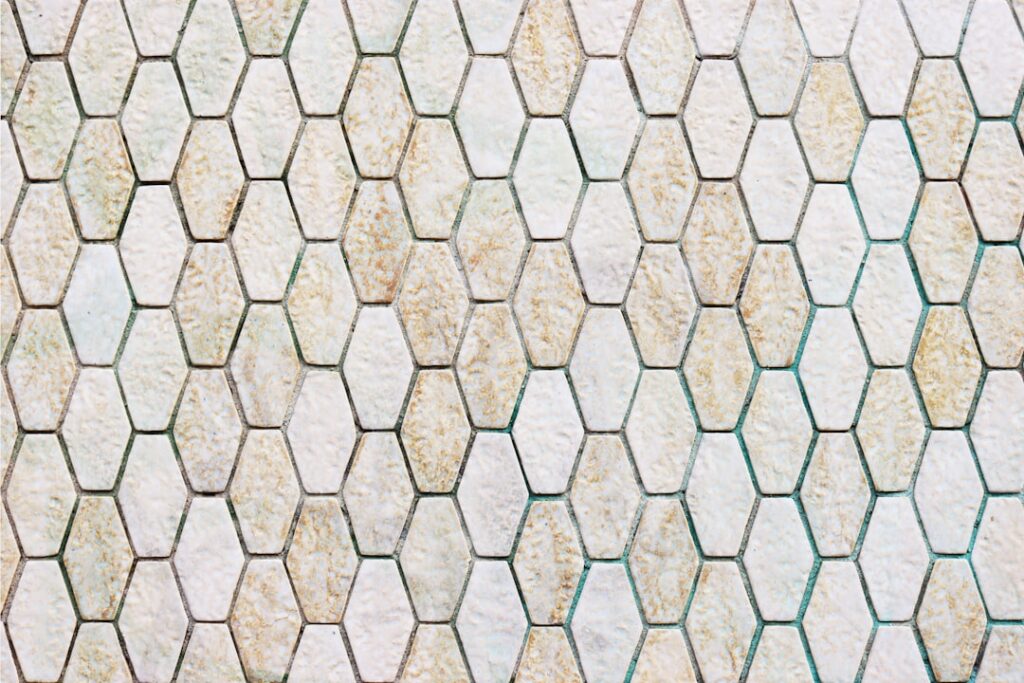
Ceramic hexagon tile has surged back into popularity, blending vintage charm with modern geometric appeal in kitchens, bathrooms, and entryways alike. The six-sided shape traces back to the early 1900s, when tiny white hex mosaics covered bathroom floors in homes and public buildings, and today it spans everything from penny-sized mosaics to bold 8-inch statement tiles.
Part of our Tile & Grout guide — explore the full guide →
What makes the hexagon so appealing is its versatility. The honeycomb geometry reads as classic or contemporary depending on size, color, and grout, and it creates visual movement that square tile simply cannot match. This guide covers sizes, pricing, layout patterns, installation, and maintenance so you can decide whether hexagon tile fits your project.
Why Choose a Hexagon Shape?
The six-sided form does something a grid of squares never will: it draws the eye across the surface in a flowing, non-linear way. That makes a small bathroom floor feel more dynamic and a large open kitchen feel intentional and designed. Hexagons also handle transitions gracefully, tucking neatly around curved shower bases, freestanding tubs, and irregular room shapes.
Ceramic as a material adds its own advantages. It is affordable, easy to clean, resistant to moisture when glazed, and available in a nearly limitless palette of colors and finishes. Compared to porcelain, standard ceramic is softer and slightly less dense, which makes it easier to cut but better suited to walls and light-to-moderate traffic floors than heavy commercial use.
Common Sizes and Formats
Hexagon tile comes in a surprising range of scales, and the size you pick dramatically changes the look. Small hexes create texture and traction, while large ones deliver a clean, modern statement.
- Penny and 1-inch hex: tiny mosaics sold on 12-inch mesh sheets, ideal for shower floors and vintage baths
- 2-inch hex: a classic middle ground, still mesh-mounted, great for floors and walls
- 4-inch hex: individual tiles that balance pattern with fewer grout lines
- 6- to 8-inch hex: large-format statement tiles for feature floors and accent walls
The smaller sheet-mounted formats install much like any mosaic, with the tiles pre-spaced on fiberglass mesh. Larger individual hexagons require careful layout because a single misaligned tile is far more noticeable across a big shape.
Where Hexagon Tile Works Best
Bathrooms are the natural home for hexagon tile. Small mosaic hexes on a shower floor give excellent grip because the many grout lines add traction and follow the slope to the drain. On main bathroom floors, a field of 2-inch or 4-inch hexagons reads as both timeless and current.
Beyond the bath, these tiles shine in several spots:
- Kitchen backsplashes, especially in elongated hex form
- Mudroom and entryway floors where pattern hides dirt
- Laundry rooms and powder rooms as low-cost feature areas
- Fireplace surrounds and accent walls
For high-traffic floors, verify the tile carries a PEI rating of at least 3 or 4, which indicates it can withstand regular foot traffic without the glaze wearing prematurely.
Costs and Budgeting
Ceramic hexagon tile is one of the more budget-friendly patterned options. Basic white or single-color hex mosaics often run $4 to $10 per square foot, while designer colors, matte finishes, and larger individual tiles range from $10 to $20 per square foot. Specialty handmade or imported hex tile can exceed that, but most homeowners find plenty of options under $12.
Factor in installation if you hire a pro. Labor for a patterned floor typically runs $8 to $15 per square foot because the geometry requires more cutting and layout time than a simple square grid. Always buy an extra 10 to 15 percent to cover cuts, edge pieces, and future repairs, and confirm every box shares the same lot number to avoid subtle shade differences.
Installation Tips and Techniques
Layout is everything with hexagons. Start by finding the center of the room and dry-laying tiles to see how the pattern falls at the walls, aiming to avoid thin slivers along the most visible edges. Snap chalk lines as guides and work outward so the honeycomb stays symmetrical.
- Prepare a flat, clean substrate; use cement backer board in wet areas.
- Spread thinset with a notched trowel sized to the tile, often a 1/4-inch notch for larger hexes.
- Set mesh sheets or individual tiles, checking alignment of the angled edges frequently.
- Cut border pieces with a wet saw; the angled cuts are the most demanding part.
- Let thinset cure 24 hours, then grout, wiping diagonally to protect the joints.
Because hexagons meet at angled points rather than clean right angles, sanded grout in joints wider than 1/8 inch helps fill and stabilize the many small intersections. Take your time on the perimeter cuts, since angled edge pieces are where amateur jobs usually show.
Grout and Design Choices
Grout color transforms hexagon tile more than almost any other factor. Match the grout closely to the tile for a seamless, monolithic look that emphasizes the shape softly. Choose a contrasting grout, such as charcoal against white hex, and the honeycomb geometry pops dramatically, turning the floor into the room’s focal point.
Finish matters too. Glossy glazes brighten small spaces and reflect light, while matte finishes hide water spots and feel more contemporary. For any floor application, a slightly textured or matte glaze offers better slip resistance than high-gloss. Mixing two hex colors in a random or gradient pattern is a popular way to add custom character without custom pricing.
Maintenance and Longevity
Glazed ceramic is remarkably low-maintenance. Routine sweeping and damp mopping with a pH-neutral cleaner keeps it looking fresh, and the glazed surface resists staining without sealing. The grout lines, however, are the vulnerable part, especially with small hex where there is a lot of grout relative to tile.
Seal cement-based grout after installation and reseal every year or two in wet areas to prevent staining and mildew. Using an epoxy grout instead of a standard cement grout eliminates most sealing chores because epoxy is naturally stain-proof and waterproof, though it costs more and is harder to work with. Avoid harsh acidic or abrasive cleaners that can dull the glaze and erode grout over time. A soft-bristle brush and a mild grout cleaner will lift most buildup from the recessed joints without damaging the tile.
Treated well, a ceramic hexagon tile floor easily lasts decades, which is exactly why so many century-old homes still wear their original hex mosaics today. For homeowners who want durable style on a reasonable budget, this shape remains one of the smartest choices in tile.
Elongated Hex and Modern Variations
Beyond the classic honeycomb, manufacturers now offer stretched and reshaped versions that expand the design possibilities. Elongated hexagon, sometimes called picket or arrow tile, pulls two opposite points into a longer diamond that can be laid vertically for a fresh, contemporary take on a backsplash. Half-hex and combined hex-and-dot patterns recreate vintage Victorian floors with a decorative accent dot at each junction.
Wood-look and marble-look ceramic hexagons are also popular, printing realistic grain or veining onto the six-sided format for a hybrid of natural texture and geometric pattern. When shopping, hold samples together to preview how the pattern repeats, and remember that busier printed designs can hide dirt and wear better than solid pale colors, a genuine advantage in entryways and mudrooms.
Prefer to explore on your own?
See how new flooring looks in your actual room in seconds — free, no signup.
Try the free Floor Studio →