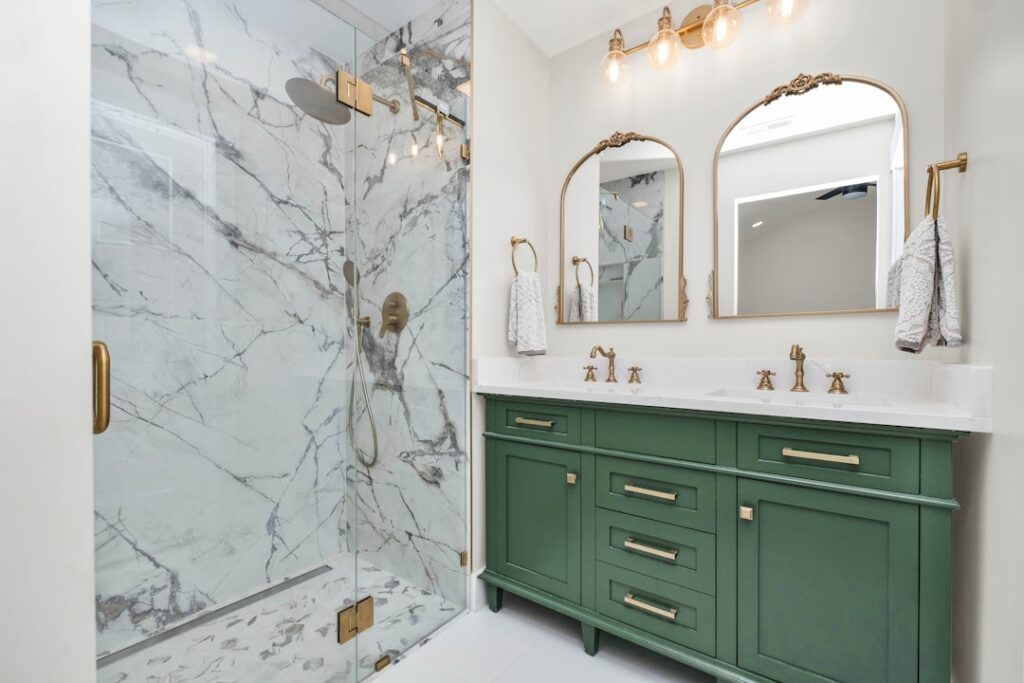
A chrome shower head is the most popular bathroom fixture finish in America, and for good reason. Chrome is bright, versatile, affordable, and remarkably easy to keep clean. It matches almost any decor, resists corrosion, and pairs with nearly every faucet and trim on the market. If you want a reliable, timeless look without a premium price, chrome is hard to beat.
Part of our Bathroom Remodeling & Flooring guide — explore the full guide →
This guide covers everything you need to know: chrome’s advantages, the styles available, flow rates, how to install one yourself, what it costs, and the simple maintenance that keeps that mirror finish spotless in hard-water homes.
- Why Chrome Is So Popular
- Chrome vs Other Finishes
- Chrome Plating Quality Matters
- Common Styles
- Chrome vs Polished Chrome vs Chrome Look
- Flow Rates and Spray Settings
- How to Choose the Right One
- What Chrome Costs
- Installing a Chrome Head Step by Step
- Routine Cleaning and Water Spots
- Descaling and Hard Water
- Troubleshooting and Mistakes to Avoid
- Rain Heads, Handhelds, and Combo Sets in Chrome
- Best Rooms and Pairings for Chrome
- Frequently Asked Questions
- Final Thoughts on Your Chrome Shower Head
Why Chrome Is So Popular
Chrome is a thin, hard, highly reflective plating applied over brass, zinc, or plastic. It resists rust and tarnish, cleans up quickly, and delivers a bright mirror shine that brightens the whole shower. Because it is mass-produced, chrome is the most budget-friendly quality finish. Its neutral silver tone works with warm and cool palettes alike, which is why builders and remodelers default to it.
Chrome vs Other Finishes
Compared to brushed nickel, chrome is shinier and cooler-toned, though it shows water spots and fingerprints more readily. Against stainless steel, chrome is usually a plated finish rather than solid metal, so it can chip if the base is cheap. Versus copper or oil-rubbed bronze, chrome reads modern and clean rather than vintage. Its biggest edge is price and the sheer ease of matching it to existing fixtures.
Chrome Plating Quality Matters
All chrome is plated, so the base metal underneath determines longevity. Chrome over solid brass is the gold standard: heavy, durable, and long-lasting. Chrome over zinc alloy is common and fine for most homes. Chrome over plastic (ABS) is the lightest and cheapest, prone to chipping at the edges over years of use. Check the weight and description; a heavier head usually signals a metal core and better durability.
Common Styles
Chrome appears in every shower head design: slim fixed wall-mount heads, large rain heads, handheld wands on hoses, and combo sets pairing a rain head with a handheld. Multi-function chrome heads offer several spray patterns, from full body to massage pulse to rain. Because chrome is so standard, you will find the widest selection and lowest prices in this finish across every brand and style.
Chrome vs Polished Chrome vs Chrome Look
Shopping for chrome, you will see a few labels worth decoding. “Polished chrome” is the classic bright, mirror-reflective finish most people picture. Some listings say “chrome” but mean a plastic head with a metallic chrome-look coating that is lighter and less durable. A handful of premium heads use a PVD chrome process that bonds the finish more permanently and resists scratching better than standard electroplating. Reading the material description and checking the weight tells you whether you are getting durable plated metal or a budget chrome-look shell.
Flow Rates and Spray Settings
Chrome heads follow US flow standards. Federal law caps flow at 2.5 GPM at 80 PSI, WaterSense-certified models run at 2.0 GPM or less, and water-saving designs reach 1.8 GPM. Many chrome multi-function heads offer three to six spray settings. If saving water matters, look for the WaterSense label rather than assuming a low number, since certification confirms the head performs well at reduced flow.
How to Choose the Right One
Prioritize plating quality: choose chrome over brass or solid metal for a fixture that lasts. Confirm the standard 1/2-inch NPT thread, which nearly all US shower arms use, so fit is essentially universal. Match GPM to your water goals, pick a spray style (fixed, rain, handheld, or combo), and consider a model with rubber or silicone nozzle tips that wipe clean and resist scale in hard-water areas.
Consider how the chrome will coordinate with the rest of the bathroom too. Chrome is cool-toned and pairs cleanly with white, gray, and blue palettes and with matching chrome faucets, towel bars, and glass-door hardware, which is why it dominates builder-grade and rental installs. If your other fixtures are already chrome, matching a new head is effortless. If you have brushed nickel or bronze elsewhere, be aware that bright chrome can clash, so decide whether you want the room to match or intentionally mix metals.
What Chrome Costs
Chrome is the value leader. Basic fixed chrome heads run $10 to $25. Multi-function and WaterSense models cost $25 to $60. Premium chrome rain heads, handhelds, and combo sets from brands like Delta, Moen, and Kohler range $60 to $150. Because chrome plating is inexpensive, you get more features per dollar than in any other finish, making it ideal for budget remodels and rentals.
Installing a Chrome Head Step by Step
Before you start, gather PTFE plumber’s tape, an adjustable wrench, and a soft cloth. Turn the shower off fully, then unscrew the old head counterclockwise; if it is stuck, grip the shower arm with one padded wrench while turning the head with another so you do not twist the arm inside the wall. Peel off every scrap of old tape, wipe the threads clean, and inspect them for damage. Wrap fresh tape clockwise so it tightens rather than unravels as you thread on the new head. This 10-minute sequence is identical across finishes, but chrome’s bright surface makes cloth-padding the wrench especially important to avoid visible scratches.
Routine Cleaning and Water Spots
Chrome’s one drawback is that it shows water spots and fingerprints. The fix is easy: wipe the head dry with a microfiber cloth after showers to prevent spotting. For weekly cleaning, use warm water with a drop of mild dish soap, then buff dry. A 50/50 vinegar-and-water spray dissolves existing hard-water spots quickly. Avoid abrasive pads and scouring powders, which scratch the thin plating and dull the shine permanently.
Descaling and Hard Water
Mineral scale clogs nozzles and weakens spray over time. To descale, fill a plastic bag with warm white vinegar, slip it over the head so the nozzles soak, and secure with a rubber band for one to two hours or overnight for heavy buildup. Then run hot water and scrub the nozzles with a soft toothbrush. Rubbing silicone nozzle tips clears clogs instantly. Descale every one to three months in hard-water regions.
Troubleshooting and Mistakes to Avoid
Weak or uneven flow almost always means scale, so descale first. Sideways-spraying nozzles are partly clogged; rub or brush them clear. A few seconds of dripping after shutoff is just residual water draining; ongoing drips signal a worn internal washer. Don’t use abrasive cleaners or steel wool, which permanently scratch chrome. Don’t buy the cheapest plastic-core head if you want it to last. Don’t skip plumber’s tape, the top cause of connection leaks. And don’t overtighten and crack the plating.
Rain Heads, Handhelds, and Combo Sets in Chrome
Because chrome is the default finish across the industry, you can find any configuration in it, and the choice comes down to how you shower. A fixed rain head, typically 8 to 12 inches across, mounts overhead and drenches you in a soft, even downpour, though wide faces need at least 45 PSI of home pressure to feel full. A handheld chrome wand on a 60 to 72-inch hose is far more practical for rinsing kids, pets, and the shower walls themselves, and it mounts on an adjustable slide bar for different heights. Combo sets pair both on a diverter so you can switch between the overhead rain and the handheld with a flick. For most families a chrome combo delivers the best mix of luxury feel and everyday usefulness, usually for $60 to $120.
Best Rooms and Pairings for Chrome
Chrome’s cool, neutral silver is the most flexible finish in the house, which is why it suits nearly every bathroom style from crisp modern to transitional. It coordinates effortlessly with chrome or polished-nickel faucets, glass shower enclosures with chrome hardware, and white or gray tile, reinforcing a clean, light-filled look. In a small or windowless bathroom, chrome’s mirror reflectivity actually helps bounce light around and make the space feel brighter and larger. If your other fixtures are already chrome, matching the shower head is foolproof since tones are consistent across brands, unlike brushed or satin finishes that vary from one manufacturer to the next. For a warmer or more vintage room, however, chrome can read a bit clinical, and a brushed nickel or bronze head may sit better.
Frequently Asked Questions
Does chrome tarnish?
No, chrome resists tarnish well; it mainly shows water spots, which wipe off easily.
How do I keep it shiny?
Dry it after showers and buff with microfiber.
Is chrome durable?
Chrome over brass lasts for years; chrome over plastic can chip.
Can I use vinegar on it?
Yes, vinegar safely descales and removes water spots from chrome.
Final Thoughts on Your Chrome Shower Head
A chrome shower head remains the smart default for most bathrooms: bright, affordable, easy to match, and simple to maintain. Choose chrome over brass or solid metal for lasting durability, confirm the universal 1/2-inch NPT thread, and pick a WaterSense model if saving water matters. Wipe it dry to beat water spots, descale with vinegar every few months, and avoid abrasives, and your chrome head will keep its mirror shine for years.