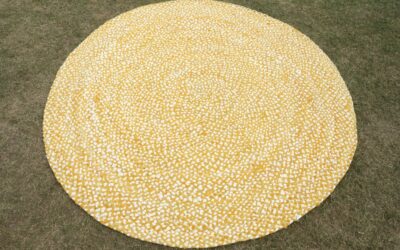
Straight lines dominate most rooms, which is exactly why a circular carpet makes such a strong impression. A round rug breaks up the grid of rectangular furniture, walls, and floorboards, softening a space and drawing the eye to a focal point. Designers reach for them under pedestal tables, in reading nooks, in kids’ rooms, and anywhere a rectangle would feel stiff. But buying the right round rug takes a slightly different eye than buying a standard one, and this guide walks you through sizes, materials, and placement so you get it right the first time.
Why Choose a Round Rug Over a Rectangle
A circular shape does specific jobs a rectangle cannot. It echoes round furniture, a pedestal dining table, a circular ottoman, a curved sofa, and ties the grouping together visually. In a small or awkward room, a round rug fills negative space without emphasizing tight corners. And in an open-plan layout, it carves out a defined zone, a conversation area or a breakfast nook, more gently than a hard-edged rug would. The curve simply feels more relaxed, which is why round rugs read as warm and inviting.
Common Circular Carpet Sizes
Round rugs are measured by diameter, and choosing the right one is mostly about matching the rug to the furniture it anchors. Standard diameters include:
- 3 to 4 feet: Accent size for entryways, under a small side table, or a reading chair.
- 5 to 6 feet: The most versatile range, ideal under a round dining table for two to four, or centering a small seating area.
- 7 to 8 feet: Anchors a full living-room seating group or a larger round dining table for four to six.
- 9 feet and up: Statement size for large open rooms and grand entry foyers.
For a dining room, size the rug so all chairs stay on it even when pulled out, which usually means the diameter should be about 4 feet larger than the table. Under a 42-inch round table, an 8-foot rug keeps chair legs from catching the edge.
Materials and How They Perform
The fiber determines durability, feel, and cleaning. Match it to the room:
- Wool: Naturally soft, resilient, and stain-resistant. The premium choice for living rooms and bedrooms, but pricier.
- Nylon and polyester: Durable, affordable synthetics that clean easily and resist fading. Great for family rooms and high-traffic areas.
- Cotton: Casual, washable, and budget-friendly, best in flat-weave styles for kitchens and kids’ rooms.
- Jute and sisal: Natural, textural, and earthy. Beautiful in a boho or coastal room but rough underfoot and hard to clean if stained.
- Polypropylene: Water- and mildew-resistant, the go-to for outdoor round rugs on patios and porches.
Pile Height and Feel
Pile height changes both the look and the practicality of a round rug. A low, flat weave suits dining areas because chairs slide easily and crumbs vacuum out. A plush, high-pile shag feels luxurious underfoot in a bedroom or reading nook but traps dirt and is harder to clean. Medium pile is the all-rounder for living rooms, balancing comfort with maintenance. Think about the traffic and the furniture that will sit on it before you commit to a deep pile.
Where to Place a Circular Carpet
Placement makes or breaks the look. A few reliable spots:
- Under a round dining table, centered so the table sits in the middle and chairs stay on the rug.
- In an entryway or foyer, where a round rug welcomes guests and softens a hard floor.
- Beneath a reading chair or nook, to define a cozy corner.
- In a nursery or kids’ room, where the soft shape and playful patterns suit the space.
- Layered over a larger rectangular rug, a designer trick that adds depth and highlights a specific zone.
Center the rug on the furniture or architectural feature it relates to, not on the room as a whole. A round rug floating in the middle of a rectangular room with no anchor looks like a mistake.
Styling Tips That Work
A round rug is a chance to add pattern and color. In a room full of straight lines and neutral tones, a bold circular rug becomes the focal point. Conversely, if your furniture is already busy, choose a solid or subtly textured round rug so it grounds the space without competing. Repeat one of the rug’s colors elsewhere, a throw pillow, a piece of art, so it feels intentional. And do not be afraid to mix the round rug with rectangular furniture; that contrast is exactly what makes it interesting.
Care and Maintenance
Round rugs care much like any rug, with one quirk: they can develop uneven wear because traffic tends to cross the center. Rotate the rug a quarter turn every few months so the wear spreads evenly. Vacuum regularly, blot spills immediately rather than rubbing, and use a rug pad underneath to prevent slipping and cushion the pile. For wool and natural fibers, have deep cleaning done professionally; synthetics often tolerate gentle home spot-cleaning.
Common Mistakes to Avoid
The most frequent error with a round rug is buying one that is too small. A dinky rug floating under a large table or in the center of a big room looks lost and makes the whole space feel unbalanced. When in doubt, size up. The second mistake is failing to anchor the rug to anything; a circle in the middle of a rectangular room with no furniture relating to it reads as an accident rather than a design choice. Always tie it to a table, a seating group, or an architectural feature.
People also forget the rug pad, which is doubly important for round rugs because they lack corners to weigh them down and tend to shift and curl at the edges. And in dining rooms, a common misstep is choosing a high pile that catches chair legs and traps crumbs, when a flat weave would perform far better. Avoid these four traps and your round rug will look and function exactly as intended.
Frequently Asked Questions
What size round rug fits under a dining table?
Choose a diameter about 4 feet larger than the table so chairs stay on the rug even when pulled out. A 42-inch round table pairs well with an 8-foot rug; a 48-inch table wants a 9-foot rug. This keeps chair legs from catching the edge.
Do round rugs work in rectangular rooms?
Yes, and the contrast is exactly what makes them interesting. The key is anchoring the rug to round furniture or a defined zone rather than centering it on the room. Round rugs excel in entryways, reading nooks, and under pedestal tables regardless of the room’s shape.
How do I keep a round rug from curling?
Use a non-slip rug pad cut to size, and if the edges still curl, reverse-roll the rug for a day or place a heavy object on the corners. A quality rug with a proper backing curls far less than a cheap one.
The Bottom Line
A circular carpet is one of the easiest ways to soften a room, define a zone, and add personality without a full redecoration. Measure by diameter, size it about 4 feet larger than a round table so chairs stay on, and pick a fiber and pile height that match the room’s traffic. Anchor it to furniture rather than floating it, add a rug pad, and rotate it occasionally. Get those basics right and a round rug will pull the whole space together in a way a rectangle never could.