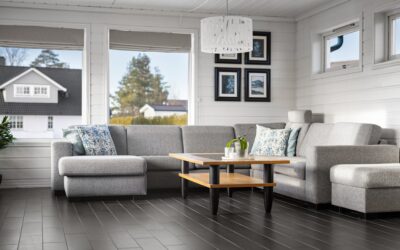
Click vinyl flooring refers to any vinyl plank or tile product that uses an interlocking tongue-and-groove system to connect planks together without glue or nails. The planks angle into each other and “click” into place, creating a floating floor that sits on top of the subfloor without being attached to it. This system is the reason vinyl flooring has become so popular with DIYers — it turns a flooring installation from a professional-only job into a manageable weekend project.
- How Click-Lock Systems Work
- Types of Click Vinyl Flooring
- Advantages of Click Vinyl Flooring
- Limitations of Click Vinyl Flooring
- Subfloor Sensitivity
- Expansion and Contraction
- Not Suitable for All Environments
- Cannot Be Refinished
- How to Choose the Right Click Vinyl
- Click Vinyl vs. Glue-Down Vinyl
- Click Vinyl vs. Click Laminate
- Final Thoughts
How Click-Lock Systems Work
Click vinyl flooring uses a precision-engineered profile on the edges of each plank. The long sides have a tongue and groove that snap together when one plank is angled into the other and pressed down. The short ends have a similar connection, though the mechanism varies slightly by manufacturer.
The most common click systems include:
Angle-Drop
The most popular system. You angle the new plank into the previous row at about 20 to 30 degrees, then drop it flat. The profile clicks into place with an audible snap. This system is intuitive and forgiving — minor alignment adjustments are easy to make before the plank locks fully.
Fold-Down
Similar to angle-drop but with a slightly different profile that allows the plank to fold down from a steeper angle. Often used on the short ends of planks.
Vertical Click (Drop-Lock)
The plank is positioned directly above the previous row and pressed straight down until it clicks. This system is faster for experienced installers but requires more precise alignment.
Valinge and Uniclic
These are patented click-lock technologies used by premium brands. Valinge uses an aluminum locking strip for superior joint strength. Uniclic (from Unilin) uses a versatile profile that can be angled, tapped, or dropped into place. Both create extremely tight, gap-resistant connections.
Types of Click Vinyl Flooring
SPC Click Vinyl
SPC (Stone Plastic Composite) click vinyl has a rigid, dense core made from limestone and PVC. It is the most popular type of click vinyl on the market.
- Core: Rigid, stone-based — extremely dent-resistant
- Thickness: 3.5mm to 7mm
- Feel: Hard and stable, similar to tile
- Waterproof: Yes, fully waterproof core and joints
- Price: $2 to $5 per square foot
WPC Click Vinyl
WPC (Wood Plastic Composite) click vinyl has a foamed core that is lighter and more cushioned than SPC.
- Core: Foamed wood-plastic blend — softer and warmer
- Thickness: 5mm to 8mm+
- Feel: Cushioned, comfortable for standing
- Waterproof: Yes, fully waterproof
- Price: $3 to $7 per square foot
Rigid Core LVP
LVP (Luxury Vinyl Plank) with a rigid core is a broad category that includes both SPC and WPC products. When shopping, check whether the specific product uses an SPC or WPC core — the label “rigid core” alone does not tell you which one.
Flexible Click Vinyl
Some older or budget click vinyl products use a flexible PVC core rather than a rigid one. These are lighter and cheaper but less stable — they conform to subfloor imperfections and can develop gaps over time in changing temperatures. For most applications, rigid core is the better choice.
Advantages of Click Vinyl Flooring
DIY Installation
No glue, no nails, no professional tools. A utility knife, tape measure, rubber mallet, and tapping block are all you need. Most homeowners can install a room in a single day.
No Mess
Unlike glue-down vinyl, tile adhesive, or concrete staining, click vinyl installation is a dry, clean process. There are no fumes, no drying times, and no cleanup beyond sweeping up cut-off pieces.
Replaceable Planks
If a plank gets damaged, it can be replaced individually. Disassemble the floor from the nearest wall to the damaged plank, swap it out, and reassemble. This is not practical for a plank in the center of a large room, but it is a genuine advantage compared to glued or nailed flooring.
Can Go Over Existing Floors
Click vinyl can be installed directly over most existing hard-surface floors — concrete, tile, vinyl, plywood, even hardwood — as long as the surface is flat, clean, and structurally sound. This saves the time, mess, and cost of removing old flooring.
Waterproof (Rigid Core)
The tight click-lock joints create a sealed surface that prevents water from reaching the subfloor. Combined with a waterproof core material, click vinyl handles kitchens, bathrooms, and basements without worry.
Limitations of Click Vinyl Flooring
Subfloor Sensitivity
Click vinyl is a thin, floating floor. Bumps, dips, and debris on the subfloor will telegraph through to the surface and can stress the click joints over time. The subfloor must be flat within 3/16 inch over 10 feet.
Expansion and Contraction
Floating floors need room to move. A 1/4-inch expansion gap is required around all walls, doorways, and fixed objects. Forgetting this gap — or blocking it with pinned molding — causes the floor to buckle.
Not Suitable for All Environments
Click vinyl should not be installed in direct sunlight without UV-protective window treatments (extended UV exposure can cause fading and warping). It is also not recommended for outdoor use, saunas, or unheated buildings where temperatures fluctuate dramatically.
Cannot Be Refinished
Once the wear layer is worn through, the floor needs replacement. Unlike hardwood, there is no option to sand and refinish. A quality product with a 20-mil wear layer lasts 15 to 25 years, but it is not a forever floor.
How to Choose the Right Click Vinyl
Wear Layer
The wear layer protects the printed design from scratches, scuffs, and UV fading. For residential living areas, choose 12 to 20 mil. For high-traffic rooms, kitchens, and homes with large dogs, 20 mil or higher is worthwhile.
Core Type
SPC for durability and dent resistance. WPC for comfort and warmth. If you are installing throughout the whole house, SPC is more versatile.
Attached Pad
Many click vinyl products include an attached underlayment pad on the bottom of each plank. This simplifies installation (no separate underlay to buy and install) and improves sound and comfort. If your product does not have an attached pad, install a compatible underlayment first.
Click System Quality
The click system is what holds the entire floor together. Read installation reviews specifically — complaints about gaps opening up, planks not clicking properly, or joints separating over time indicate a poor click system. Premium systems (Valinge, Uniclic) are worth the extra cost.
Plank Dimensions
Wider, longer planks create a more modern, spacious look. Standard dimensions are around 7 inches wide by 48 inches long. Some premium products offer planks up to 9 inches wide and 72 inches long for a more realistic wood appearance.
Click Vinyl vs. Glue-Down Vinyl
| Feature | Click Vinyl | Glue-Down Vinyl |
|---|---|---|
| Installation skill | Beginner-friendly | Intermediate to advanced |
| Installation speed | Fast | Slower (adhesive dry time) |
| Subfloor prep | Must be flat | Must be flat and perfectly clean |
| Floor height | Higher (thicker planks) | Lower (thinner planks) |
| Sound | Can sound hollow without underlay | Quiet — fully adhered |
| Removal | Easy — disassemble and reuse | Difficult — adhesive residue |
| Best for | DIY, rental properties, whole-house | Commercial, large rooms, permanent installs |
Click Vinyl vs. Click Laminate
Both use click-lock systems and float over the subfloor, but the materials are fundamentally different:
- Water: Click vinyl is waterproof. Standard click laminate is not — water destroys the HDF core.
- Cutting: Vinyl can be scored and snapped with a utility knife. Laminate requires a saw.
- Feel: Vinyl is softer and quieter. Laminate feels harder and more solid.
- Appearance: High-end laminate arguably looks slightly more realistic than vinyl at the same price point, but the gap has narrowed significantly.
Final Thoughts
Click vinyl flooring has earned its dominant market position by solving multiple problems at once: it is waterproof, affordable, good-looking, and installable by anyone willing to follow instructions. The click-lock system specifically is what makes it accessible — it removes the need for adhesives, special tools, and professional labor. Choose a rigid-core product with a quality click system and an appropriate wear layer, and you get a floor that performs reliably in any room of the house for 15 to 25 years.
Prefer to explore on your own?
See how new flooring looks in your actual room in seconds — free, no signup.
Try the free Floor Studio →