White kitchens dominated for two decades, and that’s exactly why a colored kitchen now feels fresh. These colored kitchen cabinets ideas are built around a simple truth: color is the fastest, highest-impact way to give a kitchen personality without changing the layout. Whether you crave a moody navy, a soft organic green, or a punchy two-tone scheme, the right cabinet color anchors the whole room. The trick is choosing a hue you’ll still love in ten years and pairing it with the right counters, hardware, and walls so it reads as designed rather than impulsive.
Part of our Kitchen Remodeling guide — explore the full guide →
- Navy and Deep Blue: The Modern Classic
- Greens From Sage to Forest
- Warm Earth Tones and Terracotta
- Two-Tone Cabinets for Depth
- Bold and Unexpected Hues
- How to Pair Colors With Counters and Hardware
- Choosing a Color You Won't Regret
- Bring Color In Without a Full Reno
- Where to Place Color for the Best Effect
Navy and Deep Blue: The Modern Classic
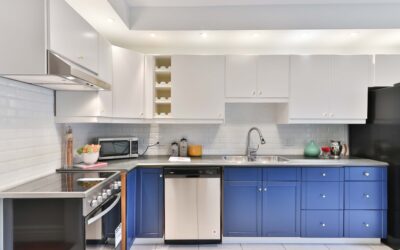
If you want color with staying power, navy is the safest bold choice. Deep blues feel rich and sophisticated, work in both traditional and contemporary kitchens, and pair beautifully with white counters, brass or gold hardware, and warm wood accents. Navy on the lower cabinets with white uppers is a foolproof combination that has aged well over the past several years.
For something softer, slate blue and dusty blue-gray bring the same calming depth without the drama. These shades feel especially at home in coastal, farmhouse, and transitional kitchens.
Greens From Sage to Forest
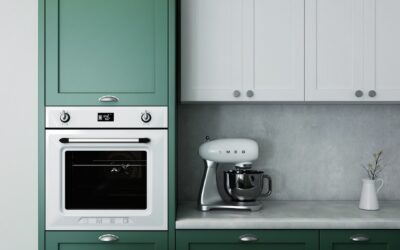
Green has overtaken blue as the color of the moment, and for good reason: it connects a kitchen to nature and reads as both timeless and current. The range is wide, so you can dial the intensity to your taste.
- Sage and muted green: soft, organic, and easy to live with; pairs with white oak, marble-look quartz, and matte black or brass.
- Olive and earthy green: warm and grounding, great with terra-cotta and natural wood.
- Forest and emerald: dramatic and luxurious, stunning against brass hardware and white or veined stone.
Green flatters warm woods and natural materials, making it a natural fit for organic-modern and French country styles alike.
Warm Earth Tones and Terracotta
As cool grays fade, warm neutrals are surging. Think mushroom, greige, putty, warm taupe, and even soft clay or terra-cotta. These hues bring coziness without the commitment of a saturated color, and they bridge the gap between a plain white kitchen and a fully colored one.
Warm earth tones pair effortlessly with brass, aged bronze, butcher block, and creamy backsplashes. They’re an excellent choice if you want warmth and depth but worry a bold color might feel dated too soon.
Two-Tone Cabinets for Depth
One of the most flexible colored kitchen cabinets ideas is to use two colors at once. A two-tone scheme lets you introduce color while keeping the room balanced and bright.
Popular Two-Tone Combinations
- Dark lowers, light uppers: navy or green base cabinets with white or cream uppers keeps the room feeling open.
- Colored island, neutral perimeter: a bold island anchors the space while the surrounding cabinets stay calm.
- Wood and color: natural wood paired with a painted color (sage and white oak is a current favorite) adds warmth and texture.
Two-tone schemes also let you experiment with color in a contained way. If you’re nervous about committing, painting just the island is a low-risk way to test a hue.
Bold and Unexpected Hues
For homeowners who want their kitchen to be a statement, saturated colors deliver. Deep charcoal and near-black cabinets feel dramatic and modern, especially in a kitchen with good natural light. Burgundy, plum, and oxblood bring unexpected richness. Even sunny yellow or soft pink can work in the right space, often on a single accent run or pantry.
The key with bold colors is balance. Keep counters, walls, and floors relatively neutral so the cabinets can be the star, and make sure the room gets enough light so a dark color doesn’t feel closed in.
How to Pair Colors With Counters and Hardware
Cabinet color never stands alone, and the supporting cast makes or breaks the look. As a general rule, pair cool cabinet colors (blues, cool grays) with cool-toned counters and hardware, and warm cabinet colors (greens, earth tones) with warm metals like brass and bronze.
- White or marble-look quartz: universal; brightens any color.
- Brass and gold hardware: warms up navy, green, and earth tones.
- Matte black hardware: sharp and modern against sage, white, or wood.
- Soapstone or dark counters: ground lighter colored cabinets.
Bring home large paint samples and view them at different times of day, since artificial and natural light shift colors dramatically.
Choosing a Color You Won’t Regret
Trends are useful for inspiration but dangerous as a sole guide, because cabinets are expensive and meant to last 15 to 20 years. Favor muted, natural, slightly grayed-down versions of a color over the brightest, most saturated version; they age more gracefully. Consider your home’s overall style and the amount of natural light, since a color that glows in a sunny kitchen can feel heavy in a dim one.
If you’re unsure, paint a sample board and live with it for a week. And remember that paint is the cheapest part of a kitchen to change later, so you can be braver with cabinet color than with counters or layout.
Bring Color In Without a Full Reno
You don’t need new cabinets to use these ideas. Repainting existing cabinet boxes and doors is one of the highest-return updates in any kitchen, typically costing a fraction of replacement. Add new hardware, refresh the backsplash, and you’ve effectively transformed the room.
Whether you go all-in on forest green, keep it subtle with greige, or split the difference with a two-tone scheme, the strongest of these colored kitchen cabinets ideas is the one that fits your light, your style, and the version of your kitchen you’ll still smile at years from now.
Where to Place Color for the Best Effect
Color placement changes how a kitchen feels as much as the color itself. Putting the darker or bolder hue on the lower cabinets grounds the room and keeps it feeling open, while reserving color for an island lets you experiment with low risk and creates a natural focal point. A colored pantry or a single run of accent cabinets adds personality without committing the whole kitchen.
In small or low-light kitchens, keep the bulk of the cabinetry light and add color sparingly so the space stays bright. In larger, sun-filled kitchens, you can afford to wrap more of the room in a saturated tone. Think about sightlines too, since the cabinets you see first from the entry or adjoining rooms carry the most visual weight and set the kitchen’s tone.