Bohemian style breaks the matchy-matchy rules most rooms follow, and nothing carries that energy like the floor. A colorful boho rug layers global patterns, saturated hues, and worn-in texture into a single piece that instantly loosens up a space. Think faded Persian medallions, Moroccan diamonds, kilim stripes, and Southwestern geometry, often mixed in one design. Done well, it becomes the visual anchor an eclectic room needs, giving your mismatched furniture and thrifted finds a reason to live together.
What Makes a Rug “Boho”
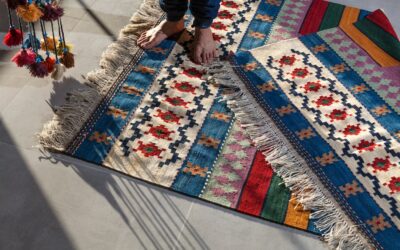
Bohemian design borrows from many cultures rather than one, so a boho rug is less a single pattern than a mood. Expect layered motifs, imperfect symmetry, and a color story that feels collected over time instead of ordered from a catalog. Distressed or “vintage-wash” finishes are common, giving new rugs the muted, sun-faded look of an antique.
- Persian and Oriental revival: medallions and florals in overdyed or distressed color.
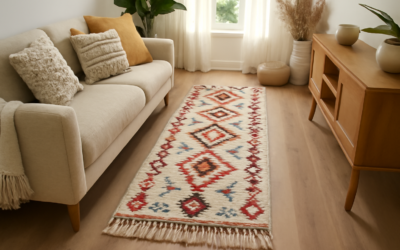
- Moroccan and Berber: diamond trellis and tribal line work, often on ivory grounds.
- Kilim and flatweave: bold geometric stripes and zigzags with a thin, tapestry-like profile.
- Southwestern and Aztec: stepped diamonds and earthy terracotta, turquoise, and mustard.
Choosing Your Color Story
Colorful does not mean chaotic. The best boho rugs still follow a loose palette, usually three to five recurring hues that repeat across the design. Pull your room’s accent colors from the rug rather than the other way around, and let the rug carry the boldness while walls and large furniture stay neutral. If your space already has strong color, pick a rug that shares at least one of those tones so the room reads intentional.
For a calmer take, look for a rug where the brights sit on a cream, gray, or charcoal ground, which tempers the saturation. For maximum drama, choose an all-over pattern with no dominant background at all.
Layering Rugs Like a Pro
Layering is a signature boho move and a smart way to fill a large floor without buying one expensive oversized rug. Start with a large, flat natural base such as jute or sisal, then float your colorful boho rug on top at an angle or offset to one side. The neutral base grounds the pattern and adds a border of woven texture.
- Lay a jute base rug roughly 2 feet larger on each side than your patterned rug.
- Position the boho rug so the seating area sits mostly on the color.
- Add a nonslip pad between the two layers to stop shifting.
- Repeat the rug’s colors in throw pillows and textiles to tie the room together.
Best Rooms and Sizes
Living rooms and bedrooms are natural homes for a bold pattern, but boho rugs also energize entryways, home offices, and reading nooks. For a living room, an 8×10 (80 square feet) fits most standard layouts with the front sofa legs on the rug. Bedrooms do well with a 9×12 under a queen or king, or a pair of 3×5 runners flanking the bed. In a dining room, keep in mind that busy patterns hide crumbs and the occasional spill better than solids do.
Materials and Durability
Fiber choice affects both the look and how the rug wears. Here is what to expect:
- Wool: the classic boho fiber, naturally stain-resistant and long-wearing, $300 to $1,000 for an 8×10.
- Cotton flatweave: lightweight, washable, and affordable at $80 to $250, though it flattens under heavy traffic.
- Polypropylene: the budget champion at $60 to $200, fade-resistant and easy to clean, ideal for kids and pets.
- Jute and blends: textural and earthy, great as a layering base rather than the top color layer.
For a family room that takes real abuse, a printed polypropylene boho rug gives you the pattern without the worry, and many spot-clean with just soap and water.
Styling Around the Rug
Once the rug is down, keep the surrounding decor relaxed and layered. Mix woods and finishes rather than buying a matched furniture set, and lean into natural materials like rattan, leather, and linen. Plants amplify the boho feel, so cluster a few in woven baskets near the rug. Pull two or three colors from the pattern into pillows, a throw, and maybe one piece of wall art, but stop before the room feels themed.
Lighting helps too. Warm bulbs around 2,700K flatter the earthy, saturated tones far better than cool white light, which can make reds and oranges look muddy.
Mixing Patterns Without Clashing
A bold rug makes people nervous about pattern overload, but a few rules keep an eclectic room from tipping into chaos. Vary the scale: if the rug has a large, sprawling medallion, pair it with small-scale patterns in pillows and drapes so the eye has somewhere to rest. Repeat at least one color across the room, whether in a throw, a lampshade, or artwork, to create a thread that ties disparate patterns together. And give the room breathing space with a couple of solid, quiet surfaces, like a plain sofa or bare wall, so the patterns feel curated rather than crowded.
When in doubt, treat the rug as the loudest voice in the room and let everything else speak more softly. That single rule prevents most boho rooms from feeling busy.
Budget-Friendly Ways to Get the Look
You do not need an antique Persian to nail bohemian style. Vintage-wash printed rugs deliver the faded, collected look for $60 to $200 in an 8×10, and they resist stains far better than real antiques. Estate sales, online marketplaces, and rug remnants are gold mines for one-of-a-kind pieces at a fraction of retail. Layering a small, colorful accent rug over a large budget jute base also stretches your dollars, letting you spend on a special 4×6 while the inexpensive base does the heavy lifting of covering the floor.
If you want the pattern to last, prioritize a tighter weave and a wool or quality polypropylene fiber over a loose cotton print, which flattens and fades faster in a sunny room.
Caring for a Colorful Boho Rug
Vacuum weekly, and for flatweaves and kilims, flip the rug and vacuum the back a few times a year to shake out embedded grit. Rotate 180 degrees every few months so sunlight and foot traffic fade the rug evenly rather than in one spot. A rug pad, about $40 to $80 for an 8×10, extends the life of any woven piece and keeps flatweaves from creeping across hard floors.
Because these rugs are already busy and often distressed, they forgive stains that would ruin a solid rug. Blot spills promptly, and have wool pieces professionally cleaned every 12 to 24 months to keep the colors from going dull.
Where Bold Color Works Best
Some rooms invite a colorful boho rug more than others. A sunroom, playroom, or casual den can take full saturation without feeling overwhelming, because those spaces already lean relaxed. In a formal living room, a muted or overdyed boho pattern reads more sophisticated than a bright kilim. Small rooms actually handle bold rugs surprisingly well, since a strong pattern underfoot draws the eye down and distracts from tight square footage. North-facing rooms that feel gray and flat benefit most, as the warm reds, mustards, and terracottas in many boho designs push heat back into a cool space.
Wherever you place it, remember that a busy rug performs best with room to be seen, so avoid burying more than two-thirds of it under furniture.
Bringing It All Together
A colorful boho rug is the fastest way to give a room soul, layering pattern, warmth, and a lived-in, collected feeling under your feet. Anchor it with a loose three-to-five color palette, layer it over a natural base if you want extra texture, and choose a fiber that matches your traffic and budget. Keep the surrounding decor relaxed and let the rug lead, and you will end up with a space that feels personal, welcoming, and effortlessly put together.