A bar floor works harder than almost any surface in hospitality. It absorbs 12-hour shifts of foot traffic, sugar-laden cocktail spills that turn sticky overnight, shattered glass at least twice a week, and a power-wash cleaning regimen that would kill a residential product in a month. Commercial bar flooring has to deliver measurable slip resistance (DCOF above 0.42 wet per ANSI A326.3), chemical tolerance to alcohol and citrus acids, fatigue reduction for standing staff, and a look that suits the room’s aesthetic — all without going over the FF&E budget. Here is what works behind the bar and in the front of house.
- The Performance Specs That Actually Matter
- Commercial-Grade Rubber Flooring
- Commercial Vinyl (LVT, Sheet Vinyl, VCT)
- Sealed and Polished Concrete
- Quarry Tile and Porcelain
- Epoxy Flake and Metallic Epoxy
- Matching Floor to Bar Zone
- Installation Considerations
- Maintenance That Preserves the Floor
- Budget Planning
The Performance Specs That Actually Matter
Before any aesthetic choice, the floor needs to hit four targets:
- Wet DCOF above 0.42 — OSHA and ANSI A326.3 standard for commercial wet-traffic floors
- Chemical resistance — Sugar syrups, citrus, alcohol, coffee, red wine, and sanitizers all attack the finish
- Impact resistance — Dropped glassware and bar tools regularly test the surface
- Cleanability — Must survive nightly mop-and-squeegee plus weekly deep-clean or steam
Commercial-Grade Rubber Flooring
Behind-the-bar staff stand on a 4×8 floor for entire shifts. Rubber is the category leader for fatigue reduction. Notrax, SlipNOT, Waterhog, and Birrus make commercial rubber anti-fatigue mats and continuous flooring specifically for hospitality.
Pros: Excellent slip resistance (DCOF 0.65+ wet), cushioned underfoot, absorbs dropped glass impact without cracking, drains through interlocking tile formats.
Cons: Harder to clean when deep — debris lodges in the drainage channels. Not the finest aesthetic for front-of-house areas.
Pricing: $4 to $10 per sq ft for tile or roll goods. Usually used in service wells and back-of-bar zones rather than customer areas.
Commercial Vinyl (LVT, Sheet Vinyl, VCT)
Heavy-duty sheet vinyl (Altro Stronghold 30, Forbo Surestep, Armstrong Safeguard) combines slip resistance (DCOF above 0.45) with straightforward installation and strong chemical tolerance. These are safety-standard products used in healthcare and institutional settings that translate well to bar environments.
Luxury vinyl tile with commercial wear layers (22 to 30 mil) from Karndean, Mannington Commercial, and Shaw Contract provides wood and stone visuals for front-of-house zones. Pair with a proper grout-sealed install and specify rated slip resistance.
VCT (vinyl composition tile) remains cost-effective at $1 to $3 per sq ft installed, but requires regular strip-and-wax and is the least premium option.
Pricing:
- Safety sheet vinyl: $6 to $12 per sq ft installed
- Commercial LVT: $5 to $9 per sq ft installed
- VCT: $2 to $4 per sq ft installed
Sealed and Polished Concrete
Polished concrete with a densifier-and-sealer treatment is the default for modern industrial and craft cocktail bars. Bar owners love the look; staff and customers occasionally do not love the hardness underfoot.
Slip resistance comes from the sealer. Specify a slip-rated topical sealer (L&M Seal Hard, Prosoco Consolideck LS/CS with slip additive) to hit DCOF 0.42+ wet. Unsealed or wax-polished concrete fails most bar slip specs.
Pros: Long service life (25+ years), timeless look, easy daily cleaning, handles cart and beer-keg traffic.
Cons: Cold and hard underfoot (add anti-fatigue mats behind the bar), spills spread further before absorbing, chemical etching from sugars and acids if sealer fails.
Pricing: $6 to $14 per sq ft for grind-and-seal, $12 to $20 for fully polished systems.
Quarry Tile and Porcelain
Quarry tile (unglazed clay body, textured surface) is the classic commercial kitchen floor that migrates to bar service areas. Dal-Tile, American Olean, and Crossville all make quarry in 6×6 and 8×8 formats with integral slip texture.
Porcelain tile rated for commercial wet traffic (COF >0.42, PEI class 4-5) covers front-of-house bar floors with a premium look. Specify grout joints at 3/16 inch minimum with epoxy grout (Laticrete SpectraLOCK, Mapei Kerapoxy) to resist staining from colored drinks.
Pricing:
- Quarry tile: $6 to $10 per sq ft installed
- Commercial porcelain: $9 to $18 per sq ft installed
Epoxy Flake and Metallic Epoxy
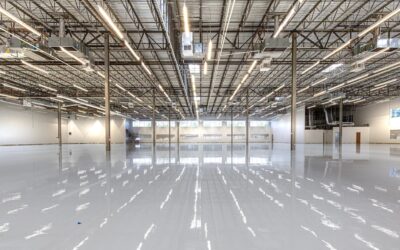
For craft brewery taprooms, cocktail lounges, and destination bars wanting a distinctive surface, decorative epoxy systems deliver visual impact plus chemical resistance. Flake systems (vinyl chip broadcast into clear topcoat) and metallic epoxy (pigmented resin that mimics liquid metal) both hit commercial-grade durability with proper spec.
Slip resistance requires additives — aluminum oxide grit or polymer anti-skid beads in the topcoat — because plain epoxy fails DCOF specs when wet.
Pricing: $8 to $18 per sq ft for flake systems, $12 to $25 for metallic epoxy.
Matching Floor to Bar Zone
- Behind-the-bar service well: Rubber interlocking tile or safety sheet vinyl. Anti-fatigue and aggressive slip rating
- Front-of-house customer area: Sealed concrete, commercial LVT, quarry tile, or porcelain depending on aesthetic
- Kitchen and back-of-house prep: Quarry tile or sheet vinyl with integral cove
- Outdoor patio bar: Concrete with slip sealer, rubber pavers, or porcelain rated for exterior wet use
- Entrance and vestibule: Walk-off matting in a recessed well to capture water before the main floor
Installation Considerations
Bars renovate under tight schedules — every closed day is revenue lost. Factor cure times:
- Sheet vinyl and LVT: 24-48 hours before heavy traffic
- Quarry and porcelain: 24 hours after grout
- Polished concrete sealer: 72 hours before bar service
- Epoxy systems: 72 hours minimum, 7 days for full chemical cure
Plan renovations during slow weeks and coordinate with refrigeration, beer line, and electrical work to avoid re-cutting the new floor.
Maintenance That Preserves the Floor
Daily: damp mop with neutral pH detergent and rinse. Weekly: auto-scrub (if equipped) or deep-clean mop with heavier degreaser. Monthly: inspect sealed surfaces for wear spots and recoat high-traffic zones preemptively. Replace service-well anti-fatigue mats when drainage channels clog or rubber compresses.
Avoid bleach-based sanitizers on epoxy and polished concrete — they break down sealers over time. Use quaternary ammonium sanitizers (quats) at manufacturer-approved dilution.
Budget Planning
For a 1,200 sq ft full-service bar (service well, front-of-house, kitchen), plan:
- Service well (200 sq ft) safety vinyl or rubber: $1,400 to $2,400
- Front-of-house (700 sq ft) sealed concrete or commercial LVT: $4,200 to $12,600
- Kitchen and back-of-house (300 sq ft) quarry tile: $1,800 to $3,000
- Walk-off matting and transitions: $300 to $700
- Total installed: $7,700 to $18,700
Skimping on bar flooring is a classic hospitality mistake — a $6 floor replaced at year 5 under operating revenue loss costs far more than the $12 floor that runs 15 years without missing a shift.
Prefer to explore on your own?
See how new flooring looks in your actual room in seconds — free, no signup.
Try the free Floor Studio →