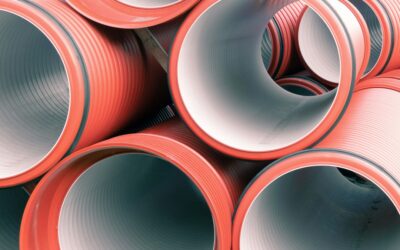
A washed-out driveway after one hard storm is usually a sizing problem, not a bad-luck problem. Concrete culvert pipe (known in the trade as reinforced concrete pipe, or RCP) is the heaviest-duty option for moving water under driveways, farm entrances, and roads, and it routinely outlasts the corrugated metal and plastic alternatives by 50 years or more. The catch is that concrete is heavy, unforgiving to install badly, and easy to under-size if you guess instead of measure. Here’s what to know about the standard sizes, strength classes, real installed costs, and the bedding details that determine whether your culvert lasts a century or cracks in the first spring thaw.
- What Concrete Culvert Pipe Actually Is
- Standard Sizes and Strength Classes
- How to Size a Culvert for Your Driveway
- What Concrete Culvert Pipe Costs
- Installation: Bedding Is Everything
- Maintenance and Common Failure Points
- Permits and Practical Tips
- RCP Pipe Sizes and How They Compare to Other Culvert Pipe Sizes
- Frequently Asked Questions
What Concrete Culvert Pipe Actually Is
Most concrete culvert sold in the US is reinforced concrete pipe manufactured to ASTM C76. A steel wire cage is cast inside the concrete wall, which lets the pipe carry both the weight of the soil above it and live loads from vehicles crossing over. Unreinforced concrete pipe (ASTM C14) still exists in small diameters (typically 12 inches and under), but for anything a truck will drive over, reinforced is the standard.
Pipe comes in tongue-and-groove or bell-and-spigot joints, usually in 6-foot or 8-foot lay lengths. A single 8-foot section of 15-inch RCP weighs roughly 1,100 to 1,300 pounds, which is the first practical difference from plastic: you are not muscling this into a trench by hand. Plan on a skid steer, backhoe, or mini excavator with chains or a pipe hook for anything 12 inches and larger.
Standard Sizes and Strength Classes
Round RCP is produced in diameters from 12 inches up to 144 inches, though residential and farm work almost always lands between 12 and 36 inches. Common stock sizes at precast yards are 12, 15, 18, 24, 30, and 36 inches. Many counties set a minimum culvert diameter for driveway entrances (15 inches is typical, and some require 18), so check with your road department before you buy, because an undersized pipe can fail inspection even if it never floods.
ASTM C76 divides pipe into five strength classes, Class I through Class V, based on the load the pipe can carry before cracking. Class III is the workhorse for driveways and shallow burial under light traffic. Class IV and V show up under highways, at very shallow cover, or under deep fills. The class is stamped or stenciled on the pipe, so verify it at pickup:
- Class III: standard for residential driveways with 1 to 10 feet of cover
- Class IV: heavy trucks or cover shallower than about 2 feet
- Class V: highway loading, fire lanes, and extreme fill heights
Elliptical and arch-profile concrete pipe exists for ditches where vertical clearance is tight: a 14×23-inch arch moves roughly the same water as an 18-inch round pipe while sitting several inches lower.
How to Size a Culvert for Your Driveway
Sizing comes down to how much water reaches the ditch during a heavy storm, and the honest answer is that the upstream drainage area matters more than the ditch’s appearance in July. A ditch that is bone dry all summer can run 18 inches deep during a 2-inch-per-hour thunderstorm. Two practical approaches work for homeowners. First, match or exceed the culverts immediately upstream and downstream of you on the same ditch line. If every neighbor has an 18-inch pipe and yours is a 12, yours becomes the choke point and the first to overtop. Second, ask the county engineer; most road departments will spec the size for a driveway permit at no charge.
When in doubt, go up one size. The material cost difference between a 15-inch and an 18-inch pipe is often less than $10 per foot, while the cost of digging out and replacing an undersized culvert, plus regrading the washed-out driveway above it, starts around $1,500.
What Concrete Culvert Pipe Costs
Material prices vary by region and fuel surcharges, but as of 2026, budget roughly these figures from a precast yard:
- 12-inch RCP: $14 to $22 per linear foot
- 15-inch RCP: $18 to $28 per linear foot
- 18-inch RCP: $22 to $36 per linear foot
- 24-inch RCP: $32 to $50 per linear foot
- 36-inch RCP: $60 to $95 per linear foot
Delivery adds $150 to $400 depending on distance, since the yard sends a boom truck or flatbed. Installed cost for a typical 20-to-24-foot driveway culvert (excavation, bedding stone, pipe, backfill, and compaction) generally runs $1,500 to $4,500. Add $400 to $900 per end for precast flared end sections, which improve flow and stop the embankment from sloughing into the pipe opening. Comparable corrugated HDPE plastic costs less up front, but concrete wins on lifespan: 70 to 100 years is a realistic service life, and it will not float out of the trench during installation the way empty plastic pipe can, and it shrugs off brush-fire heat and mower damage at the exposed ends.
Installation: Bedding Is Everything
Concrete pipe fails from poor support far more often than from load. Dig the trench 12 inches wider than the pipe on each side and deep enough for 4 to 6 inches of compacted bedding: crushed stone in the 3/4-inch range or coarse sand, never big rocks or frozen clods. Grade the bedding to a consistent slope of at least 1 percent (about 1/8 inch per foot) so water actually drains; a bellied culvert holds standing water, silts up, and breeds mosquitoes.
Set the first pipe section at the downstream end with the bell or groove end facing upstream, then push each following section home so the joint seats fully. Hand-shovel and compact granular material under the pipe haunches (the lower curves of the pipe) because voids there concentrate stress and cause the classic invert crack. Backfill in 6-inch lifts, compacting each one, and keep at least 12 inches of compacted cover over the pipe before any vehicle crosses it. Finish the ends with flared end sections or headwalls, and armor the outlet with riprap for 3 to 4 feet so discharge does not scour a hole under the pipe.
Maintenance and Common Failure Points
A properly installed concrete culvert needs very little: walk the ends each spring and fall, pull out leaves, sediment bars, and beaver debris, and flush the barrel with a garden hose or pressure washer if silt builds past a quarter of the pipe depth. Watch for three warning signs. Water ponding at the inlet after modest rain means the barrel is obstructed or undersized. A dip in the driveway directly over the pipe means backfill is settling or washing into a failed joint. And daylight visible through a joint gap means sections have pulled apart, fixable with a concrete collar if caught early, a dig-up if ignored.
Joint separation is the most common long-term issue on older lines, and it usually traces back to soft bedding at installation. Modern rubber-gasketed joints (ASTM C443) largely eliminate infiltration problems and are worth specifying if your soil is fine sand or silt that migrates easily.
Permits and Practical Tips
Almost every county and township requires a permit for a culvert in a road right-of-way, and many will dictate diameter, length, and end treatment. Call 811 before digging; utility strikes in road ditches are common because that is exactly where buried lines run. Order pipe a section long rather than short, since cutting RCP means a gas cut-off saw with a diamond blade, silica dust, and a half day you did not plan for. If you must cut, wet cut with the saw’s water feed running and wear a fitted respirator (N95 minimum, P100 better) plus eye and hearing protection. Finally, schedule delivery for the same day as excavation if you can; a string of thousand-pound pipe sections stored on a slope is a hazard, and yards charge restocking fees of 15 to 25 percent if you over-order and return.
Done right, a concrete culvert is a one-time project. Spend your money on an honest size, Class III or better pipe, and careful bedding, and the pipe under your driveway will still be doing its job when the next owner’s grandchildren drive over it.
RCP Pipe Sizes and How They Compare to Other Culvert Pipe Sizes
RCP pipe sizes run from 12 inches to 144 inches in inside diameter, and the nominal size always refers to the inside opening, not the outside. Because the concrete wall is thick, the outside of a reinforced concrete pipe is several inches larger than its listed size. That matters when you dig the trench, order end sections or compare concrete pipe sizes with plastic and corrugated metal pipe sizes.
Common Concrete Pipe Sizes
Precast yards stock round RCP in 3 inch steps up to 36 inches (12, 15, 18, 21, 24, 27, 30, 33 and 36), then in 6 inch steps for larger diameters such as 42, 48, 54 and 60 inches. Each diameter can be made with different wall thicknesses, so ask the yard for the outside diameter and weight of the exact pipe before you size the trench.
| Pipe type | Typical diameter range | Typical section length | Notes |
|---|---|---|---|
| Reinforced concrete pipe (RCP) | 12 to 144 inches | 6 or 8 feet | Heaviest; needs a machine to set |
| Corrugated metal pipe (CMP) | About 6 to 120 inches or more | Often 20 feet | Light; joined with coupling bands |
| Corrugated HDPE plastic | About 4 to 60 inches | Often 20 feet | Lightest; needs careful backfill |
What a 12×20 Culvert Pipe Means
A listing for a 12×20 culvert pipe almost always means a 12 inch diameter pipe in a 20 foot length. That length is typical for corrugated metal and plastic pipe, which is why the term turns up so often for driveway culverts. Concrete pipe comes in shorter 6 or 8 foot sections, so a 20 foot concrete culvert takes three sections of 8 foot pipe, with the extra length trimmed or left as overhang at the ends.
Large Culvert Pipe Options
Large culvert pipe, generally 48 inches and up, is used for creek crossings and farm roads that carry real flow. At that size, choices widen to elliptical or arch RCP, large corrugated metal pipe, structural plate arches and precast box culverts. These crossings almost always need engineering and a permit, since a stream crossing can affect neighbors upstream and downstream.
Cutting concrete pipe to length produces crystalline silica dust. Wet cut with a diamond blade and a steady water feed, wear a properly fitted respirator (N95 minimum, P100 better), or have the yard deliver the exact lengths.
Frequently Asked Questions
What are the outside dimensions of an 18-inch concrete culvert pipe?
An 18-inch reinforced concrete pipe with the common Wall B thickness has 2.5-inch walls, giving an outside diameter of about 23 inches. Wall B thickness follows a simple rule of the inside diameter divided by 12, plus 1 inch, so a 12-inch pipe is about 16 inches outside and a 24-inch pipe about 30 inches. Thinner Wall A and thicker Wall C pipes also exist, so confirm with the yard.
Is a 6-inch pipe big enough for a driveway culvert?
No. A 6-inch pipe clogs quickly with leaves and sediment and carries far too little storm flow for a roadside ditch, and most counties require at least a 12 to 15-inch culvert under driveway entrances, with some requiring 18 inches. Small pipes in the 4 to 6-inch range are meant for downspout and yard drain lines, not driveway crossings.
What is the difference between a driveway culvert and a pedestrian culvert?
The main difference is the load the pipe must carry. A driveway culvert must handle cars, delivery trucks, and sometimes fire apparatus, so it uses Class III or stronger reinforced concrete pipe with adequate compacted cover. A culvert under a footpath carries only foot traffic, so lighter pipe, shallower cover, and sometimes smaller diameters are acceptable, though it must still be sized for the ditch flow.