COREtec LVT flooring is one of the most recognized names in the waterproof luxury vinyl category, and for good reason, COREtec, made by Shaw Industries, is widely credited with pioneering rigid-core vinyl flooring. LVT stands for luxury vinyl tile, and while COREtec’s lineup spans both plank and tile formats, the brand is best known for rigid-core construction that stays stable, resists water, and convincingly mimics wood and stone. If you are weighing a durable, waterproof floor for a busy home, this guide explains what COREtec LVT delivers and where it fits.
Understanding LVT and Rigid Core
Luxury vinyl tile (LVT) is a multilayer vinyl product printed to look like stone, ceramic, or other materials, while luxury vinyl plank (LVP) mimics wood. COREtec produces both, and many of its products use a rigid core, a stiff center board that resists denting and stays dimensionally stable through temperature swings. That sets it apart from older flexible glue-down vinyl, which can telegraph subfloor imperfections and move with heat.
A typical COREtec product layers a printed design film and a clear protective wear layer over the rigid core, with an attached underlayment bonded to the bottom.
What Makes COREtec Different
Several construction features define the COREtec experience:
- Rigid core for stability and dent resistance.
- Attached underlayment, usually cork or foam, which cushions footsteps, dampens sound, and often eliminates the need for a separate pad.
- Waterproof construction, as the core does not swell when exposed to water.
- Click-lock floating installation, which snaps together without glue or nails over many subfloors.
- Realistic visuals and texture, with embossing that mimics genuine wood and stone.
The attached pad and rigid core together are what make COREtec feel solid and quiet underfoot compared with thin, flexible vinyl.
Waterproof Performance
COREtec markets its floors as 100 percent waterproof, meaning the planks and tiles themselves will not swell or be damaged by standing spills. That makes COREtec LVT a strong fit for kitchens, bathrooms, laundry rooms, mudrooms, and basements, exactly the rooms where laminate and natural wood fail. Keep in mind that waterproof refers to the plank or tile, not the entire floor assembly, so water that gets under the floor or sits in seams for a long time can still affect the subfloor. Wipe up standing water promptly.
Installation and Where It Works
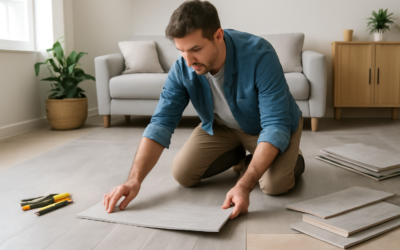
Most COREtec LVT installs as a floating click-lock floor, which makes it accessible to capable DIYers and allows installation over many existing hard surfaces, provided the subfloor is clean, dry, and flat within the manufacturer’s tolerance. Because the rigid core resists movement, COREtec handles temperature changes better than flexible vinyl. Over concrete you may still need a vapor barrier, and you should always follow the manufacturer’s expansion-gap and sunlight guidance.
The Pros
- Fully waterproof core suitable for any room in the house.
- Comfortable and quiet underfoot thanks to the attached underlayment.
- Durable wear layer resists scratches, scuffs, and dents.
- Realistic wood and stone visuals with deep texture.
- DIY-friendly floating click-lock installation.
- Backed by Shaw, an established manufacturer with broad warranty coverage.
The Cons
- Higher cost than budget LVT and most laminate.
- Not real wood or stone, so it cannot be refinished and close inspection reveals it is vinyl.
- Subfloor prep matters, as flaws can cause clicking or telegraph over time.
- Sustained, intense direct sunlight should be managed per manufacturer guidance.
What to Expect on Price
As a general guide, rigid-core luxury vinyl like COREtec typically falls in the range of $3 to $8 per square foot for materials, depending on the collection, wear-layer thickness, and plank or tile size, with professional installation adding roughly $2 to $4 per square foot. Final pricing varies by region and retailer, so treat any specific quote from an authorized dealer as the authority, and confirm current pricing and warranty terms before buying.
Is COREtec LVT Right for You?
If you want a waterproof floor that looks convincingly like wood or stone, feels comfortable and quiet underfoot, and stands up to kids, pets, and spills, COREtec LVT is a strong choice, especially for kitchens, baths, and basements where moisture rules out natural materials. Budget shoppers can find cheaper rigid-core vinyl, but they typically give up wear-layer thickness and visual realism. For a long-term floor in a busy home, COREtec’s durability and waterproof performance often justify the price.
Reading the Wear Layer
The single most important spec when comparing COREtec products, or any LVT, is the wear layer, the clear protective top coat measured in mils. A thicker wear layer resists scratches, scuffs, and traffic wear longer. As a rough guide, 6 to 12 mil suits light residential use, 12 to 20 mil handles busy households with kids and pets, and 20 mil and above is built for heavy traffic. COREtec’s premium collections carry thicker wear layers, which is much of what you pay for at the higher tiers. Match the wear layer to your household rather than chasing the lowest price.
Comparing COREtec to Other Vinyl
Not all luxury vinyl is rigid core. Flexible glue-down LVT is thinner, bonds directly to the subfloor, and can telegraph imperfections, but it lies very flat and is repairable plank by plank. WPC (wood-plastic composite) cores are softer and warmer underfoot, while SPC (stone-plastic composite) cores are denser and more dent-resistant. COREtec’s rigid-core construction with attached underlayment aims to combine the stability of a stiff core with the comfort of a built-in pad. Knowing these categories helps you compare COREtec fairly against competing brands at the showroom.
Maintenance and Longevity
COREtec LVT is low-maintenance by design. Sweep or vacuum to keep grit off the surface, and damp-mop with a manufacturer-approved cleaner, skipping wax, polish, and abrasives that can dull the finish. Use felt pads under furniture, mats at entries, and a chair mat under rolling chairs. Avoid dragging heavy appliances across the floor, and follow the manufacturer’s guidance on steam mops and intense direct sunlight. Cared for this way, a quality COREtec floor easily lasts well over a decade, and individual planks in a click-lock floor can be replaced if one is ever damaged.
Prefer to explore on your own?
See how new flooring looks in your actual room in seconds — free, no signup.
Try the free Floor Studio →