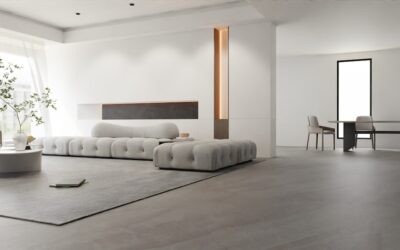
If you love the look of stone or ceramic but dread cold, hard, grout-lined floors, LVT tile may be the upgrade you have been waiting for. Luxury vinyl tile delivers a remarkably convincing stone, slate, or concrete appearance with a softer, warmer feel underfoot, full waterproofing, and a price that undercuts real tile. It has become one of the fastest-growing flooring categories in American homes, and once you understand how it is built, it is easy to see why.
Part of our Tile & Grout guide — explore the full guide →
What Exactly Is LVT Tile
LVT stands for luxury vinyl tile. It is a multi-layer flooring product made primarily of PVC vinyl, cut into tile-shaped planks or squares that mimic natural stone and ceramic. Each piece is built in layers: a backing layer for stability, a core for rigidity, a high-resolution printed design layer, and a clear wear layer on top that handles foot traffic. The closely related product, LVP, uses the same construction but is shaped and printed to look like wood planks. When the design imitates tile or stone, the industry calls it LVT.
How LVT Tile Compares to Real Tile and Laminate
Ceramic and porcelain tile are harder and more heat-resistant, but they are cold, unforgiving if you drop a glass, and require grout that stains and needs sealing. LVT is fully waterproof, warmer underfoot, quieter, and far more comfortable to stand on. Against laminate, the big difference is water: laminate has a fiberboard core that swells if water sits on it, while LVT shrugs off spills, making it the better pick for kitchens, bathrooms, and basements.
- vs. Ceramic tile: LVT is softer, warmer, and easier to install, though it will not match tile’s hardness or longevity.
- vs. Laminate: LVT is waterproof; laminate generally is not.
- vs. Sheet vinyl: LVT looks far more realistic and individual tiles can be replaced if damaged.
Understanding the Wear Layer
The wear layer is the single most important spec when shopping for LVT, because it determines how long the floor survives daily abuse. It is measured in mils (thousandths of an inch). Use this as a rough guide:
- 6 to 12 mil: Light residential traffic, such as a guest bedroom.
- 12 to 20 mil: Busy households with kids and pets.
- 20 mil and up: Heavy residential or light commercial use.
Pay more attention to wear layer thickness than to the overall plank thickness when comparing products at the same price point.
Installation Methods
LVT comes in several installation formats, and the right one depends on your subfloor and skill level:
- Click-lock (floating): Planks snap together and float over the subfloor. The most DIY-friendly option and the easiest to replace later.
- Glue-down: Each piece is adhered to the subfloor with adhesive. More stable underfoot and common in high-traffic and commercial settings, but messier to install.
- Loose-lay: Heavy backing holds tiles in place by friction with minimal adhesive. Fast to install and easy to lift.
For glue-down or click-lock LVT to perform well, the subfloor must be clean, dry, and flat within the manufacturer’s tolerance, usually no more than about 3/16 inch of variation over 10 feet. Skipping subfloor prep is the most common cause of failed installations.
What LVT Tile Costs
Material pricing typically runs from about $2 to $7 per square foot, with premium rigid-core products with thick wear layers at the higher end. Professional installation usually adds roughly $1.50 to $4 per square foot depending on your region and the method. A click-lock floor is the friendliest to a DIY budget, since the labor savings are significant and the learning curve is gentle.
Pros and Cons to Weigh
On the plus side, LVT is waterproof, comfortable, quiet, durable, and easy to maintain with just sweeping and damp mopping. It installs over many existing floors and resists scratches and dents better than most softwoods. On the downside, it is a petroleum-based product that can fade in strong direct sunlight, heavy furniture can leave dents without floor protectors, and while individual tiles can sometimes be replaced, deep gouges in the wear layer cannot be refinished the way solid wood can.
Rigid Core Versus Flexible LVT
Within the LVT category, the core construction is a major dividing line worth understanding. Flexible glue-down LVT is thin and conforms to the subfloor, which means it telegraphs any imperfections beneath it, so the subfloor must be very flat. Rigid-core LVT, which includes SPC (stone-plastic composite) and WPC (wood-plastic composite), has a dense, dimensionally stable core that floats over the subfloor and hides minor unevenness far better. SPC is harder and more impact-resistant, while WPC is a touch warmer and softer underfoot. For most click-lock floating installations over an imperfect subfloor, a rigid-core product is the more forgiving and durable choice, which is why it has surged in popularity.
Maintenance and Longevity
One of LVT’s biggest selling points is how little it asks of you. Day-to-day care is just sweeping or vacuuming to keep grit from scratching the wear layer, plus the occasional damp mop with a cleaner made for vinyl floors. Skip steam mops and abrasive scrubbers, which can damage the surface over time, and avoid wax or polish, since LVT does not need it and buildup can dull the finish. Use felt pads under furniture legs and a doormat at entries to trap grit. With reasonable care and an adequate wear layer for your traffic, a quality LVT floor can last 15 to 20 years or more, and individual planks in a glue-down or loose-lay install can be swapped if one ever gets badly damaged.
Is LVT Tile Right for Your Home
For a homeowner who wants the stone-and-tile aesthetic with waterproof durability, warmth underfoot, and a manageable budget, LVT tile is one of the smartest flooring choices available. Focus your shopping on a thick wear layer, choose the installation method that matches your subfloor and confidence level, and prep that subfloor properly. Do those three things and an LVT floor will look great and hold up for many years.
Prefer to explore on your own?
See how new flooring looks in your actual room in seconds — free, no signup.
Try the free Floor Studio →