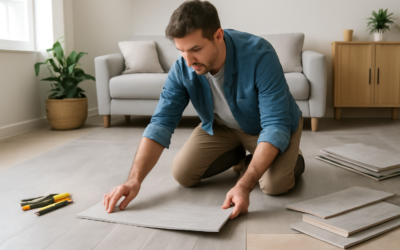
The vinyl tile category exploded from a $1.2 billion market in 2015 to over $9 billion in 2025, which is why the question how much is LVT flooring now has wildly different answers depending on the tier you’re shopping. Builder-grade glue-down LVT runs $1.29 per square foot at Floor & Decor, while a designer rigid-core LVT from Karndean LooseLay can hit $7.50 per square foot before installation. Add labor and most homeowners land between $4 and $11 per square foot installed, with the sweet spot for residential remodels around $5.50.
Material Pricing by Tier
Entry-level flexible LVT (2mm to 3mm thick, 6 to 8 mil wear layer) sells for $1.29 to $2.29 per square foot. This is glue-down product designed for landlords and commercial fit-outs. Mid-tier rigid-core SPC and WPC products (5mm to 8mm, 12 to 22 mil wear layer) run $2.99 to $5.49. Premium designer LVT with painted bevels, embossed-in-register textures, and 28 to 30 mil wear layers tops out at $6.50 to $8 per square foot.
Karndean Korlok, Amtico Signature, COREtec Stone, and Mannington Adura Max sit at the premium end. Shaw Floorte Pro, Mohawk SolidTech, and Pergo Extreme cover the mid-tier. NuCore from Floor & Decor and TrafficMaster from Home Depot dominate the budget category.
Installation Costs
Click-lock LVT installation runs $2.50 to $4.50 per square foot in labor. Glue-down LVT costs slightly more at $3 to $5 per square foot because of substrate prep requirements. Pattern installs (herringbone, basketweave, mixed-width) add 20 to 40 percent to labor. Stairs run $50 to $90 per tread including risers.
Subfloor prep is the budget killer most homeowners underestimate. Skim coating an uneven concrete slab with Mapei Self-Leveler Plus adds $1.25 to $2.50 per square foot. Removing existing vinyl with adhesive backing can add another $1 to $2. A complete 1,200-square-foot install with skim coat and removal can hit $11,000 even with mid-tier materials.
What the Wear Layer Actually Means
The wear layer is the clear urethane top film that protects the printed image below. Measured in mils (thousandths of an inch), it determines how long the floor resists scratches and abrasion. A 6-mil wear layer is meant for closets and guest rooms. 12 mil works for typical residential traffic. 20 to 22 mil handles dogs and busy households. 28 to 30 mil is light commercial spec — restaurants, retail, and waiting rooms.
Don’t confuse total plank thickness with wear layer. A 5mm SPC plank with a 6-mil wear layer is worse for daily use than a 4mm plank with a 22-mil wear layer. The wear layer is the only number that matters for surface durability.
Pros of LVT Versus Other Floors
LVT is 100 percent waterproof in the rigid-core formats, which is why it’s overtaken laminate in kitchens, bathrooms, and basements. The click-lock systems install over almost any flat hard surface, so you can lay it over old tile, sheet vinyl, or hardwood without demo. A typical 1,500-square-foot DIY install is a 2-day weekend project for someone comfortable with a miter saw.
Maintenance is minimal — a Bona Pro Hard Surface Cleaner and a microfiber mop is all you need. No waxing, no refinishing, no special humidity control. The rigid-core formats also dampen sound better than laminate, especially with a 1mm IXPE attached pad meeting IIC 51 acoustic ratings.
Cons to Know Before You Buy
LVT cannot be refinished. When the wear layer scratches through, you replace the plank or live with it. Heavy furniture (refrigerators, pianos, gun safes) can indent the surface, especially in WPC products with softer foam cores. Use furniture sliders or 2-inch felt pads under all heavy loads.
Sunlight fading is real on cheaper products. Spec a UV-cured urethane wear layer with a minimum 10-year fade warranty if you’re flooring a south-facing sunroom. Off-gassing has improved with FloorScore certification, but new installs benefit from 48 to 72 hours of ventilation before sensitive occupants move in.
How Much is LVT Flooring vs Hardwood and Laminate
Mid-tier LVT installed runs $5 to $7 per square foot. Mid-tier laminate runs $4 to $6. Engineered hardwood runs $7 to $11. Solid site-finished oak runs $10 to $16. LVT lands above laminate but well below hardwood, with the durability advantage of being waterproof.
For a 1,500-square-foot home, that math works out to roughly $8,250 to $10,500 in LVT versus $13,500 to $24,000 in hardwood. The resale impact favors hardwood in higher-end neighborhoods, but in mid-market homes the buyer rarely pays a premium for hardwood over a good LVT install.
Smart Shopping Strategy
Get three samples of each candidate product. Lay them in the actual room under both natural and artificial light for 48 hours before committing. Scratch the wear layer with a key (it should leave no visible mark). Drop a wine glass to test sound transmission. Bend the plank to confirm the locking edge doesn’t crack.
- Confirm FloorScore certification for low VOC emissions
- Verify a minimum 15-year residential warranty
- Order 10 percent extra for cuts and future repairs
- Check the production date — fresh stock from the last 12 months ensures dye lot consistency
Regional Pricing Variation
LVT installation costs vary by region more than most flooring categories. Coastal metros (San Francisco, New York, Boston, Seattle) run 20 to 35 percent above the national average. Texas, Florida, and Tennessee markets typically price 10 to 15 percent below average. The variation comes from labor rates rather than material costs, which are nationally consistent through manufacturer distribution channels.
Get three quotes from local installers and compare to online pricing from Floor & Decor, Lumber Liquidators, and Wayfair. The material spread is usually under 10 percent across retailers, while labor quotes can vary by 40 percent for identical work. The right move is buying material from the lowest-priced reputable source and hiring labor separately from a credentialed local installer.
Bottom Line on LVT Pricing
Plan on $5,000 to $8,000 for a 1,000-square-foot LVT install at the mid-tier with quality materials and professional labor. Going DIY drops that to $2,500 to $4,000. The single biggest mistake homeowners make is buying the thickest plank with the thinnest wear layer because the sales tag emphasizes total thickness. Spend on the wear layer first — your knees, dog, and resale value will all thank you.
Prefer to explore on your own?
See how new flooring looks in your actual room in seconds — free, no signup.
Try the free Floor Studio →