Pick the wrong pairing and a kitchen fights itself. The smartest countertops and backsplash combinations follow one quiet rule that pros use on every job: when one surface is busy, the other stays calm. A dramatic, heavily veined countertop wants a simple backsplash that lets it breathe, while a plain solid counter can carry a bolder tile. Get that balance right and the two surfaces read as one cohesive design instead of two materials competing for attention across your stove.
Part of our Countertops guide — explore the full guide →
The One Rule That Solves Most Kitchens
Before you fall down a sample rabbit hole, internalize the busy-versus-calm principle. Look at your countertop honestly. Does it have heavy movement, like a bold marble or a dramatic quartzite? Then your backsplash should be quiet, a solid subway tile or a soft solid slab. Is the counter a near-solid color, like a plain white or black quartz? Now you have room to play with a patterned tile, a mosaic, or a textured stone.
Trying to make both surfaces the star almost always backfires. Two strong patterns in a small space create visual chaos that you cannot un-see once it is installed.
Pairings That Reliably Work
Some combinations are popular because they simply look good across many kitchens. Use these as starting points:
- White quartz counter + white subway tile: The timeless, can’t-miss combo. Add a contrasting grout to give it definition.
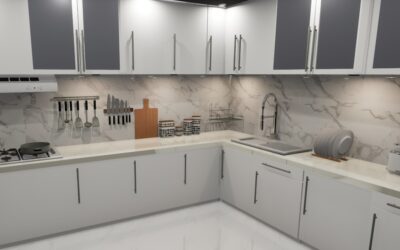
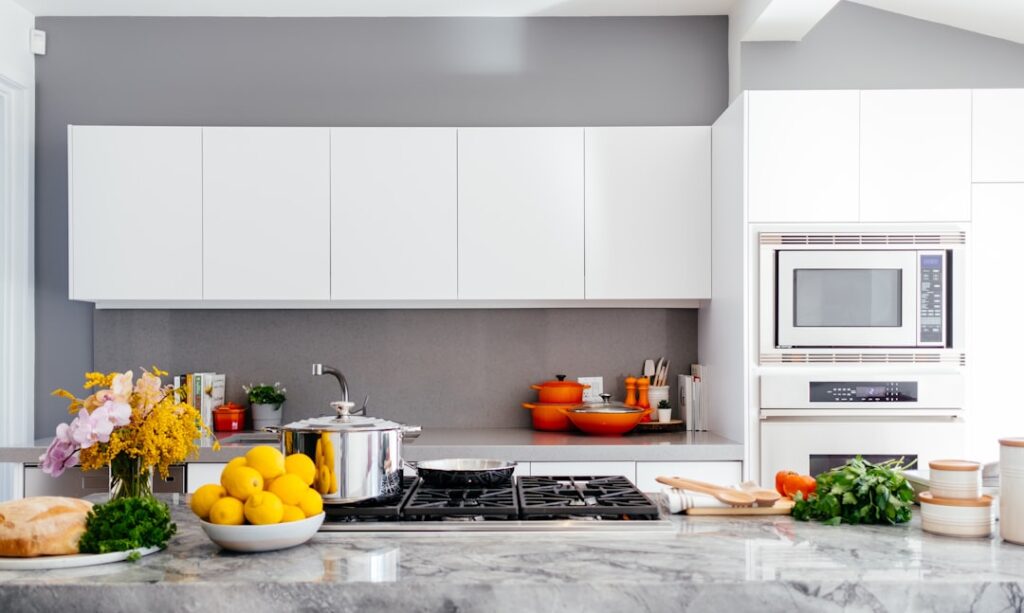
- Veined marble-look quartz + simple solid backsplash: Let the counter’s movement carry the room.
- Solid black or charcoal counter + white or zellige tile: High contrast that feels crisp and modern.
- Butcher block or wood counter + white or green tile: Warm and farmhouse-friendly.
- Full-height slab backsplash matching the counter: A seamless, luxe look where the countertop material runs up the wall.
Coordinating Color the Smart Way
You do not want a perfect match; you want a deliberate relationship. Pulling one color from the countertop and echoing it in the backsplash ties the two together without making them identical. If your quartz has gray veining, a soft gray tile or gray grout picks up that thread and makes the pairing feel planned.
Decide on warm versus cool early and stay consistent. A warm, creamy counter pairs with warm whites and beiges; a cool gray-white counter wants cool whites and grays. Mixing warm and cool undertones is the subtle mistake that makes a kitchen feel slightly off even when every individual piece is nice.
Don’t Forget Finish and Texture
Color gets all the attention, but finish quietly shapes the whole look. A high-gloss polished counter next to a glossy tile can feel slick and one-note; pairing a polished counter with a matte or honed tile adds welcome depth. Texture works the same way. A flat quartz counter comes alive against a dimensional tile, like a handmade zellige or a fluted stone, because the contrast gives the eye something to read.
Think about light too. Glossy surfaces bounce light and brighten a dark kitchen; matte surfaces hide fingerprints and water spots, which is a real advantage behind a busy cooktop.
Matching to Your Cabinets
The counter and backsplash never live in a vacuum, so factor in the cabinets before you commit:
- White cabinets: The most flexible. Almost any counter-and-tile pairing works, so let the other elements lead.
- Dark or navy cabinets: A light counter and light backsplash keep the room from feeling heavy.
- Wood-tone cabinets: Warm-toned counters and tiles complement the wood; cool grays can clash.
- Two-tone cabinets: Keep the counter and backsplash simple so the cabinets stay the focal point.
Budget-Smart Strategies
You can get a high-end look without spending on two premium materials. Put your money into one statement surface and keep the other affordable. A modest white quartz counter paired with an inexpensive but well-laid subway tile looks fantastic, and you can splurge on a single decorative tile band or a small mosaic accent behind the range for a custom touch.
Full-height slab backsplashes cost more in material and fabrication but eliminate grout lines and the cleaning they require, which can be worth it behind a cooktop. If you love a pricey tile, use it as a focal accent and run a cheaper coordinating tile across the rest of the wall.
Combinations to Approach With Caution
A few pairings cause trouble more often than not. Two heavily patterned surfaces, like a bold veined marble counter under a busy mosaic backsplash, fight each other and make a kitchen feel restless. Matching a warm-toned counter with a cool-toned tile (or vice versa) creates that subtle off feeling even when each piece is attractive on its own. And a super-trendy tile paired with an equally trendy counter can date the whole kitchen at once when the trend passes.
The fix in every case is restraint. Let one surface lead, keep the undertones consistent, and pair at least one timeless element with anything bold so the kitchen ages well.
Practical Factors Beyond Looks
Beauty is only half the decision; the surfaces have to work behind a cooktop and sink. Consider how each pairing cleans. A glossy tile wipes grease easily but shows water spots; a textured zellige hides spots but traps grime in its grooves. Grout color matters too, light grout looks crisp but stains, while a slightly darker grout stays clean-looking for years. A full-height slab backsplash eliminates grout entirely behind the range, which is a genuine maintenance win in the messiest zone of the kitchen.
Sampling Before You Commit
Never finalize a pairing from a screen or a tiny showroom chip. Bring large samples home and tape them up where they will actually live, then look at them in morning light, evening light, and under your own kitchen bulbs. Colors shift dramatically across lighting conditions, and the combo that wowed you in the store can fall flat at home. Live with the samples for a few days. The right countertops and backsplash combinations should still please you on day three, not just in the first excited glance.