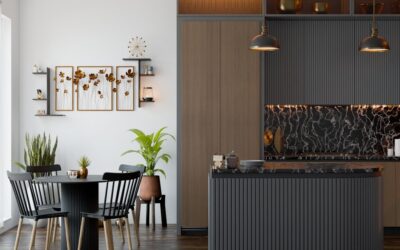
The single fastest way to make a kitchen look thrown together is to choose a busy stone counter and an equally busy tile wall that argue with each other. Coordinating your kitchen countertops and backsplash is really an exercise in balance: one surface leads, the other supports. Get that relationship right and the two read as a single, intentional design instead of two showrooms colliding. This guide walks through the decisions that make the pairing look professional.
Part of our Countertops guide — explore the full guide →
- Matching vs Contrasting: Pick a Lead
- Reliable Material Pairings
- Color and Undertone Coordination
- Grout: The Detail People Forget
- Handling the Transition and Height
- Behind the Range and Focal Points
- Practical Considerations
- Coordinating With Cabinets and Flooring
- Budgeting the Two Together
- Putting It All Together
Matching vs Contrasting: Pick a Lead
Before you shop, decide which surface will be the star. If your countertop has bold veining or dramatic movement, let it dominate and keep the backsplash quiet. If your counter is calm and solid, the backsplash can carry the visual interest with color, pattern, or texture.
- Matching approach: run the same stone up the wall as a slab backsplash for a seamless, high-end look. Great for showcasing a beautiful material.
- Contrasting approach: pair a busy counter with a simple tile, or a plain counter with a statement tile. This is the most forgiving path for most kitchens.
The rule of thumb: only one surface should be loud. Two quiet surfaces read as elegant; two loud ones read as chaotic.
Reliable Material Pairings
Certain combinations work again and again because they balance tone and texture.
- White or gray quartz + classic white subway tile: the timeless, resale-friendly default.
- Heavily veined marble-look quartz + solid neutral tile: lets the counter’s movement breathe.
- Butcher block + colorful ceramic or zellige tile: warm wood pairs beautifully with hand-glazed color.
- Dark granite + light, glossy backsplash: the contrast keeps a dark counter from feeling heavy.
- Concrete or soapstone + matte natural stone tile: an earthy, cohesive, modern-rustic look.
When in doubt, pull one accent color from the countertop and echo it in the backsplash grout or tile. That single repeated note ties everything together.
Color and Undertone Coordination
Undertones make or break a pairing. A cool gray quartz next to a warm cream tile can look muddy under kitchen lighting. Hold physical samples together in your actual kitchen light, both daylight and at night, before committing. Grays lean blue, green, or violet; whites lean warm or cool. Match undertones across your kitchen countertops and backsplash, cabinets, and flooring so the whole room shares a temperature.
Grout: The Detail People Forget
Grout color quietly controls how a backsplash reads. A matching grout makes the wall feel like one smooth field and recedes behind the counter. A contrasting grout, like charcoal against white tile, turns the pattern into a graphic feature. If your counter is the star, choose a low-contrast grout so the tile stays calm. If the tile is the star, a defined grout line can sharpen it.
Handling the Transition and Height
The seam where counter meets backsplash deserves attention. Two common approaches:
- Standard 4-inch backsplash of counter material: a short lip of the same stone, then paint or tile above. Budget-friendly and easy to clean, though it can date a kitchen.
- Full-height tile to the upper cabinets: tile runs from the countertop all the way up, giving a clean, modern, splash-proof wall. This is the current favorite for most remodels.
Where the tile meets the counter, most installs simply run tile down to the countertop and seal the joint with a color-matched flexible caulk rather than grout. That flexible line absorbs the slight movement between the two surfaces and prevents cracking.
Behind the Range and Focal Points
The wall behind the cooktop is a natural spot for a focal accent, like a framed panel of patterned tile or a herringbone inset. Keep the rest of the backsplash simple so this moment stands out. Make sure any accent still coordinates with the counter’s undertone; a focal point should feel planned, not random.
Practical Considerations
Design is only half the job. Think about maintenance too. Natural stone counters and backsplashes usually need periodic sealing. Glossy tile wipes clean easily behind a stove, while heavily textured stone or unglazed tile can trap grease. Match the finish to how hard you cook. A glass or ceramic backsplash near the range is far easier to degrease than a porous natural surface.
Coordinating With Cabinets and Flooring
Counters and backsplash never live in isolation, so the pairing has to sit comfortably with the cabinets and floor, too. A useful framework is the sixty-thirty-ten split: let one element dominate the room, a second play a strong supporting role, and a third serve as the accent. If your cabinets are the dominant white or wood tone, your countertop becomes the secondary player and the backsplash the accent that ties in a hint of color. When the cabinets are bold, keep both counter and tile calmer so the room does not fight itself.
Repeat a material or tone across at least two surfaces to create rhythm. Warm wood floors, for instance, love a butcher-block counter or a backsplash with warm undertones, while cool gray flooring pairs naturally with cooler stone. That intentional echo is what makes a kitchen feel designed rather than assembled from separate showroom picks.
Budgeting the Two Together
Treating the counter and backsplash as one budget line helps you spend where it counts. Slab counters and full-height slab backsplashes are the priciest, while tile backsplashes let you get a designer look for less by pairing a modest counter with an eye-catching tile. If money is tight, splurge on the surface people touch and see most, usually the countertop, and choose an affordable coordinating tile. Conversely, a beautiful statement tile can dress up an economical solid-color counter, stretching your dollars while still looking custom.
- Save: pair a budget quartz or laminate counter with a striking but inexpensive ceramic tile.
- Splurge: run a dramatic natural stone up the wall as a slab backsplash for a seamless, luxe result.
- Balance: mid-range quartz counter with a classic tile that will not date, protecting resale value.
Putting It All Together
Start with the piece you love most, whether that is a striking slab or a special tile, and build the rest around it as the supporting cast. Let one surface lead, coordinate undertones, choose grout deliberately, and plan a clean transition with flexible caulk at the joint. Do that and your kitchen countertops and backsplash will look like they were designed together from the first sketch, giving the whole kitchen a finished, cohesive feel that holds up for years. Before you commit, live with your two chosen samples propped up in the kitchen for a few days, viewing them under morning light, evening lamps, and the actual bulbs you use over the counter. Undertones and sheen can shift dramatically between a showroom and your own space, and this simple patience step catches mismatches while they are still easy and free to change.