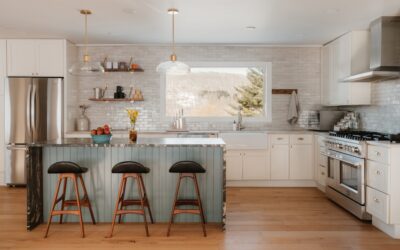
The backsplash is the one place in a kitchen where you can take a real design risk without committing to it on every wall. The best tile backsplash designs protect your wall from splashes and grease while becoming the visual anchor that ties countertops, cabinets, and flooring together. With dozens of materials, layouts, and color options, the choices can feel overwhelming, so this guide breaks them into the decisions that actually shape the final look.
Part of our Kitchen Remodeling guide — explore the full guide →
- Classic Subway Tile
- Mosaic and Glass Designs
- Pattern-Driven Layouts
- Material Choices and Their Trade-offs
- Color and Coordination
- Full-Height and Statement Backsplashes
- Cost and Installation Notes
- Grout: The Detail That Makes or Breaks It
- Backsplash Designs for Bathrooms
- Maintenance and Longevity
- Choosing the Right Design for Your Kitchen
Classic Subway Tile
Subway tile earned its popularity for good reason: the 3 by 6 inch rectangular format is timeless, affordable, and flexible. Laid in the traditional brick offset, it reads clean and familiar; turned vertically or stacked in a straight grid, the same tile feels distinctly modern.
Want more interest without straying from a safe bet? Choose a contrasting grout, charcoal grout against white tile draws every line and turns a basic install into a graphic statement. Beveled-edge subway tiles add subtle dimension and catch the light.
Mosaic and Glass Designs
Mosaic tiles, small pieces mounted on mesh sheets, bring texture, sparkle, and color that larger tiles cannot. Glass mosaics reflect light to brighten a kitchen, while stone and marble mosaics lend an organic, upscale feel. Because the sheets handle the spacing for you, mosaics are surprisingly DIY-friendly for a small backsplash.
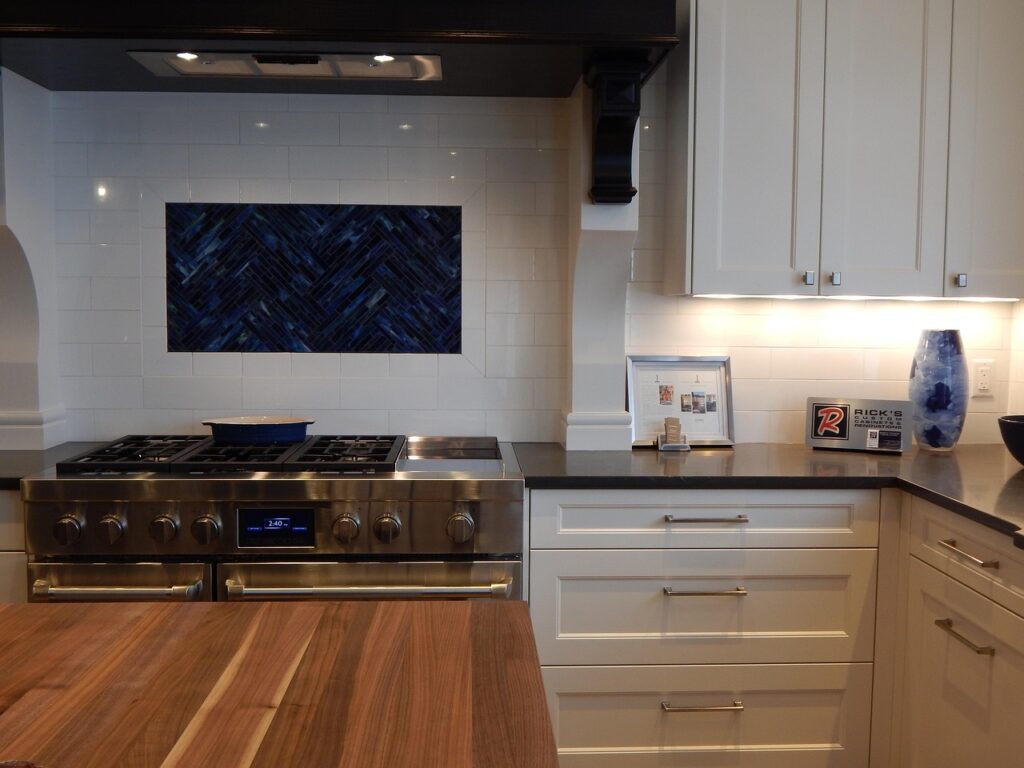
A popular approach is using mosaic as a focal accent, a band behind the range or cooktop, framed by a simpler field tile elsewhere. This concentrates the cost and the drama where the eye lands first.
Pattern-Driven Layouts
The same tile reads completely differently depending on how you set it. Layout is one of the easiest ways to add personality:
- Herringbone: angled, dynamic, and elegant, works beautifully with subway or plank tiles
- Chevron: a crisp V-pattern for a bolder, more contemporary statement
- Vertical stack: clean lines that make a low backsplash feel taller
- Basketweave: a vintage, textured look popular in classic and farmhouse kitchens
- Diagonal: sets a simple square tile on point for movement
Pattern lets a budget tile punch above its price, so do not overlook layout when planning the design.
Material Choices and Their Trade-offs
Material drives durability, maintenance, and cost. Ceramic and porcelain are the practical favorites, affordable, water-resistant, and easy to wipe down. Natural stone like marble and travertine is gorgeous but porous, so it needs sealing and is less forgiving of acidic spills near a cooking zone.
Glass tile is nonporous and stain-resistant, ideal behind a sink or stove, while metal and mixed-material tiles add an industrial or contemporary edge. Match the material to how hard that section of wall will work.
Color and Coordination
A backsplash should converse with the rest of the kitchen, not shout over it. A safe, lasting approach is to keep the field tile neutral and let your countertop or cabinets provide the color, or vice versa. If your counters are busy granite, a quiet backsplash calms the room; if your counters are plain, the backsplash can carry the personality.
Pull one accent color from the room, a cabinet hardware finish, a pendant light, the flooring, and echo it in the tile or grout to make the whole space feel intentional and connected.
Full-Height and Statement Backsplashes
The trend of running tile from counter to ceiling, or up the full wall behind a range, makes a dramatic, high-end statement. A slab or large-format backsplash with minimal grout lines feels sleek and is easier to clean, while a full-height patterned tile turns the wall into the room’s focal point.
Full-height designs cost more in material and labor, so many homeowners reserve them for the range wall and use a standard height elsewhere to balance the budget.
Cost and Installation Notes
Backsplash material runs anywhere from $2 per square foot for basic ceramic to $25 or more for premium glass, marble, or handmade tile. A typical kitchen backsplash uses 30 to 40 square feet. Professional installation adds $8 to $15 per square foot, though a straightforward subway or mosaic job is a realistic weekend DIY project for a confident homeowner.
Whatever you choose, invest in quality grout and seal natural stone, since the grout lines and porous materials are where a backsplash shows its age fastest.
Grout: The Detail That Makes or Breaks It
Grout is easy to ignore at the planning stage and impossible to ignore once it is installed. Color choice dramatically changes the look: matching grout makes the tile read as one smooth surface, while contrasting grout highlights every tile and emphasizes the pattern. White grout looks crisp but stains near a cooking zone, so many homeowners choose a light gray that hides grime.
For durability, consider epoxy grout in high-splash areas; it resists stains and water far better than standard cement grout, though it costs more and is trickier to install. Whatever you choose, sealing cement grout after installation keeps it from discoloring over time.
Backsplash Designs for Bathrooms
Backsplashes are not just for kitchens. Behind a bathroom vanity, a tile backsplash protects the wall from water and toothpaste splatter while adding a designer touch. The same materials apply, though bathrooms often invite a bit more glamour, marble mosaic, glossy glass, or a bold pattern that the smaller space can carry.
A simple band of tile a few inches above the vanity is the budget approach, while running tile up to the mirror or full height makes a stronger statement. Pull the color from your bathroom floor tile or fixtures to keep the room cohesive.
Maintenance and Longevity
A backsplash is one of the lowest-maintenance surfaces in the kitchen, but a little care keeps it looking new. Wipe glazed ceramic, porcelain, and glass with a damp cloth and mild cleaner; their nonporous surfaces shrug off grease and splatter. Avoid abrasive pads on glossy or metallic tiles, which can dull the finish over time.
Natural stone needs more attention, reseal marble and travertine periodically and wipe spills promptly, since acids like lemon juice and vinegar can etch the surface. The grout lines are where most aging shows, so a yearly scrub and reseal of cement grout keeps the whole backsplash crisp for a decade or more.
Choosing the Right Design for Your Kitchen
The best tile backsplash designs balance looks, durability, and budget for your specific space. Start with how bold you want to go, pick a material suited to the wall’s workload, then use layout, color, and height to dial in the personality. Whether you land on timeless white subway or a dramatic full-height herringbone, a well-chosen backsplash protects your walls and gives the whole kitchen a finished, designed feel.
Prefer to explore on your own?
See how new flooring looks in your actual room in seconds — free, no signup.
Try the free Floor Studio →