
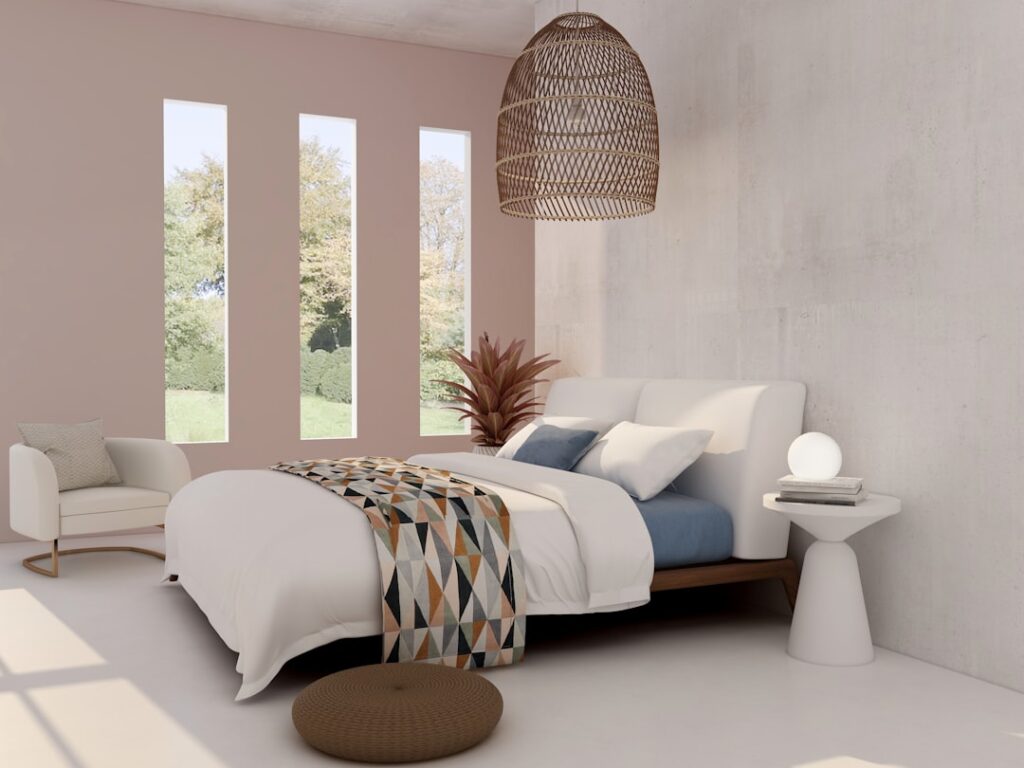
Dark blue is the rare paint color that makes a bedroom feel both bigger and more intimate at the same time. Where bright white walls glare under morning sun and beige walls feel dated by year three, a well-chosen dark blue bedroom walls color reads sophisticated, deepens the apparent ceiling height, and lends itself beautifully to both modern and traditional furniture. The risk is that the wrong shade or the wrong lighting plan turns the room into a cave that fights you every time you walk in. Choosing the shade, planning the lighting, and pairing the finishes well is what makes the difference between a refined retreat and a regretted weekend.
Why Dark Blue Works in a Bedroom
Color psychology research consistently shows blue tones lower heart rate and slow breathing, which is exactly what you want in the room dedicated to sleep. Dark blues amplify this effect by reducing the overall light bouncing back into your eyes, which signals to your circadian rhythm that the day is winding down.
Dark blue also forgives. Where black walls show every fingerprint and white walls show every scuff, navy and slate-blue hues hide minor damage. The walls look fresh longer between repaints, often holding their color for 6 to 10 years before needing a touch-up.
The Five Shades Worth Considering
Not every blue reads the same. Pick the wrong undertone and the room turns into a moody mistake.
- Benjamin Moore Hale Navy (HC-154): Classic navy with subtle green undertone, the safest first choice
- Sherwin-Williams Naval (SW 6244): Slightly cooler navy, pairs beautifully with brass and warm wood
- Farrow & Ball Hague Blue (No. 30): Rich teal-navy with depth, magazine-worthy results in a bedroom
- Benjamin Moore Old Navy (2063-10): Almost black-blue, dramatic and intimate
- Sherwin-Williams Inkwell (SW 6992): Near-black blue for maximum drama
Always buy a sample pot and paint a 2×2 foot patch on at least two different walls. Blue shifts dramatically based on natural light direction. North-facing rooms cool the color further. South-facing rooms warm it slightly. The same paint looks different in every room of the house.
Lighting Plan Is Non-Negotiable
Dark walls absorb light. A bedroom that worked fine with one ceiling fixture in white walls will feel oppressive in dark navy. Plan for layered lighting before the painters arrive.
The minimum setup is one ceiling fixture, two bedside table lamps, and one floor lamp or accent fixture. The total lumen output should land between 1500 and 2500 lumens for a 12×14 foot bedroom in dark blue, compared to 1200 to 1800 lumens for the same room in lighter colors. Use 2700K to 3000K warm white bulbs to keep the room feeling intimate without the cold cast that 4000K creates.
Ceiling Choices That Match
The ceiling decision is where most homeowners freeze. Three approaches all work, each producing a different mood.
- Crisp white ceiling: The safe choice, lifts the ceiling visually and balances the dark walls
- Match the wall color: Dramatic, creates a cocoon effect, makes the room feel cozy
- Paint the ceiling a lighter blue: 50% of the wall color for a graduated effect
For ceilings under 8 feet tall, stick with white. For 9-foot or taller ceilings, painting the ceiling the same color as the walls works beautifully and adds significant drama. Ceiling color is more forgiving than walls because you rarely see it directly under task lighting.
Trim, Doors, and Window Frames
White trim against dark blue walls is the classic move because it provides crisp contrast and lets the architectural details stand out. Benjamin Moore Simply White or Sherwin-Williams Pure White in a semi-gloss finish handles fingerprints and looks bright against any dark wall color.
For a more modern look, paint the trim the same color as the walls. The room reads as one continuous surface without the frame of white trim interrupting the geometry. This works particularly well with shaker-style doors and simple baseboards. Skip this approach if the trim has heavy ornate detail, which gets lost in monochrome.
Furniture Pairings That Look Intentional
Natural wood pops against dark blue. Light oak, white oak, and natural maple read warm and balanced against navy walls. Walnut and walnut-stained pieces look elegant and traditional. Painted white or cream furniture creates strong contrast that can feel either crisp or stark depending on the rest of the room.
Brass and warm metals work better than chrome or nickel against blue walls. A brass pendant fixture or brass-framed mirror anchors the room and warms up the cool tones. Black furniture risks turning the room oppressive unless the room has plenty of natural light.
Textiles That Soften the Look
Dark walls absorb light, but the right bedding bounces it back. Cream, white, soft sage green, blush pink, and warm beige bedding all pair beautifully with navy walls without competing for attention. A linen duvet in oatmeal or cream is the most-requested look in interior design portfolios for a reason.
Layer textures rather than colors. A linen duvet, a chunky wool throw, a velvet pillow, and a smooth cotton sheet add visual depth without introducing color noise. The walls do enough work on the color side. Let the textiles bring softness and warmth.
Common Mistakes to Avoid
Several pitfalls show up in dark blue bedrooms that homeowners regret within a year.
- Skipping the primer: Dark blue requires a tinted gray primer for proper coverage
- Choosing flat finish: Eggshell or matte finish hides imperfections better and cleans easily
- Forgetting about light: Dark walls double the light fixture requirement
- Painting all four walls plus the ceiling without testing: Always do a sample wall first
- Pairing with dark furniture and dark floors: Creates a cave effect that fights the room’s purpose
Test the color, light the room properly, and pair with light bedding and at least some warm wood furniture. Following just these basics produces a bedroom that looks like it came out of a design magazine.
Budget for a 12×14 Foot Bedroom
Two coats of premium paint plus a tinted primer covers a 12×14 foot bedroom for about $200 to $300 in materials, assuming Benjamin Moore Aura or Sherwin-Williams Emerald at $80 to $90 per gallon. A professional painter charges $600 to $1,200 for the same room, walls only. Add another $200 to $400 if the ceiling and trim get repainted at the same time.
Buy slightly more paint than you think you need. Touch-ups years later are nearly impossible to match if the paint store discontinues a custom-mix color or the batch shifts between gallons. A quart of leftover paint stored in a temperature-controlled space saves a future repaint headache.


