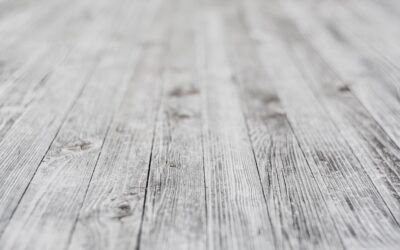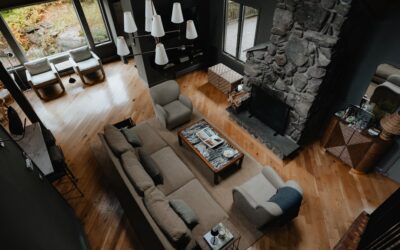
Gray floors got a bad name from a decade of flat, cold, obviously fake gray LVP — but a well-executed dark gray stain on real hardwood is a different animal entirely. Charcoal and smoke-toned oak, done properly, looks architectural: the grain still reads through the color, the tone shifts with the light, and the floor pairs with modern furniture the way no brown ever quite does. Done badly, the same can of stain produces a purple, blotchy mess that photographs like wet concrete. The gap between those outcomes comes down to product choice, species, and process. Here’s all three.
What Dark Gray Stain Looks Like in Real Rooms
First, calibrate expectations. Dark gray on wood is not the uniform slate color of porcelain tile — pigment sits in the grain and pores more heavily than on the dense face wood, so oak stained charcoal shows dramatic dark grain lines over a lighter gray field. That grain contrast is the point; it’s what separates “stained hardwood” from “gray laminate.” In cool daylight, dark gray floors read true charcoal; under warm evening bulbs they shift toward smoky taupe-brown. If you want a floor that reads identically gray at all hours, wood stain is the wrong technology — you want tile or vinyl. If you want a living, shifting smoke tone, keep reading.
The Products That Deliver Dark Gray
| Product | Tone on White Oak | Depth | Field Notes |
|---|---|---|---|
| Duraseal Charcoal (labelled among their gray line) | Deep smoke gray, brown base | Dark | Popular single-can dark gray; forgiving warmth |
| Minwax Classic Gray (2 coats) | Builds to mid-dark silver-gray | Medium-dark | Double application deepens it; test drying between coats |
| Duraseal Ebony + Classic/Smoke Gray blends | Charcoal-black custom range | Very dark | 50/50 Ebony + gray is the classic “charcoal floor” recipe |
| Varathane Carbon Gray | Dark ash gray | Dark | Fast-dry; strong pigment, keep a wet edge |
| Rubio Monocoat Charcoal / Slate Grey | Matte fumed charcoal | Dark | Hardwax oil, one coat color+finish; premium look, ~$150/L |
| Bona DriFast Graphite | True deep gray | Dark | Pro favorite for waterborne-finish systems |
| Minwax Aged Barrel / Carbon Gray | Gray-brown to ash | Medium-dark | Warmer takes; good on red oak where cool grays go purple |
Two buying notes. Quart pricing runs about $12 to $20 for the Minwax/Varathane tier and more for Duraseal and Bona through flooring suppliers; a 1,000-square-foot floor typically needs two to three gallons of stain. And gray pigments settle harder than browns — box-mix all your cans together (pour into one bucket, stir, redistribute) or the last room will be a different gray than the first.
Species: Who Takes Gray Well and Who Turns Purple
White oak is the champion, full stop. Its neutral tan base and open grain take gray pigment evenly and honestly — nearly every gorgeous gray floor you’ve saved a photo of is white oak. Red oak is the purple trap. Pink undertone plus cool gray pigment equals lavender, and dark gray only partially buries it; in raking light a charcoal-stained red oak floor can flash unmistakably violet. If red oak is what you own, choose brown-based dark grays (Duraseal Charcoal over their cooler grays, or blend in Special Walnut), water-pop aggressively for deeper pigment load, and accept that your result will be smoke-brown-gray, not steel. That’s not a defect — it’s usually prettier. Maple blotches; gray magnifies it because any uneven patch reads as a stain flaw rather than wood character. Conditioner and dye-based systems help, but maple gray floors are expert-level. Pine takes gray charmingly rustic with conditioner. Ash behaves like a slightly wilder white oak and grays beautifully. Hickory is chaos — its natural cream-to-brown variation under dark gray gives a heavily variegated floor; some owners love it, most don’t expect it, all should see a big sample first.
The Process: Where Gray Floors Are Won
Dark gray is the least forgiving stain family — it advertises sanding flaws, lap marks, and moisture differences louder than ebony. The professional sequence: finish-sand the entire floor to a uniform grit (100 on the big machine, edges blended so they drink stain at the same rate — edger swirls show as dark halos under gray). Vacuum meticulously; gray pigment collects in leftover dust and leaves streaks. Water-pop the whole floor — evenly dampen, dry 12 to 24 hours, then don’t touch it with feet or grit. Water-popping opens the grain so the floor accepts a heavier, more even pigment load; skipping it is the number one reason DIY gray floors come out pale, streaky, and purple-ish. Apply stain with the grain in sections, wipe consistently, and keep a wet edge across full board lengths. Let gray stains dry fully — 24 to 48 hours, longer in humidity; gray pigments are notorious for bleeding back through finish coats when rushed.
Then the make-or-break decision: waterborne finish only. Oil-based polyurethane ambers within months, and amber over gray equals a greenish, dingy khaki that no one intended. A quality two-component waterborne like Bona Traffic HD in matte or satin locks the gray true and outwears big-box poly two to one. Materials run roughly $100 to $130 per gallon and the finish is half of what you’re actually paying for on a gray floor.
Living With Dark Gray Floors
Practical scorecard, honestly. Dust: dark gray hides household dust better than ebony but worse than greige — the mid-charcoal range with visible grain is surprisingly forgiving because the grain pattern camouflages debris. Scratches: same physics as any dark stain — deep scratches expose light raw wood — but gray’s grain contrast disguises minor ones better than black floors do. Sheen: matte, always; gloss on gray reads industrial in the bad way. Sun: quality waterborne finishes with UV inhibitors keep gray stable, but cheap finishes let dark gray floors fade unevenly under rugs versus exposed areas — rotate rugs the first year. Resale: dark gray polarizes more than greige; in most US markets it appraises as “designer” in modern homes and “will need refinishing” to traditional buyers. If resale within three years matters, greige is the safer bet, and that middle ground is covered separately.
Decorating: What Dark Gray Floors Want Around Them
Charcoal floors are a modern foundation and they ask for decisive contrast. Walls: warm white (SW Alabaster, BM Swiss Coffee) is the classic gallery pairing; pale greige works; mid-gray walls over dark gray floors is the one dead combination — the room turns into weather. Cabinets and furniture: white oak, walnut, matte black, and navy all thrive; the gray floor plus natural white oak furniture pairing is the defining look of current high-end builds. Metals: black and brass. Rugs: ivory, high-texture, always — a cream wool rug on charcoal oak is instant depth. Add real plants; green against dark gray is disproportionately effective.
Sample Boards Are the Whole Game
Everything above compresses into one discipline: test on your actual floor. Stain three two-foot squares in a closet or behind a couch — your chosen gray, one warmer, one darker — water-popped exactly as the real job will be, topcoated with your actual waterborne finish. Evaluate at noon and under evening bulbs. Look specifically for purple flash (red oak’s tell), blotch (maple’s tell), and whether the tone still pleases you in warm light when it drifts brown. Ten square feet of testing prevents a thousand square feet of regret, and no photo on the internet substitutes for pigment on your own wood.
Dark gray stain is the modern floor done right when you respect its three rules: white oak or a brown-based gray on anything pinker, water-pop before pigment, and waterborne matte on top forever. Get those right and you own the rare gray floor that looks like architecture instead of laminate — grain alive under smoke, furniture popping against it, and a color that will still read intentional when the next trend cycle rolls through.
Prefer to explore on your own?
See how new flooring looks in your actual room in seconds — free, no signup.
Try the free Floor Studio →