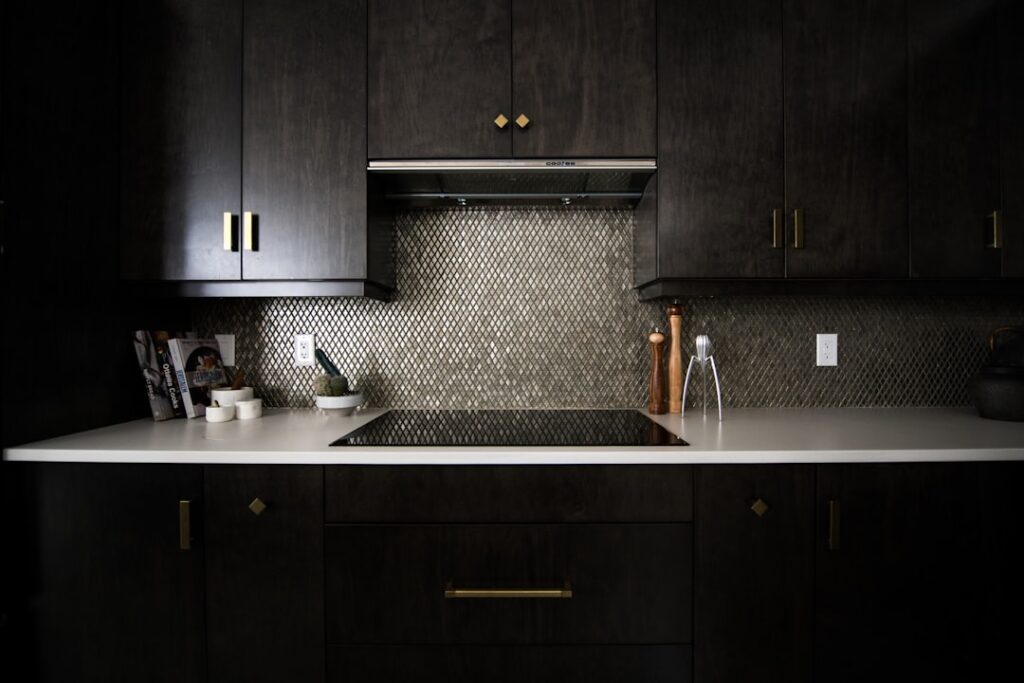
Rich, grainy, and full of character, dark oak cabinets kitchen designs have moved well past the honey-toned oak of decades ago into deep espresso, coffee, and near-black finishes that anchor a room with warmth. The bold color reads as luxurious and grounding, but it also demands smart choices around light, contrast, and materials so the space feels inviting rather than heavy. This guide covers everything from countertop pairings to flooring, hardware, and lighting so your dark oak cabinets look intentional and timeless.
Whether you are refacing existing cabinets, staining raw oak, or ordering new boxes, the design principles below help you build a kitchen that balances drama with everyday livability.
Why Dark Oak Works So Well
Oak has one of the most pronounced grain patterns of any common cabinet wood, and a dark stain amplifies that texture instead of hiding it. The result is depth you simply cannot get from a flat painted surface. Dark oak also hides fingerprints, minor scuffs, and everyday wear far better than white or pale finishes, which makes it a practical pick for busy families and hardworking kitchens.
From a design standpoint, dark cabinets create a strong visual anchor. They make brass, matte black, and stainless hardware pop, and they let lighter countertops and backsplashes feel bright by contrast. The key is managing that contrast so the room stays balanced.
Choosing the Right Countertop
Countertops carry much of the contrast in a dark oak kitchen. Because the cabinets are already deep in tone, most designers go lighter up top to keep the space from closing in. Popular choices include:
- White or light gray quartz ($50 to $120 per square foot installed): Clean, low-maintenance, and highly reflective, it bounces light and sharpens the grain of the oak below.
- Marble or marble-look quartz: Soft veining adds elegance and a touch of movement without competing with the wood.
- Butcher block or lighter wood: For a warm, organic look, though it introduces a second wood tone that needs to coordinate.
- Waterfall quartz islands: A striking way to introduce a bright vertical plane that offsets dark perimeter cabinets.
If you love a moody, dramatic look, a soapstone or dark granite counter can work, but pair it with a light backsplash and plenty of lighting so the whole zone does not disappear.
Flooring That Complements Dark Oak
Flooring is where many dark oak kitchens succeed or stumble. The goal is enough tonal separation that the cabinets and floor read as distinct surfaces. Matching a dark floor too closely to dark cabinets can make the room feel like a cave.
- Light to medium wood or wood-look: Blonde oak, natural hickory, or a warm honey luxury vinyl plank offers a beautiful counterpoint that keeps the room grounded but airy.
- Gray-toned LVP or tile: A cool mid-gray floor sets off espresso cabinets crisply and reads modern.
- Large-format porcelain tile: In a soft greige or cream, it feels contemporary and is nearly indestructible in a kitchen.
Avoid pairing dark oak cabinets with very dark flooring unless you have abundant natural light and light countertops and walls to lift the space. Aim for at least two to three shades of separation between the cabinet finish and the floor.
Backsplash and Wall Color Pairings
Because the cabinetry is doing the heavy visual lifting, walls and backsplashes are your chance to add light and breathing room. Warm whites, soft creams, greige, and pale sage all flatter dark oak beautifully. For the backsplash, consider:
- Classic white subway tile for a clean, budget-friendly contrast (often $7 to $15 per square foot installed).
- Marble or marble-look mosaic for understated luxury.
- Warm beige or taupe zellige tile to echo the wood’s warmth while staying light.
- A slab backsplash that continues the countertop material for a seamless, modern look.
If you want a bolder statement, a deep green or navy painted wall can look sophisticated against dark oak, but keep it to an accent so the kitchen does not feel overwhelming.
Hardware and Fixtures That Pop
Hardware is jewelry for cabinets, and dark oak provides the perfect backdrop for metals to shine. The most popular pairings include:
- Brushed brass or gold: Warm and current, it adds a luxe glow against the deep wood.
- Matte black: Sleek and modern, though it offers subtler contrast, so choose larger pulls so they remain visible.
- Brushed nickel or stainless: A safe, timeless neutral that coordinates with most appliances.
- Oil-rubbed bronze: Traditional and cohesive with the wood’s brown undertones.
Carry the metal finish through to your faucet, lighting, and even open-shelf brackets for a pulled-together look. Long bar pulls tend to read more modern, while cup pulls and knobs lean traditional.
Lighting Is Non-Negotiable
Dark cabinets absorb light, so a dark oak kitchen needs a deliberate lighting plan to stay bright and functional. Layer three types:
- Ambient lighting: Recessed cans or a central fixture for overall brightness. Plan roughly one recessed light per 20 to 25 square feet.
- Task lighting: Under-cabinet LED strips are essential; they illuminate countertops that dark uppers would otherwise shadow. Expect $200 to $600 installed for a typical run.
- Accent and decorative lighting: Pendants over an island or glass-front cabinet lighting add sparkle and depth.
Choose warm white bulbs in the 2700K to 3000K range to complement the wood tones. Cooler bulbs can make dark oak look flat and gray.
Balancing Dark Cabinets in a Small Kitchen
Dark oak can absolutely work in a compact kitchen, but you have to manage the visual weight. Try a two-tone approach: dark oak on the lower cabinets and a lighter finish or open shelving up top. This keeps eye level bright while grounding the room below. Pair it with light countertops, a reflective backsplash, and plenty of task lighting. Glass-front upper doors also lighten the load visually. In a galley or one-wall layout, keeping walls and ceilings crisp white makes the dark cabinetry feel like a designed choice rather than a shrinking one.
Styling and Finishing Touches
Once the big elements are set, styling ties everything together. Warm wood cutting boards, woven baskets, greenery, and a few brass or ceramic accents soften the look. Open shelving styled with a mix of neutral dishware and plants introduces lighter tones at eye level. A runner rug in a warm neutral or subtle pattern breaks up the floor and adds comfort underfoot. These small layers keep a dark oak cabinets kitchen from feeling stark and give it a collected, lived-in warmth.
Frequently Asked Questions
Are dark oak cabinets outdated?
Not at all. The orange-toned honey oak of the 1990s fell out of favor, but modern dark oak in espresso, coffee, and charcoal stains is very much on trend. The pronounced grain reads as rich and characterful, especially paired with light counters and current hardware.
What countertop color goes best with dark oak cabinets?
Light countertops create the most flattering contrast. White or light gray quartz, marble, and marble-look surfaces keep the kitchen bright and let the wood grain stand out. Save darker counters for kitchens with strong natural light.
Do dark cabinets make a kitchen look smaller?
They can if the whole room goes dark. Balance dark oak with light walls, countertops, and flooring, add strong layered lighting, and consider a two-tone layout in small spaces to keep everything feeling open.
What wall color works with dark oak cabinets?
Warm whites, creams, greige, and soft sage all flatter dark oak. For a bolder accent, deep green or navy can look elegant when used sparingly.
Done thoughtfully, a dark oak cabinets kitchen delivers warmth, depth, and a sense of quality that lighter finishes struggle to match. Lean on light countertops, complementary flooring, standout hardware, and a serious lighting plan, and your cabinets will feel timeless for years to come.