
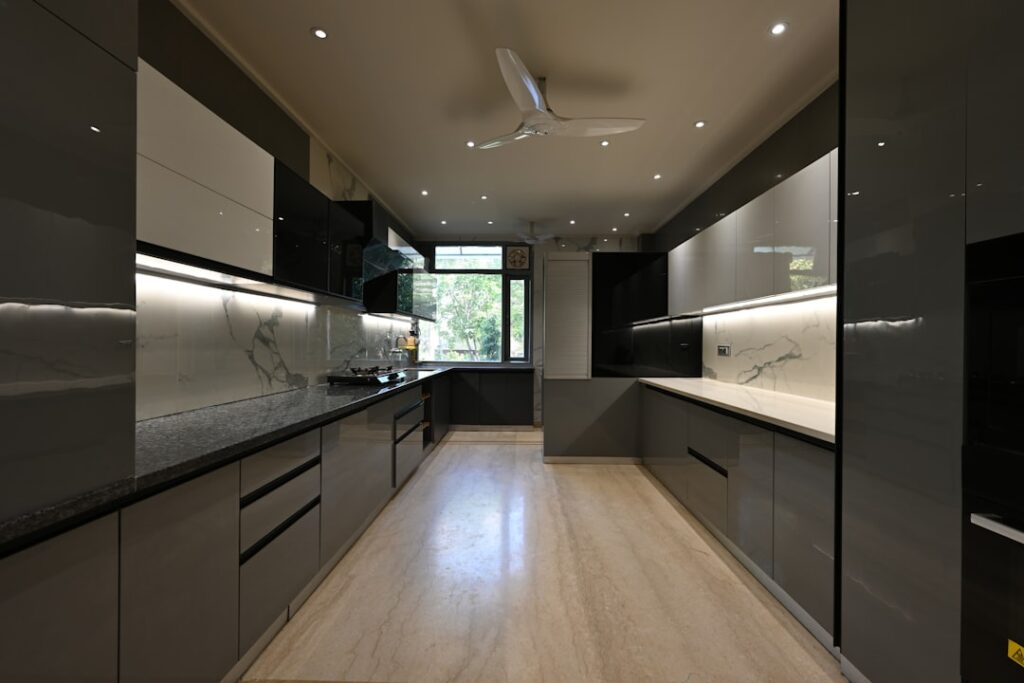
A kitchen full of white or light cabinets can look clean and fresh — and just a little flat. Drop a rich, grounded island into the center of it and the whole room gains depth. A dark wood kitchen island is one of the most reliable ways to add warmth, contrast, and a focal point without renovating the entire kitchen. But “dark wood” covers everything from espresso-stained oak to natural black walnut, and the species, finish, and countertop you pair with it decide whether the island reads elegant or heavy. This guide walks through the choices that get it right.
Part of our Kitchen Remodeling guide — explore the full guide →
Why a Dark Island Works So Well
Contrast is the design principle doing the heavy lifting here. When perimeter cabinets stay light — white, cream, pale gray, or natural — a dark island becomes the anchor that gives the eye somewhere to land. It defines the center of the room, visually separates the island’s function from the perimeter’s, and adds the kind of layered, collected look that all-matching kitchens lack.
Dark wood also brings warmth that painted cabinetry cannot. The grain, the tone, and the natural variation read organic and inviting, softening the crispness of a modern kitchen. And because the island is a single element rather than the whole room, you can go bold with a dark tone without the space feeling closed in.
Best Wood Species for a Dark Island
Walnut
Black walnut is the premium choice, and it earns the price. Its naturally rich chocolate-brown color, straight grain with occasional waves, and subtle purple and gray undertones give a dark island depth that stain cannot fully replicate. Walnut needs little more than a clear finish to look spectacular.
Stained Oak
Oak takes dark stain beautifully and shows off dramatic grain. Rift or quarter-sawn white oak in an espresso, ebony, or dark walnut stain delivers a rich look at a friendlier price than solid walnut. The pronounced grain adds texture that reads high-end.
Cherry and Mahogany
Cherry darkens naturally over time and takes a warm, reddish-brown finish that suits traditional and transitional kitchens. Mahogany offers a similar warm-dark tone with a fine, elegant grain.
Painted “Dark Wood” Alternatives
If you want the drama without the wood-grain look, a deep painted island — charcoal, near-black, or a dark stained-effect finish — gives the contrast while keeping cost down. Just know it reads more contemporary and less organic than real dark grain.
Choosing the Right Finish
Finish controls both durability and how the grain reads. For a natural, matte look that shows the wood honestly, a hardwax oil or a matte polyurethane preserves the grain and feels warm to the touch. For a more formal, protected surface, a satin polyurethane adds sheen and resists spills and scratches better — important on a hard-working island.
Avoid high-gloss finishes on a large dark surface; they show every fingerprint and dust mote and can look dated. Matte and satin are far more forgiving and more current. Whatever you choose, an island takes daily abuse, so prioritize a finish rated for heavy use and reseal or refresh it as the years pass.
Countertop Pairings That Elevate the Look
The countertop makes or breaks a dark island. A few pairings consistently look expensive:
- White or light quartz with subtle veining: the classic contrast — crisp, bright, and timeless against dark wood.
- Marble or marble-look quartz: dramatic veining on a dark base reads luxurious and gives the island real presence.
- Butcher block on butcher block: a wood top on a wood island leans warm and rustic; keep tones in the same family to avoid clash.
- Honed black or soapstone: for a moody, monochromatic modern look where the island reads as one sculptural mass.
- Waterfall quartz edge: carrying a light stone down the sides frames the dark wood and adds a contemporary edge.
For most kitchens, a light stone top on a dark base gives the strongest, most enduring contrast. Match the countertop to the perimeter counters or deliberately differ it — a different island top is a common, intentional design move.
Hardware and Detailing
Hardware finish should tie the island to the rest of the kitchen. Against dark wood, warm metals shine: brushed brass, aged bronze, and champagne bronze glow beautifully and add a touch of luxury. For a cooler, more modern feel, matte black hardware disappears elegantly into darker grains, while polished nickel and chrome add crisp contrast.
Consider the details that make an island feel custom: furniture-style legs or corbels for a traditional look, a flat slab front for modern, decorative end panels, or open shelving on one end for cookbooks and baskets. Adding a couple of pendant lights above in a complementary metal finish completes the composition and pulls the eye to your new focal point.
Styling and Balancing the Room
A dark island needs a little balance so it doesn’t feel like an island floating alone. Repeat the dark tone somewhere else in the room — bar stools, window frames, open shelf brackets, light fixtures, or the flooring — so the eye reads it as part of a plan rather than a one-off. Two or three touchpoints of the dark tone tie the whole kitchen together.
Watch your lighting, too. Dark surfaces absorb light, so make sure the island is well lit with pendants and under-cabinet or recessed lighting nearby. A dark island in a dim kitchen can feel heavy; the same island under good light feels rich and inviting.
Sizing and Proportion
A dark island commands attention, which makes getting its size right even more important — an out-of-scale island throws the whole kitchen off. As a rule, leave at least 36 to 42 inches of clearance around all sides of the island for comfortable walking and appliance doors, and 42 to 48 inches on sides where two people pass or work back-to-back. A standard island runs about 36 inches tall to match counter height, with a raised bar section at 42 inches if you want a visual divider and casual seating.
For seating, plan roughly 24 inches of width per stool so people aren’t elbow to elbow, and allow 12 to 15 inches of overhang on the countertop for legroom. A dark island with a light stone waterfall edge and a row of comfortable stools becomes a genuine gathering spot, not just a work surface. If your kitchen is small, a modest dark island still delivers the contrast without crowding the room — the color does the heavy lifting, so it need not be large to make an impact.
Care and Long-Term Maintenance
Dark wood shows dust, water spots, and fingerprints more readily than light finishes, so plan for a little upkeep. Wipe the island with a soft, slightly damp cloth and dry it promptly; avoid soaking the wood or using harsh all-purpose sprays that strip the finish. For oiled finishes, refresh the surface with a compatible wood conditioner or hardwax oil every year or two to keep it looking rich and to reseal high-use areas. For polyurethane finishes, a periodic wipe with a wood-safe cleaner is usually all it takes.
Guard against the two things that damage wood islands fastest: standing water and heat. Use trivets under hot pans, wipe spills quickly, and place a mat under any sink or coffee station on the island. Treated well, a solid wood island develops a warm patina over the years and only looks better with age — one of the quiet advantages of real wood over painted or laminate surfaces.
Bringing It All Together
A dark wood kitchen island delivers warmth, contrast, and a focal point that a matching kitchen simply cannot. Choose a species that fits your budget and style — walnut for luxury, stained oak for value and grain, painted dark for modern economy — protect it with a matte or satin finish built for daily use, and pair it with a light stone countertop for timeless contrast. Add warm-metal hardware, echo the dark tone in a few other elements, and light it well. Do that, and your island will be the piece guests notice first and the feature that keeps the kitchen feeling grounded and inviting for years.


