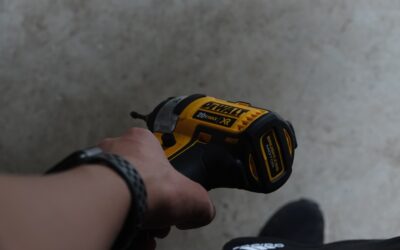
For years the drywall-sander market split neatly in two: premium corded machines from Festool and Mirka for the pros, and a swamp of $150 imports for everyone else. The DeWalt drywall sander — the 20V MAX DCE800 — landed squarely in the gap and changed the conversation, because it cut the cord without cutting the performance serious finishers expect. This review covers the DCE800 in depth: specs, dust collection, real-world runtime, pricing, the accessories that matter, and whether it beats the corded alternatives for your kind of work. For the general case on why these tools exist at all, our drywall sander guide covers the category.
Part of our Paint & Walls guide — explore the full guide →
The Lineup: One Sander, Several Kits
DeWalt keeps it simple — there is one drywall sander platform, sold in different configurations. That focus contrasts with rivals who split the category into wall and ceiling models; the DCE800’s articulating head and telescoping shaft are meant to cover both jobs with a single tool:
- DCE800B — bare tool, no battery or charger; roughly $349 to $429 street price. The right buy if you already live on DeWalt 20V MAX batteries.
- DCE800T2 — kit with two 6.0Ah FLEXVOLT batteries and charger; typically $599 to $699.
- Kit-with-bag variants (DCE800X1 and similar) — one 9.0Ah battery, charger, and storage bag; pricing between the two above and worth comparing at the register.
All versions share the same head and motor; you are only choosing how you buy batteries. That platform logic is DeWalt’s core pitch — a remodeler with a 20V drill, driver, and saw kit adds finish-sanding capability for bare-tool money.
Specs That Matter
The DCE800 runs a brushless motor spinning a 9-inch hook-and-loop head at 700 to 1,200 RPM across a five-position speed dial, taking standard 225mm (approximately 9-inch) mesh or paper abrasive discs. The telescoping shaft adjusts from about 4 feet to 5 1/2 feet, covering 8- and 9-foot walls and ceilings flat-footed, and the head articulates to follow wall-to-ceiling transitions. Weight lands around 10 pounds with a 6.0Ah battery — comparable to corded giraffe-style sanders once their cord and hose drag is counted. A removable brush ring around the head lets you sand tight to inside corners, and an LED ring around the head throws raking light across the surface as you work, which sounds like a gimmick and is instead the feature owners praise most: ridges and pits appear in the shadow line before your fingertips would find them.
Dust Collection: The Deciding Feature
Drywall dust is the whole reason power sanders exist, and the DCE800 treats extraction seriously. The head is shrouded and ported for a vacuum hose, with an integrated hose-lock collar that fits DeWalt’s AirLock system directly. Paired with a DeWalt dust extractor — the DWV012 HEPA unit is the natural partner — capture is excellent: sanding Level 4 walls produces a faint haze rather than the white-room catastrophe of hand sanding. Any shop vacuum with a universal adapter works too, though a fleece-bag or HEPA extractor keeps fine gypsum from blowing straight through a standard filter. One honest note: like every shrouded sander, capture drops at the wall-ceiling corner where the brush ring lifts, so plan a quick pole-sander touch-up pass there. If dust-free work is your primary buying criterion, our drywall sander with vacuum guide compares extraction setups across brands.
Runtime and Real-World Performance
Cordless finish sanding lives or dies on runtime, and here the DCE800 is genuinely workable: a 6.0Ah FLEXVOLT pack delivers roughly 45 minutes to an hour of continuous sanding at moderate speed — call it a large bedroom’s walls and ceiling per battery, sanding a typical Level 4 finish with 220-grit mesh. The two-battery kit therefore covers most working days with the charger rotating packs. Performance-wise, the brushless motor holds RPM under lean pressure without bogging, and the head’s balance rewards a light touch — let the abrasive cut, and swirl marks stay away. Owners coming from 5-pound orbital-sander improvisations will notice the shoulder fatigue of any long-reach sander after a few hours; the DCE800’s grip positions and mid-shaft balance point are better than most, but ceilings still earn their reputation.
How It Stacks Up Against Rivals
Against the corded premium tier — Festool Planex LHS 2 (around $1,100 tool-only, plus a $700-plus extractor) and Mirka Leros — the DeWalt gives up some refinement: the Planex’s suction-assist feature that holds the head to the ceiling, finer speed control, and legendary abrasive ecosystem. It costs less than half as much and never tangles a cord and hose around a ladder, which on occupied-home remodels is worth real money. Against the budget corded field — WEN 6377, Yattich, Ginour, all $110 to $180 — the DCE800 is in a different class for balance, dust sealing, durability, and serviceability, and the price gap says so. The honest positioning: production tapers doing houses every week still gravitate to Festool; remodelers, punch-out crews, and serious DIYers doing rooms rather than subdivisions get 90 percent of the experience from the DeWalt at a fraction of the system cost.
Abrasives and Accessories
Run mesh discs rather than paper — they load slower and shake clean — in a simple grit ladder: 120 for knocking down heavy joints or old texture, 180 for general finish sanding, 220 for the final pass before primer. DeWalt’s own mesh works fine; Festool Granat and Mirka Abranet 225mm discs fit the hook-and-loop pad and are the upgrade path (about $2 to $3 per disc versus $1.50 for house-brand). Keep a spare brush ring in the kit — it is a wear part — and if you own AirLock hoses, the direct connection is worth standardizing on. Budget roughly $30 to $50 in abrasives per whole-house job.
First-Use Technique and Care
A few habits get new owners to clean walls faster. Start at the middle speed with 180-grit mesh and let the head float — the most common beginner error is leaning into the pole, which heats the compound, loads the disc, and cuts hollows around butt joints. Work in slow, overlapping W-patterns, keep the head moving whenever it is spinning, and use the LED shadow ring rather than your palm to decide where another pass is needed. Feather across joints diagonally instead of tracking straight down them, which grooves the seam line. On maintenance, the platform is refreshingly simple: knock dust out of the brush ring between rooms, empty the extractor before the bag chokes suction, and blow out the head’s vents at day’s end — gypsum dust is abrasive, and the brushless motor’s longevity mostly depends on keeping its airflow clear. DeWalt backs the tool with its standard three-year limited warranty, one-year free service, and 90-day money-back window, and spare pads, brush rings, and shrouds are stocked parts rather than special orders.
Verdict: Who Should Buy It
The DeWalt drywall sander is the right tool for three buyers: remodeling contractors already on the 20V platform who sand rooms weekly, not daily; serious DIYers finishing a basement or an addition who refuse to hand-sand 2,000 square feet of Level 4; and skim-coat renovators converting textured walls to smooth, where its 120-grit appetite shortens ugly days (context in our drywall texture guide). Skip it if you patch occasionally — a $25 pole sander covers patch work, as our drywall patch guide notes — or if you run production taping crews, where the Festool system’s ergonomics repay their price. For everyone between those poles, the DCE800 is the current sweet spot in the category: pro-grade dust control and finish quality, cordless convenience, and a price that leaves money in the budget for the extractor that makes it shine. Buy the bare tool if you are already on the platform, buy the two-battery kit if you are not, and either way budget for the vacuum on the same receipt.