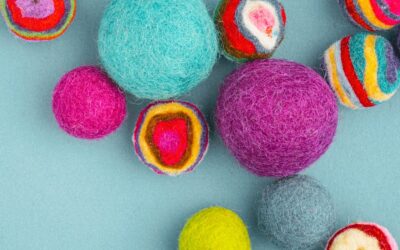
Walk into any laundry aisle and you’ll find both dryer sheets and wool dryer balls competing for the same spot in your routine. The marketing claims for both are loud. The actual dryer balls benefits — the ones that show up in real laundry, not in advertising copy — are real but specific. After three years of using them in my own house and testing different brands across hundreds of loads, here’s what they actually do, what they don’t, and whether the switch is worth making.
- What Dryer Balls Are
- Benefit 1: Shorter Drying Times
- Benefit 2: Reduced Static
- Benefit 3: Softer Laundry Without Chemicals
- Benefit 4: No Chemical Residue
- Benefit 5: Reusable and Long-Lasting
- What Dryer Balls Don't Do
- Wool vs. Plastic Dryer Balls
- How Many to Use
- What to Buy
- Care and Replacement
- Special Cases: When Sheets Beat Balls
- Cost-Benefit Summary
- Final Take
What Dryer Balls Are
The most common version is wool — typically a wool felt ball about the size of a tennis ball, weighing 4 to 6 ounces. Brands like Smart Sheep, Friendsheep, and Wool Bull all make essentially the same product at different price points. Plastic spiky dryer balls also exist (Nellie’s Dryerballs, the Dryer Egg) and serve a similar function with slightly different mechanics.
You toss 3 to 6 balls into the dryer with a wet load and run a normal cycle. That’s the whole product.
Benefit 1: Shorter Drying Times
This is the most measurable benefit. Wool dryer balls separate clothes during tumbling, allowing hot air to circulate more efficiently around individual items. In side-by-side tests, drying time dropped 15 to 25 percent on most loads — a typical 60-minute cycle ran 45 to 50 minutes instead.
That’s roughly $30 to $80 per year in energy savings for a household running 5 loads a week, depending on local electricity rates. Over 3 years, the balls more than pay for themselves.
Benefit 2: Reduced Static
This benefit is real but partial. Wool dryer balls reduce static cling because wool itself doesn’t generate static the way synthetic fabrics do, and the tumbling action with multiple balls dissipates the buildup. They don’t eliminate static the way liquid fabric softener does — synthetic-heavy loads (athletic wear, polyester sheets) will still have some cling.
For mostly-cotton loads, the static is essentially gone. For 70 percent polyester loads, expect noticeable but not complete reduction.
Benefit 3: Softer Laundry Without Chemicals
Wool dryer balls fluff cotton towels, sheets, and clothes by physically agitating fibers during drying. The result is genuinely softer fabric without the waxy coating that fabric softener leaves on towels (which actually reduces absorbency over time). Towels that go through a dryer with wool balls dry faster and absorb more water — both useful properties.
Not the same as the perfumed softness of dryer sheets — softer in the sense of fluffier, less stiff, more like air-drying done right.
Benefit 4: No Chemical Residue
Dryer sheets and liquid softeners coat clothes with chemicals that build up on towels (reducing absorbency), reduce flame resistance on children’s pajamas (a real warranty issue with manufacturers like Carter’s), and can clog the lint screen of your dryer. Wool dryer balls leave nothing behind. Eliminating that residue is one of the more practical dryer balls benefits, especially for households with sensitive skin.
People with eczema, asthma, or fragrance sensitivities often see noticeable improvement after switching.
Benefit 5: Reusable and Long-Lasting
A set of 6 wool dryer balls runs $15 to $30 and lasts 1,000+ loads. That’s roughly 4 years of average household use. Compare to dryer sheets at $0.10 to $0.25 per sheet — running through 1,000 sheets costs $100 to $250 over the same period. The math heavily favors balls over time.
What Dryer Balls Don’t Do
Honest assessment: a few claims don’t hold up.
- “Add fragrance with essential oils”: A few drops of essential oil on a wool ball gives a faint scent for the first few loads, then fades. Not a real fragrance system.
- “Eliminate wrinkles”: They reduce wrinkles slightly compared to no agitation, but pulling clothes out promptly and folding still matters more.
- “Save more energy than a clothesline”: A clothesline saves 100 percent of the dryer’s energy. Balls save 15 to 25 percent. Different scales.
- “Last forever”: Eventually wool balls develop bald spots, lose their bounce, and need replacing.
Wool vs. Plastic Dryer Balls
Plastic spiky dryer balls (Nellie’s, Woolzies’ plastic version) work via a different mechanism — they physically separate clothes with their nubs. They’re noisier, don’t absorb moisture, and don’t soften fabric the way wool does. They do reduce drying time slightly. For most uses, wool is the better choice unless you have a wool allergy.
How Many to Use
For small loads (under half-full), 3 dryer balls is enough. For medium loads, 4 to 5. For large loads (sheets, comforters, towels), 6 balls. Using too few defeats the purpose; using too many crowds the load and reduces efficiency. There’s no benefit beyond 6 balls in a typical residential dryer.
What to Buy
The wool dryer ball market is commoditized — most products are essentially identical. Looking for these specs gets you a quality set:
- 100 percent wool, no synthetic core: Cheap balls have a plastic or foam center. Inspect before buying.
- Tightly felted, dense feel: Loose ones unravel quickly
- About tennis-ball sized: Smaller ones don’t have enough mass to separate clothes
- Set of 6: One set handles every load size
Smart Sheep and Friendsheep are the most consistent brands. Generic Amazon brands are hit or miss; check reviews for “core unraveled” or “fell apart after a year.”
Care and Replacement
Wool dryer balls are essentially maintenance-free. They live in the dryer drum permanently. Every 6 months or so, wash them in a mesh laundry bag on a normal cycle to remove any built-up lint. They develop a fuzzy outer layer over time that you can trim with scissors if it bothers you visually — it doesn’t affect performance.
Replace when they lose density, develop bald spots, or stop bouncing.
Special Cases: When Sheets Beat Balls
For loads where you want fragrance or specific anti-static properties (heavy synthetic loads), dryer sheets still have a place. Some households use balls for daily loads and one dryer sheet for the occasional polyester-heavy load. That hybrid approach captures most of the benefits without the all-or-nothing trade-off.
Cost-Benefit Summary
For a typical 4-person household running 350 loads per year:
- Annual savings on dryer sheets: $25 to $50
- Annual savings on energy: $30 to $80
- Cost of dryer balls (amortized): $5 to $8 per year
- Net savings: $50 to $120 per year
Plus the indirect benefits: cleaner air in the laundry room, no chemical buildup on towels, no allergic reactions on sensitive skin.
Final Take
The dryer balls benefits worth caring about are shorter drying times, fluffier towels without chemical buildup, and modest reduction in static. They’re not a miracle product — they don’t replace careful folding, line-drying, or proper sorting. But for $20 once and zero ongoing cost, they’re one of the easiest swaps a household can make. Most people who switch don’t go back.