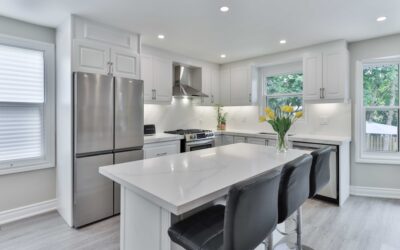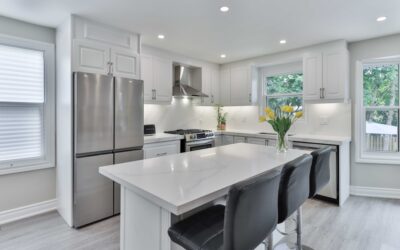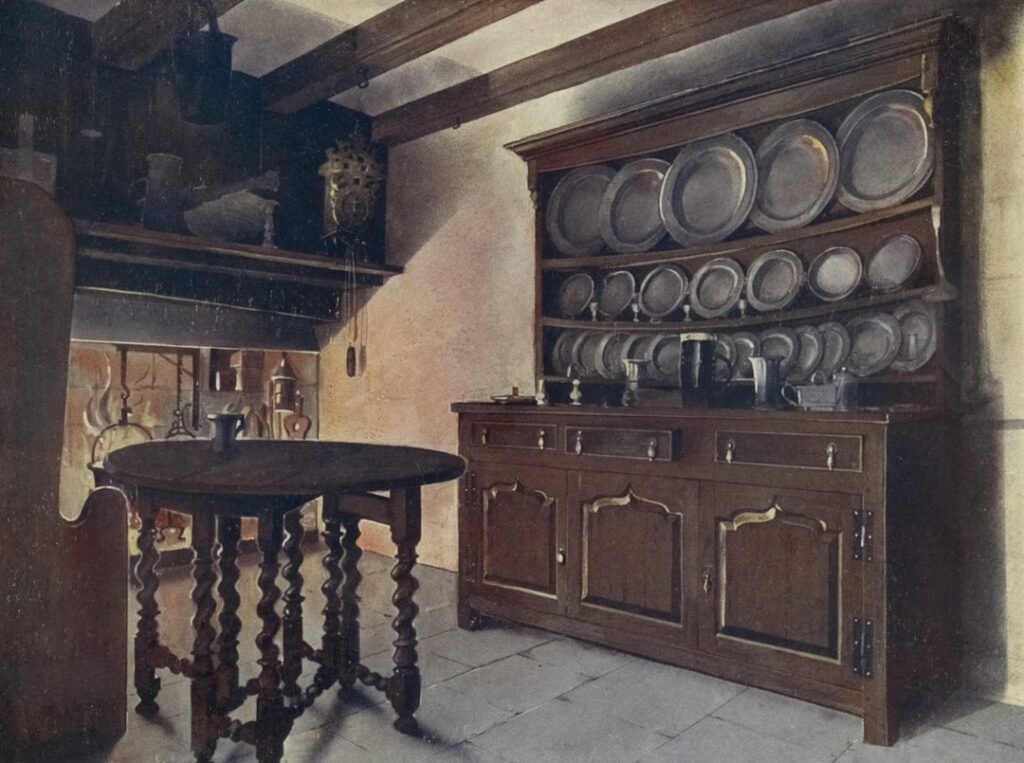
The early 2000s Tuscan kitchen was everywhere for a decade — dark cherry or golden oak cabinets, ornate corbels, faux-finish gold and terracotta walls, heavy wrought-iron accents, and busy granite in browns and golds. It was warm and dramatic when it was new, but it reads dated today. The good news is you rarely need a full gut renovation to bring one of these kitchens into the present. Most of the “Tuscan” feel comes from a handful of finishes you can change without touching the layout.
Part of our Kitchen Remodeling guide — explore the full guide →
I have updated dozens of these kitchens over the years, and the strategy is almost always the same: neutralize the heavy warm tones, lighten and simplify the surfaces, and swap the ornate details for cleaner ones. Here is how to do it, roughly in order of impact per dollar.
- What Defines the Tuscan Look
- Start With Paint — The Biggest Bang for the Buck
- Update the Cabinets Without Replacing Them
- Swap the Hardware and Fixtures
- Address the Countertops and Backsplash
- Lighten Floors and Finishing Touches
- A Budget-Friendly Order of Operations
- Keep What Still Works
- Mistakes to Avoid When Updating
- Frequently Asked Questions
What Defines the Tuscan Look
Before you start changing things, it helps to name exactly what makes a kitchen read as early-2000s Tuscan. Recognizing the signature elements tells you what to target:
- Faux-finish or sponged walls in gold, ochre, terracotta, or Venetian plaster tones
- Dark, heavily stained cabinets — cherry, espresso, or golden oak — often with glaze in the corners
- Ornate details: corbels, rope molding, fluted columns, and scrollwork
- Busy granite countertops in brown, gold, and black speckle (Baltic Brown, Tropic Brown, Santa Cecilia)
- Tumbled travertine or terracotta backsplashes with decorative medallions
- Wrought-iron light fixtures, pot racks, and cabinet hardware
- Bronze or oil-rubbed finishes on faucets and pulls
You do not have to remove all of these to modernize the room. Changing even two or three of the biggest offenders shifts the whole feel.
Start With Paint — The Biggest Bang for the Buck
Nothing dates one of these kitchens faster than gold and terracotta faux-finished walls. Repainting them a clean, modern neutral is the single most transformative and affordable change you can make. A couple of gallons and a weekend, roughly $80 to $150 in materials, and the room already feels years newer.
Go with a warm white, soft greige, or gentle sage — colors that keep the coziness Tuscan style is known for without the heavy saturation. Sherwin-Williams Accessible Beige, Benjamin Moore Revere Pewter, or a muted sage all work beautifully, especially if you are keeping wood cabinets. Skip cool blue-grays, which can make warm wood look orange.
Update the Cabinets Without Replacing Them
Cabinets are the most expensive thing to replace and usually the least necessary to. If the boxes are solid, you have two strong options:
- Paint them. A painted finish in creamy white, soft greige, or a muted green instantly modernizes the room. Professional cabinet painting runs $2,000 to $6,000 depending on kitchen size; a careful DIY job with a quality enamel costs $200 to $500 in materials.
- Remove the ornate trim. If you want to keep the wood tone, take off the corbels, rope molding, and decorative appliques. Simplifying the cabinet faces alone strips out a lot of the dated ornateness.
Whichever route you choose, swapping the doors’ bulky raised-panel profiles for shaker fronts — or simply painting them to de-emphasize the profile — pushes the look toward transitional and current.
Swap the Hardware and Fixtures
This is the cheapest high-impact update on the list. Ornate bronze scrollwork pulls and wrought-iron fixtures scream early 2000s. Replacing them with clean, simple hardware in brushed nickel, matte black, or brushed brass modernizes the room for a couple hundred dollars.
- Cabinet pulls and knobs: Choose simple bar pulls or round knobs. Budget $2 to $6 per piece; a full kitchen might run $100 to $300.
- Faucet: Trade the ornate bronze faucet for a sleek single-handle pull-down in matte black or stainless. Good ones run $150 to $400.
- Lighting: Replace wrought-iron chandeliers and pot racks with clean pendants or low-profile fixtures. This one change dramatically shifts the room’s era.
Pick one metal finish and carry it through the whole kitchen for a cohesive, intentional look.
Address the Countertops and Backsplash
Busy brown-and-gold granite and tumbled travertine backsplashes are core Tuscan signatures. These are more expensive to change, so weigh them against your budget.
If the granite has to stay for now, lean into it by keeping surrounding tones neutral so it reads as one warm element rather than competing with gold walls and ornate wood. When you are ready to replace, quartz or a quieter granite in white, gray, or soft veining costs roughly $40 to $100 per square foot installed and instantly calms the room.
The backsplash is often the easier win. Replacing a tumbled travertine or terracotta backsplash with a simple white subway tile, a soft handmade-look zellige, or a large-format porcelain runs $10 to $25 per square foot in materials and removes a huge chunk of the dated character. A modest backsplash tear-out and retile is a very doable weekend-plus project.
Lighten Floors and Finishing Touches
Dark, warm-toned tile floors reinforce the heavy Tuscan feel. A full floor replacement is a bigger investment, but if you are already renovating, a lighter luxury vinyl plank or a pale wood-look tile brightens the entire space. Expect $3 to $8 per square foot for quality LVP, materials and install.
For finishing touches, swap heavy tuscan-print rooster and grapevine decor for simple modern accessories, add a few plants, and hang clean window treatments in a light linen. These small styling moves cost very little and pull the whole updated look together.
A Budget-Friendly Order of Operations
If you cannot do everything at once, here is the sequence I recommend for the most visible improvement per dollar:
- Paint the walls a modern neutral ($80–$150)
- Swap hardware, faucet, and light fixtures ($300–$700)
- Replace the backsplash ($400–$1,200 DIY)
- Paint or simplify the cabinets ($200–$6,000)
- Update countertops and flooring when budget allows
Working top to bottom on this list, most homeowners get an early 2000s Tuscan kitchen looking fresh and current for a few thousand dollars rather than the $30,000-plus a full remodel would cost.
Keep What Still Works
Modernizing does not mean stripping every ounce of warmth out of the room. Some elements of the Tuscan style are genuinely timeless and worth keeping. Natural stone, real wood tones, and an open, hospitable layout never go out of fashion — it is the heavy faux finishes and ornate scrollwork that date the space, not warmth itself. The current design direction has actually swung back toward earthy, warm-neutral kitchens, so you are working with the trend rather than against it.
If you have a solid farmhouse-style apron sink, a substantial island, or good-quality cabinet boxes, build around them. A range hood with clean lines, warm wood open shelving, and a few natural textures like a woven runner or terracotta pots used sparingly can nod to the old Mediterranean feel without tipping back into 2003. The trick is restraint: one or two warm, organic touches read as intentional, while a dozen read as a theme.
Mistakes to Avoid When Updating
A few missteps can waste money or leave the room looking half-finished:
- Mixing too many metal finishes. Pick one — brushed nickel, matte black, or brass — and carry it through hardware, faucet, and lighting.
- Painting cabinets a cool gray next to warm granite. If you are keeping busy brown counters, choose a warm white or greige so the two do not clash.
- Replacing everything at once without a plan. Work through the order of operations so each change builds toward a cohesive result.
- Forgetting the ceiling and trim. Old faux-finished ceilings and dark stained trim can undercut a fresh wall color, so factor them in.
Frequently Asked Questions
How do I modernize a Tuscan kitchen on a budget?
Start with paint and hardware. Repainting the gold or terracotta walls a modern neutral and swapping ornate bronze pulls and fixtures for clean ones costs a few hundred dollars and delivers the biggest visual change.
Do I have to replace my cabinets?
Almost never. If the boxes are solid, painting them or removing the ornate corbels and trim modernizes them at a fraction of replacement cost.
What paint colors work best?
Warm whites, soft greiges, and muted sage greens keep the cozy feeling while dropping the dated saturation. Avoid cool blue-grays with warm wood cabinets.
What should I do about busy brown granite?
If replacing it is not in the budget, keep everything around it neutral so it reads as a single warm accent. When you are ready, quartz or a quieter stone in lighter tones instantly calms the whole kitchen.
Tackle the finishes in the right order and an early 2000s Tuscan kitchen can feel bright, current, and welcoming without losing the warmth that made the style appealing in the first place.