An electric fireplace gives you the warmth and glow of a hearth without the chimney, the venting, or the firewood — but a bare insert mounted on a blank wall looks unfinished. The mantel is what transforms it from an appliance into a focal point. The right electric fireplace mantel ideas frame the flames, give you a surface to style, and tie the fireplace into your room’s design. Because electric units don’t produce real combustion heat at the surround, you have far more freedom with materials than a wood or gas fireplace allows. Here’s how to make the most of it.
Floating Mantel Shelf for a Modern Look
The cleanest, most contemporary option is a single floating wood shelf mounted above a wall-recessed or wall-mounted electric insert. With no legs or full surround, the shelf lets the linear flames take center stage while giving you a ledge for decor. A solid reclaimed wood beam, 4 to 6 inches thick, brings warmth and contrast against a painted or tiled wall.
Because electric inserts stay cool at the frame, you can mount a floating shelf as close as 8 to 12 inches above the unit — always check the manufacturer’s clearance, but it’s far more forgiving than a real flame. A floating mantel typically costs $80 to $250 for the beam and hidden bracket hardware, and installs in an afternoon.
Shiplap and Board Surrounds
For farmhouse, coastal, or transitional rooms, framing the fireplace wall in shiplap creates instant character. Run the horizontal planks floor to ceiling or just across the fireplace wall, then add a chunky wood mantel beam to anchor the composition. Painted crisp white, shiplap brightens the room; in a warm greige or soft black, it adds depth.
Board-and-batten offers a more vertical, structured alternative with the same cozy appeal. Either treatment costs roughly $2 to $5 per square foot in materials and dramatically elevates a plain drywall wall. Pair it with a simple painted mantel for a coordinated, built-in feel that looks far more expensive than it is.
Stone and Brick Accent Walls
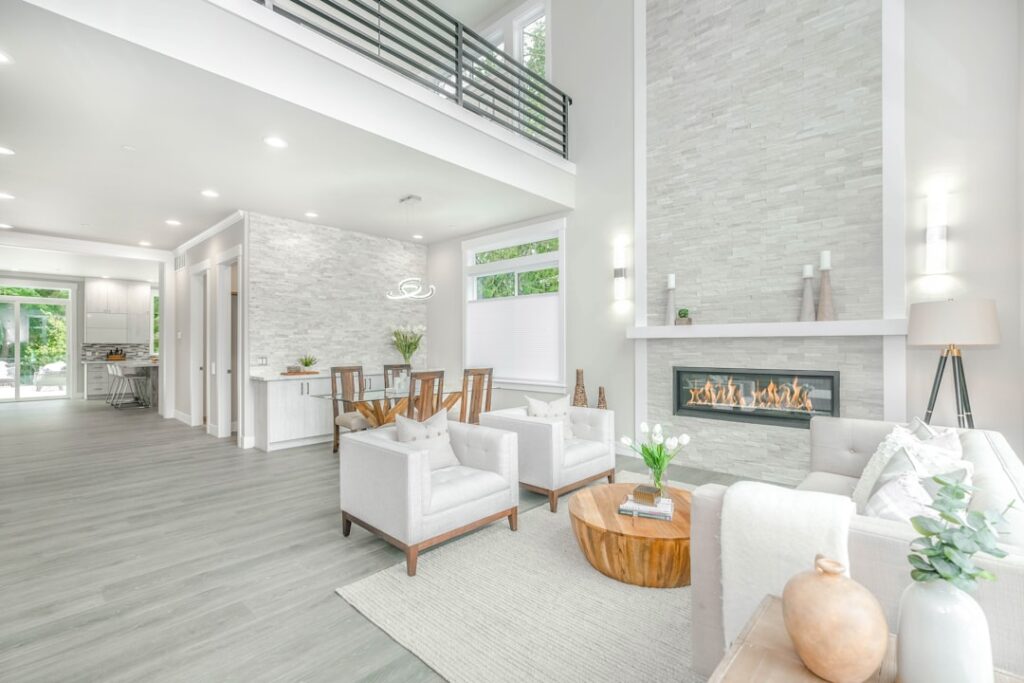
If you want the traditional hearth feeling, a stone or brick surround delivers it. Stacked stone veneer panels, faux brick, or full-height natural stone wrap the fireplace in texture and make it the unmistakable center of the room. Manufactured stone veneer runs $10 to $20 per square foot installed, while peel-and-stick faux brick panels offer a budget DIY route under $5 per square foot.
Top a stone surround with a rustic wood beam or a poured-look concrete mantel for contrast between rough and smooth. For modern spaces, large-format porcelain slabs in a marble or limestone pattern create a sleek, seamless surround with minimal grout lines. Stone reads especially well in living rooms with high ceilings where the vertical material can run all the way up.
Built-In Cabinetry and Shelving
One of the smartest moves with an electric fireplace is integrating it into built-ins. Flank the insert with floor-to-ceiling cabinets below and open shelves above, and you get a wall that’s equal parts focal point and storage. This works beautifully in living rooms and dens where you also want a home for books, media gear, and decor.
- Lower cabinets: Conceal media components, blankets, and clutter behind doors.
- Open upper shelves: Style with books, pottery, and framed art in balanced groupings.
- Symmetry: Mirror the layout on both sides of the fireplace for a polished, built-in look.
- Lighting: Add LED strip lighting under shelves to highlight the display at night.
Custom built-ins run $1,500 to $5,000, but stock cabinetry plus a few open shelves achieves a similar effect for far less.
Decorating the Mantel Itself
Once the surround is set, the styling brings it to life. The classic approach layers a large anchor piece — a framed mirror, art, or a flat-screen — behind a few decorative objects of varying heights. Lean a framed print against the wall, then add a pair of candlesticks, a small plant, and a stack of books to create depth.
Follow the rule of thirds and odd numbers: group items in clusters of one, three, or five rather than evenly spacing them. Keep one side slightly heavier than the other for a relaxed, asymmetrical balance, and leave breathing room so the mantel doesn’t feel crowded. Swap a few seasonal accents — garland in winter, greenery in spring — to keep it fresh.
Mantel Materials and What They Cost
The mantel beam itself sets the tone, and material choices range widely in price and feel. A solid reclaimed wood beam delivers rustic character and runs $100 to $400 depending on size and species. Engineered or MDF mantels painted to match trim offer a clean, budget-friendly look starting around $60. For a more contemporary edge, a poured-concrete or concrete-look mantel brings industrial weight at $150 to $500.
Match the material to your surround and room style. Rough-sawn oak or hickory pairs naturally with stone and shiplap, while a smooth painted MDF mantel suits modern flat walls. Floating beams need a hidden steel bracket rated for the weight you’ll display, so check the bracket’s load rating before mounting heavy decor on top. Because electric inserts run cool at the frame, you have far more flexibility on combustible mantel materials than a wood or gas fireplace allows.
Positioning the Insert and TV
One of the most common questions is whether a TV can sit above an electric fireplace, and the answer is usually yes — another advantage of electric over gas. Because the insert vents its warm air from the front or louvers rather than radiating intense heat upward, a flat-screen mounted above stays within safe temperatures, though leaving 12 inches of clearance and a mantel shelf to deflect heat is smart.
Mount the TV so its center sits at comfortable seated eye level, typically 42 to 48 inches off the floor, and position the fireplace insert below the mantel. Recess-style inserts that sit flush in the wall create the cleanest look for a TV-above-fireplace setup. Run wiring inside the wall or through a cord-management channel so no cables dangle and break the polished, built-in effect you’re after.
Pulling Your Look Together
The best electric fireplace mantel ideas start with how you’ll use the wall and what style your room already speaks. Go floating and minimal for modern spaces, shiplap or stone for warmth and texture, or full built-ins when you need storage to earn its keep. Because electric inserts stay cool and need no venting, you can place them on virtually any interior wall and dress them however you like.
Match your mantel material and color to existing wood tones and metals in the room, keep clearances per the manufacturer, and finish with thoughtful styling. The result is a fireplace that feels custom-built and instantly becomes the heart of the room.