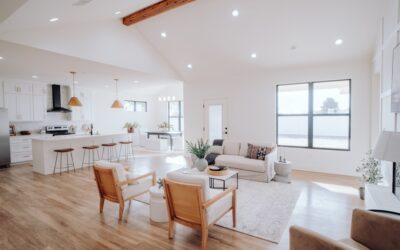
Engineered timber flooring brings the natural warmth and character of real wood into your home with a construction designed for modern living. Built with a hardwood veneer surface bonded to a dimensionally stable plywood core, engineered timber planks deliver the beauty of solid wood with greater resistance to humidity changes, broader installation compatibility, and a wide range of species, widths, and surface finishes to suit any interior style.
This guide walks you through the key decisions involved in selecting engineered timber flooring, from choosing the right wood species and plank dimensions to understanding surface treatments and installation requirements.
- What Is Engineered Timber Flooring?
- Popular Timber Species for Engineered Flooring
- Understanding Timber Grading
- Plank Width and Length Options
- Surface Finishes and Treatments
- Installing Over Concrete
- Installing Over Underfloor Heating
- Cost of Engineered Timber Flooring
- Choosing the Right Engineered Timber Floor
What Is Engineered Timber Flooring?
Engineered timber flooring is a layered wood product featuring a real hardwood surface (the veneer or lamella) bonded to a multi-ply core. The term “timber” is used interchangeably with “wood” in many markets and refers specifically to flooring made with genuine hardwood species rather than synthetic materials. The cross-laminated core layers resist warping and expansion, allowing engineered timber to perform well in environments where solid timber would buckle, gap, or cup.
The surface veneer ranges from 0.6 mm on entry-level products to 6 mm on premium European offerings. Thicker veneers allow for sanding and refinishing, extending the floor’s lifespan. The total plank thickness typically ranges from 10 mm to 21 mm depending on the core construction and intended use.
Popular Timber Species for Engineered Flooring
The species you choose affects the floor’s hardness, grain pattern, color, and character. Here are the most popular options and what each brings to the table.
Oak
Oak is by far the most popular species for engineered timber flooring worldwide. European white oak and American white oak both offer excellent hardness (Janka rating around 1,360), prominent grain patterns, and outstanding versatility. Oak accepts stains beautifully, making it available in everything from natural blonde to deep espresso tones. Its popularity also means the widest selection of plank sizes, finishes, and price points.
Red oak features a warmer, pinkish-brown tone with more pronounced grain and is common in traditional American interiors. White oak has a cooler, more neutral tone that suits both contemporary and classic designs and is currently the dominant choice in modern home design.
Walnut
American black walnut is prized for its rich, chocolate-brown color with purple and golden undertones. It is softer than oak (Janka rating around 1,010), making it more prone to denting, but its stunning color depth makes it a favorite for formal living spaces, dining rooms, and master bedrooms. Walnut does not need staining because its natural color is its defining feature.
Hickory
Hickory is one of the hardest domestic wood species (Janka rating around 1,820), making it exceptionally resistant to dents and scratches. Its grain pattern features dramatic color variations from creamy white sapwood to deep brown heartwood, giving each plank a bold, rustic character. Hickory engineered planks are an excellent choice for high-traffic areas and homes with large dogs.
Maple
Hard maple offers a clean, light appearance with subtle grain patterns (Janka rating around 1,450). Its uniform color and smooth texture create a contemporary, minimalist aesthetic. Maple is well-suited to modern interiors, Scandinavian-inspired designs, and spaces where you want the floor to serve as a neutral backdrop rather than a focal point.
Ash
Ash falls between oak and maple in terms of hardness (Janka rating around 1,320) and features a pronounced, open grain similar to oak but with a lighter, more golden tone. It takes stain well and is popular in both natural and whitewashed finishes.
Exotic and Specialty Species
For a distinctive look, consider species like acacia (dramatic grain variations), teak (natural water resistance and golden brown color), cherry (warm reddish tones that deepen with age), or European beech (fine, uniform grain in a warm pink-brown tone). Exotic species typically cost more but create unique visual impact.
Understanding Timber Grading
Wood grading describes the visual character of the planks and significantly affects the overall look of your floor.
- Select / Prime: The cleanest grade with minimal knots, uniform color, and consistent grain. Creates a refined, formal appearance. This is the most expensive grade.
- Natural / Classic: A balanced grade allowing some small knots, minor color variation, and natural grain character. Provides warmth without being too busy. This is the most popular grade.
- Rustic / Character: Features larger knots, filled cracks, sapwood variations, and mineral streaks. Creates a distinctly natural, farmhouse, or industrial look. Knots and imperfections are filled with epoxy or wood filler during manufacturing.
- Reclaimed / Heritage: Some manufacturers offer engineered planks using reclaimed barn wood or antique timber for the veneer, providing genuine aged character, nail holes, and patina.
Plank Width and Length Options
Plank dimensions have a profound effect on how your floor looks and feels in a space.
Width
- Narrow (3 to 4 inches): Traditional strip flooring look. Suits smaller rooms and classic interiors. Creates visual rhythm and makes spaces feel busier.
- Standard (5 to 6 inches): The most versatile and popular width. Works in nearly any room and style.
- Wide (7 to 9 inches): Modern and on-trend. Wide planks showcase more grain character per board, reduce the number of seam lines, and make rooms feel larger and more open.
- Extra-wide (10 to 12 inches): A premium, statement-making choice that creates a luxurious, European-estate feel. These planks require high-quality core construction to remain stable at such widths.
Length
Longer planks create a more seamless, high-end look with fewer end joints. Budget engineered flooring often comes in random lengths from 12 to 48 inches, while premium products feature planks from 48 to 86 inches or longer. If you choose wide planks, pairing them with longer lengths creates the most visually appealing result.
Surface Finishes and Treatments
The surface finish affects both the visual character and practical performance of your engineered timber floor.
Smooth
A classic, clean finish that showcases the natural grain without added texture. Smooth finishes suit formal and contemporary interiors. They show scratches and wear more readily than textured options but are easy to clean and maintain.
Brushed (Wire-Brushed)
Wire brushing removes the softer spring growth wood from the grain, leaving the harder summer growth slightly raised. This creates a subtle, tactile texture that adds depth and dimension to the surface while naturally disguising minor scratches and everyday wear. Brushed finishes are the most popular choice for modern residential installations.
Hand-Scraped
Either manually or machine-scraped to simulate the look of antique, hand-planed timber. The irregular surface undulations create a rustic, old-world character. Hand-scraped finishes are ideal for farmhouse, traditional, and character-driven interiors.
Distressed
Combines multiple aging techniques including scraping, edge rolling, wire brushing, and sometimes adding faux worm holes or saw marks. Distressed floors look like they have been in place for generations from the day they are installed.
Smoked and Fumed
Smoking or fuming involves exposing the timber to ammonia fumes, which react with the tannins in the wood (particularly effective with oak) to darken and enrich the color naturally without staining. The result is a deep, warm brown tone with exceptional depth and variation that cannot be achieved with applied stains.
Oil vs Lacquer Finish
The protective coating applied to the surface is a key choice:
- UV-cured lacquer (polyurethane): Creates a sealed, protective film on top of the wood. Available in matte, satin, semi-gloss, and gloss sheens. Lacquer is more resistant to spills and stains and requires less maintenance, but scratches show as white marks through the coating. Refinishing requires full sanding.
- Hardwax oil: Penetrates into the wood fibers rather than forming a surface film. Oil finishes feel more natural underfoot and showcase the wood’s true character. Scratches and wear blend in more naturally, and spot repairs are possible without refinishing the entire floor. However, oil finishes require periodic re-oiling (every 1 to 3 years depending on traffic).
Installing Over Concrete
Engineered timber is one of the few real wood flooring options that installs successfully over concrete slabs. However, proper preparation is essential.
- Moisture testing: Test the concrete slab for moisture using a calcium chloride test or relative humidity probe. Moisture levels should be below 3 pounds per 1,000 square feet per 24 hours (calcium chloride) or below 75 percent relative humidity (RH probe).
- Flatness: The slab should be flat within 3/16 inch per 10-foot span. Use self-leveling compound to correct low spots.
- Moisture barrier: For floating installations, use a 6 mil polyethylene film or a combination underlayment with built-in moisture protection. For glue-down installations, use a moisture-mitigating adhesive or apply a concrete sealer first.
- Acclimation: Allow the engineered planks to acclimate in the room for 48 to 72 hours before installation, maintaining normal living temperature and humidity levels.
Installing Over Underfloor Heating
Engineered timber flooring is compatible with underfloor (radiant) heating systems, which is a significant advantage over solid hardwood. The thin, stable construction efficiently transfers heat into the room while resisting the expansion and contraction that constant temperature cycling causes.
Key guidelines for radiant heat installations:
- Choose planks no wider than 7 inches to minimize potential movement. Narrower planks distribute stress across more joints.
- Glue-down installation is preferred over floating because it creates better thermal contact between the plank and the heated subfloor.
- Surface temperature should not exceed 80 to 85 degrees Fahrenheit (27 to 29 degrees Celsius).
- Commission and run the heating system for at least 2 weeks before installation to drive out residual moisture from the subfloor.
- Maintain indoor humidity between 35 and 55 percent year-round to prevent excessive wood movement.
- Oil finishes are generally preferred over lacquer for radiant heat installations because they allow the wood to breathe and absorb minor moisture fluctuations more gracefully.
Cost of Engineered Timber Flooring
Prices vary significantly depending on species, veneer thickness, plank dimensions, finish, and brand.
- Budget: $4 to $6 per square foot. Standard oak, thin veneers, narrower planks.
- Mid-range: $6 to $10 per square foot. Wide-plank oak, brushed or hand-scraped finishes, 2 to 4 mm veneers.
- Premium: $10 to $18 per square foot. European white oak, wide and long planks, 4 to 6 mm veneers, premium finishes, specialty species.
- Installation: $2 to $5 per square foot for floating, $3 to $6 for glue-down, $4 to $7 for nail-down.
Choosing the Right Engineered Timber Floor
Start with the species and finish that match your interior style, then prioritize veneer thickness and plank quality based on your budget. A well-chosen engineered timber floor brings genuine warmth and character to your home while adapting to the realities of modern construction, concrete subfloors, and radiant heating systems that solid hardwood simply cannot match.
For more guidance on engineered wood products and how they compare to other flooring types, visit our comprehensive engineered wood flooring resource.
Prefer to explore on your own?
See how new flooring looks in your actual room in seconds — free, no signup.
Try the free Floor Studio →