One of the biggest decisions in any hardwood project happens before a single board goes down: do you finish the wood at the factory or on site? Finished wood flooring, more precisely called prefinished hardwood, arrives at your home already sanded, stained, and sealed, ready to walk on the moment it’s installed. It’s become the dominant choice for residential projects because it skips the mess, fumes, and waiting that come with finishing wood in your living room. This guide breaks down what finished wood flooring is, its real pros and cons, how it compares to site-finished floors, and how to buy it well.
- What “Finished Wood Flooring” Means
- The Pros of Finished Wood Flooring
- The Cons to Consider
- Finished vs. Site-Finished: A Quick Comparison
- Solid vs. Engineered Prefinished
- What It Costs
- How to Buy Smart
- Caring for a Finished Wood Floor
- Choosing a Species and Color
- Installation Methods
- The Bottom Line
What “Finished Wood Flooring” Means
Finished, or prefinished, wood flooring is hardwood that has its protective finish applied at the factory under controlled conditions before it ever reaches your home. The boards come stained to your chosen color and sealed with multiple coats of a durable topcoat, often aluminum-oxide or UV-cured finishes that are harder than what can be applied on site. The alternative, unfinished or site-finished flooring, is installed raw, then sanded, stained, and sealed in place.
Both solid and engineered hardwood are available prefinished, so you can get the convenience of a factory finish across most wood flooring types.
The Pros of Finished Wood Flooring
- Faster installation: there’s no sanding, staining, or finishing on site, so the floor is walkable almost immediately after install.
- Less mess and fewer fumes: you avoid the dust storm and strong odors of on-site sanding and finishing.
- Tougher factory finish: factory-applied finishes like aluminum-oxide are typically more durable and scratch-resistant than site-applied coats.
- Predictable color: what you see in the sample is what you get; there’s no guessing how stain will react to your boards.
- Strong warranties: many prefinished products carry long finish warranties, often 25 years or more for residential use.
- Less disruption: you can often use the room the same day rather than waiting days for finish to cure.
The Cons to Consider
- Beveled edges: prefinished boards usually have small beveled (microbeveled) edges where planks meet, creating tiny grooves that can collect dust. Site-finished floors are sanded flat for a seamless surface.
- Less customization: you choose from available colors and species rather than mixing a custom stain on site.
- Repair matching: matching an existing prefinished color exactly can be hard if the product line is discontinued.
- Refinishing surprises: when you eventually sand a prefinished floor, the beveled edges and tough factory finish can complicate the job.
Finished vs. Site-Finished: A Quick Comparison
Both approaches make beautiful floors; the right one depends on priorities.
- Choose finished (prefinished) if you want speed, less mess, a very durable factory finish, and a predictable color, the right call for most homeowners and occupied homes.
- Choose site-finished if you want a perfectly smooth, edge-free surface, a fully custom stain color, or you’re matching an existing site-finished floor, and you can tolerate the dust, fumes, and multi-day timeline.
Solid vs. Engineered Prefinished
Prefinished flooring comes in both constructions. Solid prefinished hardwood is a single piece of wood through and through, can be refinished multiple times, but is more sensitive to humidity and generally limited to above-grade installation. Engineered prefinished hardwood has a real wood veneer over a stable plywood or composite core, offering better dimensional stability for basements and over concrete, with the ability to refinish once or twice if the wear layer is thick enough. For moisture-prone or below-grade areas, engineered is usually the safer choice.
What It Costs
Prefinished hardwood materials commonly run about $4 to $12 per square foot depending on species, grade, and construction, with exotic species and wide planks at the higher end. Because there’s no on-site finishing labor, installation is often cheaper and faster than site-finished work, typically adding roughly $3 to $6 per square foot. Site-finished floors can have lower material cost (unfinished boards) but higher labor due to sanding and multiple finish coats, so the total often lands in a similar range once everything is added.
How to Buy Smart
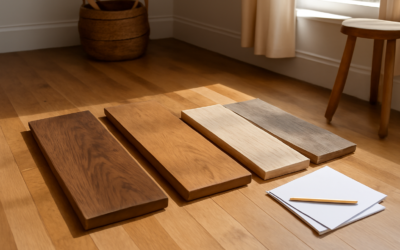
- View large samples in your own light; wood color shifts dramatically between store lighting and your home.
- Check the finish warranty and confirm it matches your traffic level (residential vs. commercial).
- Note the edge profile, microbeveled vs. square, so you know what the seams will look and clean like.
- Confirm the wear layer on engineered products if you want the option to refinish later.
- Order extra from the same lot for future repairs, since discontinued colors are hard to match.
- Acclimate the wood in your home before installation to prevent gapping or cupping.
Caring for a Finished Wood Floor
Prefinished floors are easy to maintain. Sweep or vacuum regularly to keep grit off the finish, clean with a product made for hardwood, and wipe spills promptly. Use felt pads under furniture, place mats at entries, and keep indoor humidity stable to protect the wood. Avoid wet mopping and steam cleaners, which can damage wood over time. With proper care, a quality finished wood floor easily lasts decades before it ever needs refinishing.
Choosing a Species and Color
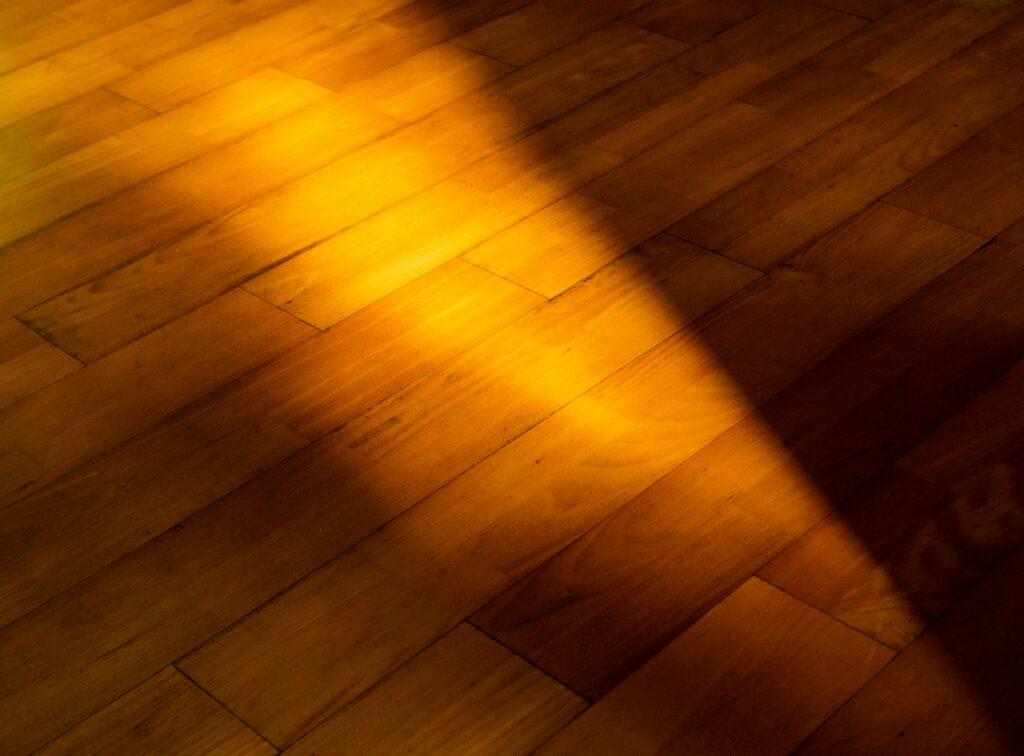
Finished wood flooring comes in a wide range of species, and the choice affects both looks and durability. Oak, both red and white, is the most popular for good reason: it’s hard, widely available, takes stain well, and its grain hides wear. Hickory and maple are even harder and suit busy households, while walnut and cherry offer rich, darker tones at a premium. For color, lighter floors hide dust and scratches and make rooms feel open, while darker floors feel rich and cozy but show pet hair and footprints more. Wider planks read modern and show off grain; narrower strips feel more traditional. Always view a large sample in your own home over a day or two, since wood tone shifts noticeably between morning and evening light.
Installation Methods
Prefinished flooring is installed in a few different ways depending on the construction and subfloor. Solid prefinished hardwood is typically nailed or stapled down to a wood subfloor. Engineered prefinished planks offer more flexibility: they can be nailed, glued down to concrete, or, with click-lock systems, floated over an underlayment, which makes engineered a better fit for basements and slab subfloors. Whichever method applies, the subfloor must be clean, dry, and flat within tolerance, and the wood should acclimate in the room first. Because prefinished floors need no on-site finishing, installation is faster and far less disruptive than site-finished work, often completed in a day or two for a typical room.
The Bottom Line
Finished wood flooring, prefinished hardwood, gives you a durable factory finish, predictable color, and a fast, low-mess installation, which is why it’s the go-to for most homeowners today. The main trade-offs are beveled edges and less stain customization compared to site-finished floors. Decide between solid and engineered based on where it’s going, buy on warranty and wear-layer specs, view samples in your own light, and order extra for repairs. Do that, and you’ll have a beautiful, hard-wearing wood floor that’s ready to enjoy the day it goes down.
Prefer to explore on your own?
See how new flooring looks in your actual room in seconds — free, no signup.
Try the free Floor Studio →