The fastest way to date a room is a tile choice that follows a fad instead of the space itself. The best floor and wall tile ideas start from proportion, light, and traffic, then let color and pattern do the finishing work. Whether you’re covering a small bathroom floor or wrapping a kitchen from counter to ceiling, the right tile size, layout, and grout can make a room feel larger, cleaner, and far more expensive than it actually was. Here are the combinations that consistently look good years later.
Part of our Tile & Grout guide — explore the full guide →
- Floor and Wall Tile Ideas for Small Bathrooms
- Kitchen Backsplash and Floor Pairings
- Choosing Tile Size for the Space
- Layout Patterns That Add Character
- Grout: The Detail Everyone Underestimates
- Mixing Materials Without Clashing
- Budgeting Your Tile Project
- Color, Texture, and Living-Space Ideas That Age Well
Floor and Wall Tile Ideas for Small Bathrooms
In a bathroom under 60 square feet, oversized tile is your friend, which surprises most homeowners. A large-format 24-by-24-inch porcelain floor tile means fewer grout lines, so the eye reads the floor as one continuous plane and the room feels bigger. Run the same large tile up the shower wall and you erase the visual seam between horizontal and vertical surfaces. For contrast, add a single accent wall of small penny-round or 2-by-2-inch mosaic behind the vanity.
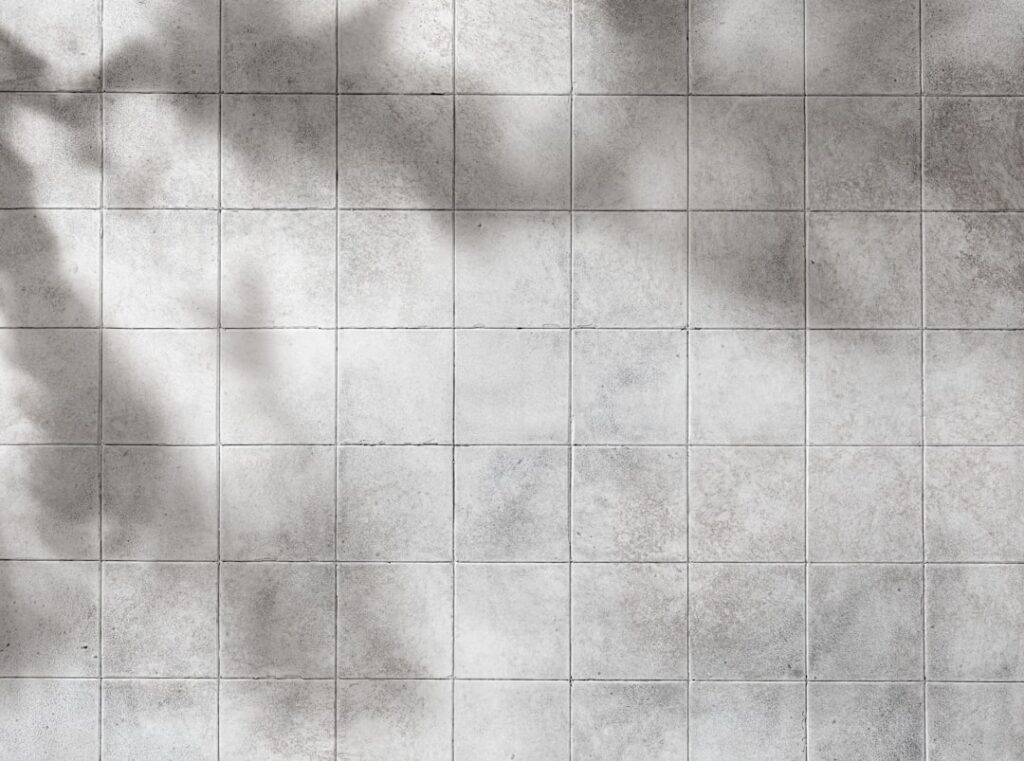
Light, warm neutrals stretch space. A greige (gray-beige) 12-by-24-inch tile laid in a straight stack costs roughly $3 to $8 per square foot for the material and reflects light without the sterile feel of stark white. Skip busy patterns on the floor of a tight room; save the drama for one focal wall.
Continuity is the secret weapon in a small bath. Running the same tile from the floor up the shower wall, or wrapping one tile around the whole room, removes the visual breaks that make a space feel chopped up and cramped. If you crave contrast, introduce it through a single element, a mosaic shower niche, a patterned floor inset, or a strip of accent tile, rather than switching materials on every surface. One considered move reads as design; three or four read as clutter.
Kitchen Backsplash and Floor Pairings
Kitchens let you be bolder because upper cabinets and appliances break up the sight lines. A classic 3-by-6-inch white subway tile on the backsplash, set in a running bond with a soft gray grout, pairs with almost any floor and runs $2 to $6 per square foot. Want more character? Try a herringbone subway layout or a handmade zellige tile with subtle color variation for $8 to $20 per square foot.
On the floor, wood-look porcelain planks (6-by-36 inches or 8-by-48 inches) give you the warmth of hardwood with tile’s spill resistance, ideal in a room that sees dropped pans and mopped messes. If you want pattern underfoot, an encaustic-look cement tile in a defined zone, say in front of the sink or under a kitchen island, reads as a designed choice rather than an accident.
Choosing Tile Size for the Space
Size drives the whole look, so match it to the room before you fall in love with a color.
- Small rooms: large-format tile (18-by-18 inches and up) minimizes grout and expands space.
- Showers and curved walls: mosaic sheets (1-by-1 or 2-by-2 inches) flex around contours and add grip.
- Feature walls: vertical stacked tile (rectangles set upright) draws the eye up and raises a low ceiling.
- Large open floors: plank tile in a 33 percent offset avoids lippage while looking like natural wood.
A quick pro tip on offset: never step plank or rectangular tile more than one-third of its length. A traditional 50 percent brick-lay on long planks causes the center of one tile to sit higher than its neighbor’s edge, and that “lippage” catches toes and light.
Layout Patterns That Add Character
The same tile looks completely different depending on how you set it. A straight grid feels modern and calm. A diagonal layout hides out-of-square walls in older homes but generates more cut waste, so order 15 to 20 percent extra instead of the usual 10 percent. Herringbone and chevron patterns bring energy and are worth the added labor, which typically runs $2 to $4 per square foot above a standard grid because the installer makes more cuts and takes more time to keep the angles true.
For walls, a vertical stack has become the go-to for a clean, contemporary shower. Basketweave and pinwheel patterns suit vintage and cottage baths. Whatever you choose, dry-lay a few square feet on the floor first and step back; patterns that look great on a sample board can feel frantic across a full room.
Grout: The Detail Everyone Underestimates
Grout color changes a tile job more than any other single choice. Matching grout to the tile makes the surface read as one seamless field, softening pattern and hiding minor cut imperfections. Contrasting grout, like charcoal lines around white subway tile, turns the grid itself into the design and looks crisp when new but shows every smudge over time.
For floors and wet walls, use a stain-resistant epoxy or a high-performance cement grout, and keep joints between 1/8 and 3/16 inch for rectified large-format tile. Seal cement grout within a week of installation and reseal every year or two in showers. This $20 quart of sealer is the cheapest insurance against the dingy, discolored lines that make an otherwise good tile job look tired.
Mixing Materials Without Clashing
Some of the best floor and wall tile ideas combine two or three materials, but restraint is key. A reliable formula: pick one hero tile, one supporting neutral, and one small accent. For example, a marble-look porcelain floor (hero), a matte white ceramic wall tile (neutral), and a thin brass-trimmed mosaic niche (accent). Keep the undertones consistent, warm with warm, cool with cool, so the pieces feel intentional.
Trim and transitions pull it together. A metal Schluter edge, about $10 to $25 per 8-foot length, finishes exposed tile edges cleanly and eliminates the fragile bullnose that chips over time. Where tile meets a different floor, a low-profile transition strip prevents a stubbed toe and a cracked edge.
Budgeting Your Tile Project
Material is only part of the number. Expect $7 to $14 per square foot for professional floor installation and $9 to $18 per square foot for walls, since vertical work is slower. Add demolition, waterproofing membrane in wet areas ($1.50 to $3 per square foot), and setting materials. A full 100-square-foot bathroom floor and shower surround typically lands between $3,500 and $8,000 installed, depending on tile grade and pattern complexity. Spend on the tile you’ll see every day at eye level, and save on the large floor field where a mid-priced porcelain performs just as well as a premium one.
Color, Texture, and Living-Space Ideas That Age Well
Color is where homeowners chase trends and regret it fastest. The tile that photographs beautifully today can look dated in five years, so anchor a room with timeless neutrals on the big surfaces and reserve bold color for elements you can change cheaply, like a painted vanity or towels. Warm whites, soft greiges, and earthy clay tones have stayed relevant for decades because they flatter almost any light.
Texture adds interest without the risk of a loud color. A matte or honed finish reads calm and hides water spots, while a subtle three-dimensional wall tile catches light and creates depth on a feature wall. Handmade-look zellige, with its glossy, slightly uneven surface, brings artisanal character that a flat machine tile can’t match. For floors, always check the slip rating: look for a coefficient of friction (COF) of 0.42 or higher on any wet-area floor so it stays safe underfoot in a shower or entry.
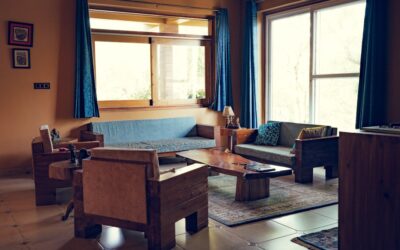
Tile isn’t just for kitchens and baths. Wood-look porcelain plank flows beautifully through living rooms, hallways, and open-concept spaces, giving you the warmth of hardwood with none of the worry about scratches, spills, or pets. A large-format 24-by-48-inch porcelain slab across a main floor creates an expansive, seamless look with minimal grout, and it hides dirt between cleanings better than you’d expect.
A tiled fireplace surround is one of the highest-impact projects in a living room. A floor-to-ceiling stack of textured tile turns a plain firebox into a dramatic focal wall, while a simple band of marble-look tile keeps a traditional room elegant. Entryways are another underused canvas: a bold encaustic-look cement tile in a foyer makes a memorable first impression and stands up to tracked-in grit. Wherever you place it, dry-lay a section first and view it in the room’s actual light before committing, since tile reads differently under warm evening lamps than under a showroom’s cool fluorescents.
Prefer to explore on your own?
See how new flooring looks in your actual room in seconds — free, no signup.
Try the free Floor Studio →