White cabinets are the most popular kitchen cabinet color in America, and they give you a blank canvas for your backsplash — which is exactly why choosing the right one feels overwhelming. After more than 30 years installing tile and helping homeowners design kitchens, I’ve seen every combination imaginable. These white cabinet kitchen backsplash ideas represent the best pairings for 2026, from timeless classics to bold statements, at every price point.
Part of our Kitchen Remodeling guide — explore the full guide →
- Classic Subway Tile Backsplashes
- Marble and Marble-Look Backsplashes
- Herringbone and Chevron Patterns
- Bold Patterns and Color Statements
- Warm vs. Cool Tone Pairings
- Best Color Pairings With White Cabinets
- Budget-Friendly Backsplash Options
- Trending Backsplash Styles for 2026
- Installation Tips
- Frequently Asked Questions
Classic Subway Tile Backsplashes
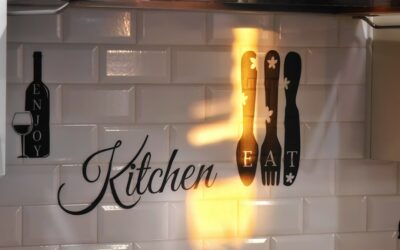
Subway tile and white cabinets is the pairing that never goes out of style. The 3×6-inch format has been a kitchen staple since the early 1900s, and in 2026 it remains the single most popular backsplash choice for white cabinet kitchens — for good reason.
The beauty of subway tile with white cabinets is its versatility. A white-on-white subway backsplash creates a clean, seamless look that makes small kitchens feel larger. Gray subway tile adds subtle contrast without competing with the cabinets. And colored subway tile — sage green, navy, dusty blue — transforms the backsplash into the kitchen’s focal point.
Layout variations keep subway tile feeling fresh:
- Running bond (offset): The classic staggered pattern. Timeless and universally appealing.
- Stacked (straight set): Modern and minimal. Vertical grout lines create a clean grid that reads contemporary.
- Vertical stack: Installing standard subway tiles vertically draws the eye upward and makes ceilings feel taller.
- One-third offset: A subtle variation on running bond with a slightly different rhythm.
Subway tile costs $2 to $15 per square foot for material, making it one of the most affordable backsplash options. Handmade or artisan subway tiles with undulating surfaces run $15 to $30 per square foot and add texture that mass-produced tiles lack.
Marble and Marble-Look Backsplashes
Marble backsplashes paired with white cabinets create an elevated, luxurious kitchen that photographs beautifully and impresses in person. Carrara marble with its soft gray veining is the most popular choice, followed by Calacatta with its bolder, more dramatic veining.
Options for incorporating marble into your backsplash:
Full slab marble backsplash: A single bookmatched slab behind the range creates a dramatic focal point. This is the premium approach at $50 to $150 per square foot installed, but the visual impact is extraordinary.
Marble mosaic tile: Smaller marble pieces in herringbone, basketweave, or hexagonal patterns at $15 to $40 per square foot. The pattern adds visual interest while the marble adds luxury.
Marble subway tile: Polished or honed marble cut into subway tile format at $10 to $25 per square foot. Gives you the marble look in a familiar layout.
Marble-look porcelain: For homeowners who love the marble aesthetic but want zero maintenance, porcelain tiles that mimic Carrara or Calacatta run $5 to $20 per square foot and are completely stain-proof. The technology has improved dramatically — from a few feet away, premium porcelain marble-look tiles are nearly indistinguishable from real stone.
Real marble backsplashes require sealing and can etch from cooking splatter (tomato sauce, citrus). Honed marble hides etching better than polished. If you’re willing to accept the natural aging, real marble is stunning. If not, marble-look porcelain gives you 90 percent of the beauty with none of the maintenance.
Herringbone and Chevron Patterns
Herringbone is the pattern of the moment for white cabinet kitchen backsplash ideas. The V-shaped interlocking pattern adds movement and visual interest that straight-set tile cannot match. It works equally well in traditional and modern kitchens.
Herringbone vs. chevron: Herringbone uses rectangular tiles set at 45-degree angles, creating a staggered zigzag. Chevron uses tiles cut at an angle so the edges form a continuous V-shape. Herringbone is more common and easier to install; chevron is slightly more refined and contemporary.
Best tiles for herringbone backsplashes with white cabinets:
- White marble herringbone: Elegant and subtle. The pattern creates texture while maintaining a tone-on-tone palette.
- Gray herringbone: Provides contrast against white cabinets without being bold. Works in both traditional and transitional kitchens.
- Blue or green herringbone: A statement-making choice that pairs beautifully with brass hardware and white cabinetry.
- Wood-look porcelain herringbone: Brings warmth and texture. Pairs particularly well with butcher block countertops and white shaker cabinets.
Herringbone installation costs 15 to 25 percent more than straight-set tile due to the additional cutting and precision required. Budget $8 to $15 per square foot for labor on herringbone patterns, compared to $5 to $10 for straight-set.
Bold Patterns and Color Statements
White cabinets are the perfect backdrop for a bold backsplash statement. Because the cabinets are neutral, you can push the backsplash further than you could with colored cabinetry. Here are bold options that work:
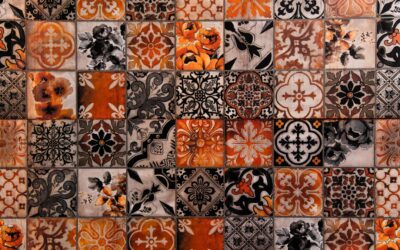
Patterned cement tile: Encaustic cement tiles in geometric, floral, or Moroccan patterns create show-stopping backsplashes. At $8 to $25 per square foot, they’re affordable and unique. Choose patterns with white in them to tie back to the cabinets.
Zellige tile: Handmade Moroccan clay tiles with an imperfect, glossy surface that catches light differently at every angle. Zellige in blues, greens, or terracotta against white cabinets creates a collected, artisanal look. Prices range from $15 to $35 per square foot.
Glass tile in saturated colors: Emerald green, deep navy, or rich teal glass tile behind a white kitchen creates a jewel-box effect. Glass reflects light and makes the color appear even richer. Budget $10 to $30 per square foot.
Printed or hand-painted tile: Delft-inspired blue-and-white tiles, Spanish colonial patterns, or custom-printed options add personality and cultural reference to your kitchen. These specialty tiles start around $20 per square foot and can exceed $50 for handmade artisan work.
Large-format patterned porcelain: Big slabs with dramatic veining or geometric patterns minimize grout lines and create a modern, seamless look. Prices vary from $5 to $20 per square foot for the tile itself.
Warm vs. Cool Tone Pairings
One of the most important design decisions is whether to pair your white cabinets with warm-toned or cool-toned backsplash materials. The direction you choose affects the entire kitchen’s mood.
Cool-toned backsplashes (gray, blue, blue-green, white marble) create a crisp, clean, contemporary feel. They pair best with bright white or blue-white cabinets, chrome or nickel hardware, and cool-toned countertops like gray quartz or Carrara marble. Cool kitchens feel spacious and airy.
Warm-toned backsplashes (cream, beige, terracotta, warm green, gold) create an inviting, cozy atmosphere. They pair best with warm white or cream cabinets, brass or gold hardware, and warm countertops like butcher block or cream-veined granite. Warm kitchens feel homey and welcoming.
The key rule: match the undertone of your white cabinets to the undertone of your backsplash. Cool white cabinets with warm backsplash (or vice versa) creates a subtle clash that makes both elements look “off.” Hold a backsplash sample against your cabinet door in natural daylight to check the undertone match before committing.
Best Color Pairings With White Cabinets
These specific color combinations have proven themselves in thousands of white cabinet kitchens:
White + sage green backsplash: The top trending combination for 2026. Sage green adds warmth and natural energy without overwhelming. Works with brass hardware and butcher block or quartz countertops.
White + navy blue backsplash: Classic and sophisticated. Navy subway tile or Moroccan fish-scale tile creates a nautical or coastal feel. Pairs with nickel hardware and white or gray countertops.
White + black backsplash: High contrast and dramatic. Black subway tile, hexagonal tile, or matte-finish large-format tile makes white cabinets pop. Pair with black hardware and white countertops for a monochromatic statement.
White + greige (gray-beige) backsplash: Subtle and sophisticated. Greige tile bridges warm and cool tones and works with any hardware finish. Perfect for homeowners who want contrast without color.
White + terracotta or rust backsplash: A warm, earthy combination that’s gaining momentum. Terracotta zellige or clay tile brings Mediterranean warmth to modern white kitchens. Pair with matte black or aged brass hardware.
Budget-Friendly Backsplash Options
A stunning backsplash doesn’t require a premium budget. These options deliver style with white cabinets for under $10 per square foot in materials:
Ceramic subway tile: $2 to $5 per square foot. The most affordable option that still looks classic and intentional. Available at every home improvement store.
Peel-and-stick tile: $3 to $10 per square foot. Dramatically improved quality in recent years. Vinyl, gel, and composite options mimic subway tile, marble, and mosaic patterns. Easy DIY installation — perfect for renters or temporary makeovers.
Painted beadboard: $3 to $6 per square foot for materials. A cottage-style option that adds texture and charm. Not recommended behind stoves without a heat shield, but works beautifully on sidewalls.
Porcelain mosaic sheets: $4 to $8 per square foot. Pre-mounted on mesh sheets for faster installation. Penny round, hexagonal, and mini-subway formats are available in dozens of colors.
Large-format porcelain: $3 to $8 per square foot. Fewer tiles mean faster installation and less grout. Clean, modern look that suits white cabinet kitchens well.
Trending Backsplash Styles for 2026
These backsplash trends are defining white cabinet kitchen design in 2026:
- Full-height backsplashes: Running tile all the way to the ceiling instead of stopping at the upper cabinets. Creates a dramatic, high-end look, especially with vertical subway tile.
- Textured and 3D tiles: Tiles with raised patterns, fluted surfaces, or sculptural elements add tactile dimension that flat tiles can’t match.
- Warm neutrals: The shift away from cool grays toward warm whites, creams, and beige-adjacent colors continues to accelerate.
- Zellige and handmade tile: The imperfect, handcrafted aesthetic is in high demand as homeowners reject the uniformity of factory-made tile.
- Bookmatched slab backsplashes: A single stone or porcelain slab with continuous veining behind the range — dramatic and minimalist simultaneously.
- Mixed materials: Combining two complementary tile types (e.g., subway tile on walls with mosaic behind the range) adds layered visual interest.
Installation Tips
Whether you’re hiring a professional or tackling a DIY backsplash, these tips ensure a great result:
Dry-lay the pattern first. Set tiles on the counter without adhesive to visualize the layout, identify where cuts will fall, and center the pattern on focal points like the range hood.
Use the right adhesive. Mastic (pre-mixed adhesive) works for most ceramic and porcelain backsplash tiles on drywall. Modified thinset is required for natural stone, glass tile, and any area that may get wet (behind sinks). Never use mastic on natural stone — it won’t bond properly.
Grout color matters enormously. White grout on white tile creates a seamless look. Gray grout on white tile outlines each tile and emphasizes the pattern. Dark grout on white tile makes a bold, graphic statement. Buy a grout sample and test it with your tile before committing.
Seal grout lines. After grout cures (24 to 72 hours), apply a penetrating grout sealer to prevent staining from cooking splatter. Reapply annually. This five-minute task saves hours of scrubbing later.
Frequently Asked Questions
What backsplash goes best with white cabinets?
White or light gray subway tile is the universally safe choice that works with any white cabinet style. For more personality, sage green or navy tile creates beautiful contrast. For luxury, marble (or marble-look porcelain) elevates the entire kitchen. Match the backsplash undertone (warm or cool) to the undertone of your white cabinets for the most cohesive result.
Should the backsplash match the countertop or the cabinets?
The backsplash should complement both but doesn’t need to match either exactly. A good rule of thumb: pick a color from the countertop’s secondary tone or veining and echo it in the backsplash. For example, gray veining in a white quartz countertop pairs naturally with gray or blue-gray backsplash tile. The backsplash bridges the visual gap between countertop and cabinets.
How much does a kitchen backsplash cost to install?
A standard kitchen backsplash covers 25 to 35 square feet and costs $300 to $1,500 for budget materials or $1,000 to $4,000 for premium tile, fully installed. Labor alone runs $5 to $15 per square foot depending on tile type and pattern complexity. DIY installation saves 40 to 50 percent and is achievable for most homeowners with basic tools and patience.
Is subway tile outdated for 2026?
No. Subway tile remains one of the most popular backsplash choices in 2026. What has evolved is how it’s used — vertical stacking, larger format (4×8 or 4×12), handmade textures, and colored glazes keep subway tile feeling current. The standard white 3×6 in running bond is timeless rather than trendy, meaning it won’t look dated a decade from now either.
Prefer to explore on your own?
See how new flooring looks in your actual room in seconds — free, no signup.
Try the free Floor Studio →