Most homeowners treat flooring as a background element, then wonder why their finished room looks generic. The floor covers more square footage than any other surface in the house, which means it carries enormous visual weight. Floor decorate decisions, from layout pattern to border accents to area rug placement, can shift a room from forgettable to genuinely impressive without changing a single wall color. The trick is understanding which techniques pay off and which add cost without payoff.
- Pattern Layouts That Transform a Room
- Tile Borders and Inlays
- Area Rug Layering for Instant Decor
- Color and Tone Strategy
- Transitions That Look Custom
- Lighting Pulls Out the Floor’s Best Features
- Maintenance That Keeps Decor Choices Looking Sharp
- Mixing Wood and Tile in One Open Floor Plan
- Budget Decor Wins Without a Renovation
Pattern Layouts That Transform a Room
The cheapest way to dress up a floor is to change how you lay the same material. Standard offset planks at 50 percent stagger look fine but blend into the background. Shift to a 33 percent or 25 percent stagger and the grain pattern starts to read as deliberate.
Herringbone and chevron command attention but eat material. Plan on 20 to 25 percent waste compared to 10 percent on straight lay. Hardwood and porcelain wood-look planks both work, but herringbone in a small bathroom or large open kitchen each tell different stories. Match the pattern scale to the room size.
Tile Borders and Inlays
A simple tile border around the perimeter of a room creates a framed-rug effect at a fraction of the cost of inset rugs. Pencil liners at $4 to $8 per linear foot, glass mosaic strips at $12 to $24 per linear foot, or contrasting porcelain trim all work. Plan the layout so the border lands cleanly under cabinet kicks and doorways.
Inlays at the foyer or kitchen island can use compass roses, geometric medallions, or contrasting wood species. Pre-cut medallions from companies like Pavé Tile or Element 7 cost $300 to $1,200 depending on size and complexity. Custom mosaics climb past $50 per sq ft but install in an afternoon.
Area Rug Layering for Instant Decor
The fastest floor decor upgrade is a properly sized rug. The mistake most homeowners make is buying too small. In a living room, the front legs of every seating piece should sit on the rug. In a dining room, chairs should remain on the rug when pulled out, which usually means 8×10 minimum and 9×12 ideal.
- Living room minimum — 8×10, ideal 9×12 or 10×14
- Dining room — at least 24 inches beyond the table edge on all sides
- Bedroom king — 9×12 with 18 to 24 inches showing on each side
- Bedroom queen — 8×10 with similar reveal
- Entry — 3×5 or 4×6 depending on door swing
A 5/8 inch felt-and-rubber rug pad at $1.50 per sq ft extends rug life by 5 to 10 years and prevents bunching. Skip the thin foam pads from big-box clearance racks.
Color and Tone Strategy
Light floors expand small rooms. Dark floors anchor large open layouts and hide pet hair from light-colored animals. Mid-tone floors are the safest pick for resale, particularly natural oak, hickory, and gray-brown wood-look porcelain. Stark whites and dark espressos show every footprint.
Match floor undertone to the cabinet and trim undertone. Warm floors (red, orange, yellow base) pair with warm whites and cream cabinets. Cool floors (gray, blue, green base) pair with crisp whites and gray cabinets. Mixing warm floor with cool cabinet creates visual tension that most homeowners notice but cannot name.
Transitions That Look Custom
Where two floor materials meet, the transition piece can either feel intentional or like an afterthought. T-molding works when floors are the same height. Reducer strips bridge thickness changes. Schluter Reno-T at $26 per 8-foot piece gives a clean metal transition between tile and wood.
For a more designed look, run hardwood through doorways without a transition and only break at material changes. Tile-to-hardwood transitions look best with a flush threshold or a marble saddle, not a stamped aluminum strip.
Lighting Pulls Out the Floor’s Best Features
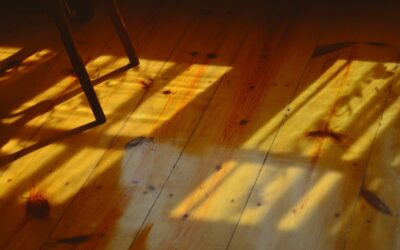
Hardwood and natural stone come alive with the right lighting. Recessed cans at 12 to 18 inches off the wall create a grazing light that highlights grain and texture. A 6 foot floor lamp throwing light across an oak floor at 5 p.m. shows more depth than overhead lighting ever will.
Avoid pointing light directly down onto polished tile or high-gloss hardwood. The glare flattens the texture and creates hot spots in photos. Diffused light from layered fixtures reveals what a polished floor actually looks like.
Maintenance That Keeps Decor Choices Looking Sharp
A herringbone tile floor with crisp grout lines depends on grout sealing every 12 to 18 months. Aqua Mix Sealer’s Choice at $42 per quart covers about 400 sq ft of grout joints. Skip a sealing cycle and the grout darkens, which kills the contrast that made the pattern shine in the first place.
Hardwood with a wire-brushed finish hides dirt but needs Bona Hardwood Floor Cleaner ($24 per gallon) and microfiber pads. Vinyl planks in light colors show every speck and benefit from a daily robot vacuum sweep. Match the cleaning routine to the decor choice you made.
Mixing Wood and Tile in One Open Floor Plan
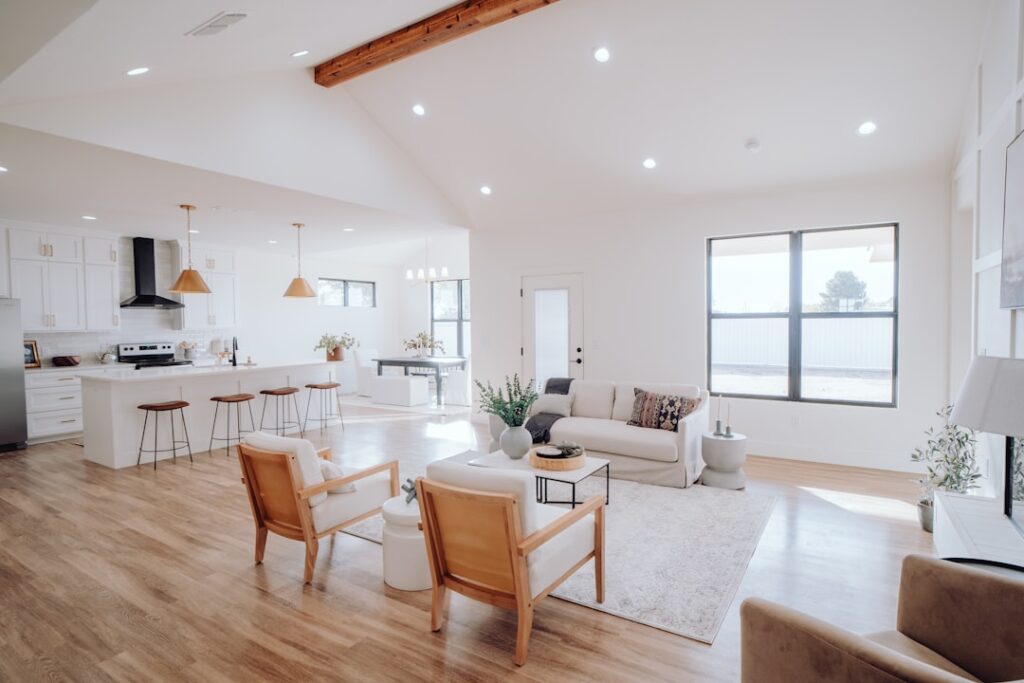
Open floor plans with kitchens flowing into living rooms create the question of where to break materials. The cleanest move is to run hardwood through the entire main floor and let tile stop at bathrooms and mudrooms. The second-cleanest is to break under the kitchen island, where the visual transition gets hidden by cabinetry above.
Avoid breaking materials mid-room with no architectural justification. A random transition between the living room and kitchen looks like a budget decision, not a design choice. If tile must replace wood under the kitchen sink for water protection, frame the tile zone with a complete change like a step or a half-wall.
Budget Decor Wins Without a Renovation
If a full floor replacement is not in the budget, three moves still upgrade the look. First, a runner in the hallway adds color and softens echo. Second, a quality rug pad under existing rugs makes them feel and look more expensive. Third, a deep clean and refinish on existing hardwood at $1.50 to $3 per sq ft restores the floor’s original presence.
For tile floors, a professional grout cleaning at $0.75 per sq ft transforms a tired-looking room. The floor decorate strategy that wins is the one that matches your budget, your home’s existing style, and the realistic maintenance you will keep up with two years from now.
Prefer to explore on your own?
See how new flooring looks in your actual room in seconds — free, no signup.
Try the free Floor Studio →