Ductless heat pumps have become a go-to solution for room additions, garages, and homes without ductwork. The Goodman mini split line pairs a reputable American HVAC brand with the flexibility of zoned heating and cooling, and it competes on both price and warranty coverage. This guide walks through sizing, efficiency ratings, installation, and long-term care.
- What a Mini Split Actually Is
- Goodman’s Place in the Market
- Understanding BTU Sizing
- Decoding SEER2 and HSPF2 Ratings
- Single-Zone vs. Multi-Zone Systems
- Installation Overview
- What Installation Costs
- Heating Performance in Cold Weather
- Choosing the Right Indoor Head Style
- Maintenance That Keeps It Running
- Common Problems and Troubleshooting
- Mistakes to Avoid
- Frequently Asked Questions
- Warranty and Registration Details
- Comparing Goodman to Other Brands
- Energy Savings and Rebates
- Final Thoughts
What a Mini Split Actually Is
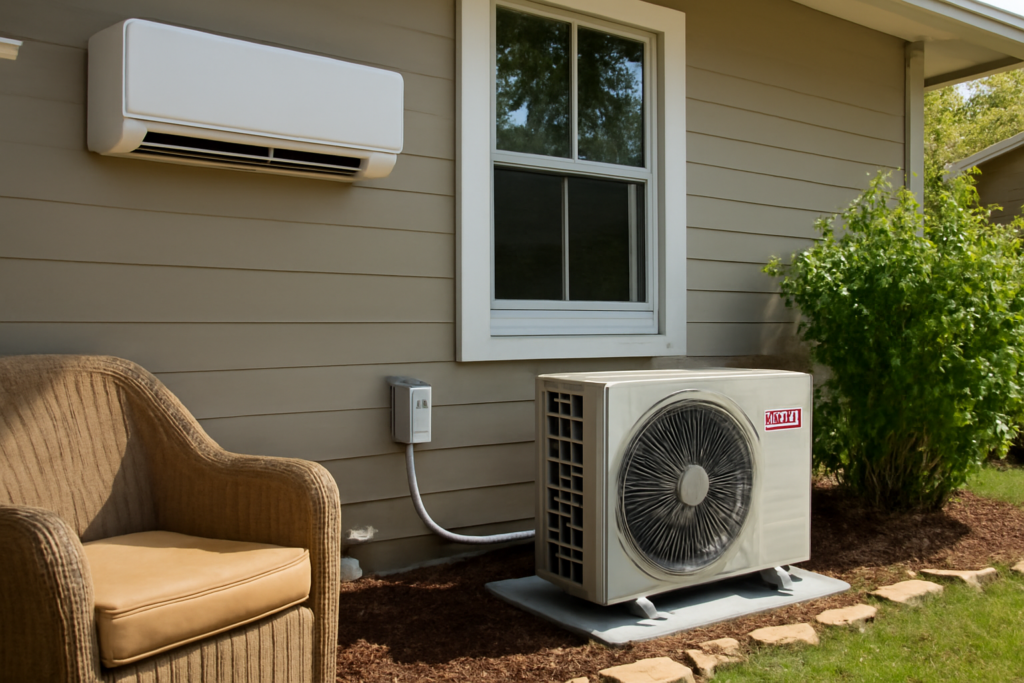
A mini split is a ductless system with two main parts: an outdoor condenser/compressor unit and one or more indoor air handlers connected by a refrigerant line set. Instead of pushing conditioned air through sheet-metal ducts, each indoor head delivers heating and cooling directly to the room it serves. Because there is no duct system, you avoid the 20 to 30 percent energy loss typical of leaky ductwork, which is one reason ductless systems earn high efficiency scores.
Goodman’s Place in the Market
Goodman is a Houston-based brand owned by Daikin, the world’s largest HVAC manufacturer. That relationship matters because Daikin pioneered much of the inverter compressor technology that makes modern mini splits efficient and quiet. Goodman positions itself as a value brand, generally undercutting premium labels like Mitsubishi and Fujitsu on price while offering a competitive 10-year parts limited warranty when the unit is registered within 60 days of installation.
Understanding BTU Sizing
Mini splits are sized in BTUs (British Thermal Units) per hour, typically ranging from 9,000 to 36,000 BTU for residential heads. A rough rule of thumb is 20 BTU per square foot, so a 500-square-foot room needs roughly 10,000 BTU, which rounds to a 12,000 BTU (one-ton) unit. Sun exposure, ceiling height, insulation, and climate shift that number. Oversizing is a real mistake: an oversized unit short-cycles, cooling the air fast but never running long enough to remove humidity, leaving the room clammy.
Decoding SEER2 and HSPF2 Ratings
As of 2023, efficiency is measured under the SEER2 and HSPF2 standards. Goodman mini splits commonly land between 15 and 23 SEER2 for cooling and 8 to 10 HSPF2 for heating. Higher numbers mean lower operating costs. For federal ENERGY STAR qualification and many utility rebates, you generally want at least 16 SEER2. A unit in the 20+ SEER2 range costs more upfront but can trim your cooling bill meaningfully in hot climates where the system runs many hours per year.
Single-Zone vs. Multi-Zone Systems
A single-zone system connects one outdoor unit to one indoor head, which is ideal for a bonus room, sunroom, or garage. A multi-zone system links one outdoor condenser to two, three, or more indoor heads, each with its own thermostat and remote. Multi-zone setups let you condition several rooms independently, but they cost more and require careful matching of total indoor capacity to the outdoor unit’s rated output.
Installation Overview
Installation involves mounting the indoor head on an exterior-adjacent wall, drilling a roughly 3-inch pass-through for the line set, setting the outdoor condenser on a pad or wall bracket, running refrigerant lines and a condensate drain, and wiring a dedicated 208/240-volt circuit. The refrigerant lines must be vacuumed down to remove moisture before the system is charged. This step requires EPA Section 608 certification, so a DIY install of a pre-charged unit is possible but a licensed HVAC technician is strongly recommended for warranty validity.
What Installation Costs
A single-zone Goodman mini split typically runs $2,000 to $4,500 installed, depending on capacity and local labor rates. Multi-zone systems climb to $5,000 to $10,000 or more. The equipment itself is often 40 to 50 percent of the total, with the balance going to labor, electrical work, mounting hardware, and refrigerant. Utility and federal rebates, including the Inflation Reduction Act’s heat pump incentives, can offset a portion for qualifying high-efficiency models.
Heating Performance in Cold Weather
Modern inverter mini splits provide usable heat well below freezing, but standard models lose capacity as temperatures drop. If you live where winters routinely hit the teens or lower, look for a cold-climate rated unit that maintains rated capacity down to 5°F or below. In milder regions a standard Goodman heat pump handles winter comfortably and costs far less to run than electric resistance baseboard heat.
Choosing the Right Indoor Head Style
Wall-mounted heads are the most common and least expensive. Other options include ceiling cassettes that recess into a drop ceiling for a cleaner look, floor-mounted consoles that work well under large windows, and slim ducted air handlers that can serve two small rooms through short duct runs. Match the head style to the room’s layout and your aesthetic preferences.
Maintenance That Keeps It Running
Mini splits are low-maintenance but not maintenance-free. Clean or rinse the washable indoor filters every two to four weeks during heavy use. Once or twice a year, gently clean the indoor coil and blower wheel, which collect dust and can breed mildew that causes odors. Keep the outdoor unit clear of leaves and debris, and hose off the condenser coil each spring. An annual professional check of refrigerant charge and electrical connections extends the system’s life toward its 15-to-20-year potential.
Common Problems and Troubleshooting
If the unit stops cooling, first check the filters and confirm the outdoor unit’s fan is spinning. Water dripping from the indoor head usually signals a clogged condensate drain line, which you can clear with a wet/dry vacuum at the outdoor drain outlet. Error codes flash on the indoor display or blink on the unit; match them to the manual to distinguish a sensor fault from a low-refrigerant condition. Ice on the outdoor coil in cooling mode points to low charge or airflow problems that need a technician.
Mistakes to Avoid
The biggest errors are oversizing the equipment, skipping the vacuum-and-evacuation step during install, and placing the indoor head where furniture blocks airflow. Also avoid mounting the outdoor unit in a tight, enclosed alcove that traps heat, and never neglect filter cleaning, which is the single most common cause of weak airflow and comfort complaints.
Frequently Asked Questions
Can I install a Goodman mini split myself?
You can handle mounting and running lines, but refrigerant handling and final charging legally require EPA certification, and DIY work can void the warranty.
How long does one last?
With proper maintenance, 15 to 20 years is realistic.
Is it noisy?
Indoor heads run around 19 to 40 decibels, quieter than a refrigerator on low settings.
Warranty and Registration Details
Goodman’s 10-year parts limited warranty is a major selling point, but it comes with conditions. You typically must register the unit within 60 days of installation to receive the full 10-year term; unregistered units often drop to a shorter base warranty of around five years. The warranty covers parts, not labor, so budget for service labor even during the coverage period. Keep your installation paperwork and serial numbers, and confirm the installer registers the equipment or do it yourself online promptly after the job.
Comparing Goodman to Other Brands
Against premium brands like Mitsubishi and Fujitsu, Goodman generally costs less upfront and offers comparable warranty coverage, but the premium labels often edge ahead on ultra-low-temperature heating performance, sound levels, and advanced controls. Against other value brands like Pioneer and MRCOOL, Goodman benefits from the Daikin engineering pedigree and a broader dealer network for service. If long-term parts availability and professional support matter to you, Goodman’s established presence is reassuring compared with lesser-known imports.
Energy Savings and Rebates
Because inverter mini splits modulate their output rather than cycling fully on and off, they run more efficiently than older single-speed systems, often cutting energy use for heating and cooling substantially. Many electric utilities offer rebates of a few hundred dollars for qualifying high-efficiency heat pumps, and federal tax credits under current energy legislation can return up to 30 percent of the cost of a qualifying system, with annual caps. Check your utility’s program and the federal ENERGY STAR requirements before purchasing to maximize available incentives.
Final Thoughts
For homeowners who want efficient, zoned comfort without the cost and disruption of ductwork, the Goodman mini split delivers strong value backed by Daikin engineering and a generous parts warranty. Size the unit correctly, choose a SEER2 rating that fits your climate and budget, hire a certified installer, and keep the filters clean. Do that, and you’ll enjoy quiet, low-cost heating and cooling for many years.