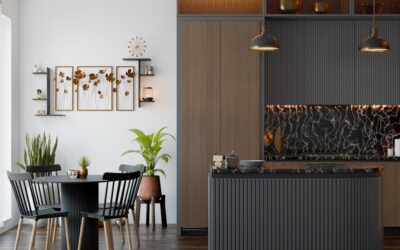
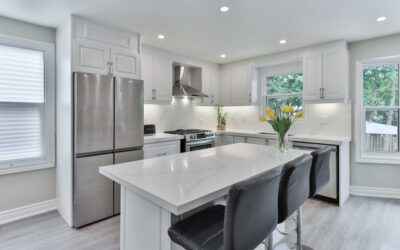
A half round kitchen island features one straight side and one curved, semicircular side, blending the practical storage of a rectangular island with the softer, sociable shape of a curve. It has become a favorite for open-concept kitchens because the rounded edge eases traffic flow, invites casual seating, and adds a distinctive design statement without the space demands of a full circle.
Part of our Kitchen Remodeling guide — explore the full guide →
This guide covers where a half round island works best, how to size and lay it out, seating and material options, and realistic costs so you can decide whether the curve is right for your kitchen.
- Why Choose a Half Round Island?
- Where a Half Round Island Works Best
- Sizing Your Half Round Island
- Seating Along the Curve
- Layout and Function Options
- Materials and Countertops
- What a Half Round Island Costs
- Lighting a Curved Island
- Storage and Function Trade-offs
- Design Styles That Suit a Curved Island
- Planning Plumbing and Electrical
- Is a Half Round Island Right for You?
Why Choose a Half Round Island?
The curved profile solves several everyday problems that boxy islands create.
- Better traffic flow: The rounded end removes the sharp corner people bump into, easing movement in busy kitchens.
- Natural gathering shape: A curve draws people together, making the seated side feel more social and conversational.
- Softer aesthetic: The organic shape breaks up a room full of straight lines and rectangles.
- Safer for kids: No hard corner at a child’s head height.
- Flexible seating: Stools fan out along the curve, fitting more people comfortably.
Where a Half Round Island Works Best
The shape shines in open-plan kitchens where the island faces a living or dining area. The straight side houses the working zone against the main kitchen, while the curved side opens toward the room for seating and entertaining. It also suits kitchens with a natural traffic path, since the curve guides movement around it rather than forcing 90-degree turns.
In a small or galley kitchen, however, a curved island can waste usable counter space compared with a rectangle, so it is best reserved for rooms with room to spare.
Sizing Your Half Round Island
Proper clearance is the foundation of a functional island, curved or not.
- Walkway clearance: Leave at least 36 to 42 inches of open space around the island; 42 to 48 inches is ideal on the working side where appliances open.
- Overall footprint: A typical half round island runs 6 to 8 feet along the straight side, with the curve projecting 3 to 4 feet at its deepest point.
- Counter height: Standard 36 inches for a work surface; 42 inches if you want a raised bar on the curved seating side.
- Seating overhang: Allow about 12 to 15 inches of counter overhang for comfortable knee room.
Seating Along the Curve
The semicircular side is what makes this island so welcoming, and it accommodates seating gracefully.
- Stools placed along the arc give each person a slightly angled view toward one another, which feels more social than a straight row.
- Plan about 24 inches of width per stool so guests are not crowded.
- Backless stools tuck neatly under the curve and preserve sightlines; low-back stools add comfort.
- A curved island 7 feet long can typically seat three to four people comfortably.
Layout and Function Options
A half round kitchen island can be as hardworking or as simple as you need.
- Prep and seating combo: Straight side for chopping and appliances, curved side for stools.
- Cooktop or sink island: Install a cooktop or prep sink on the straight side, keeping the curve as a clean gathering zone.
- Storage-focused: Cabinets and drawers along the straight back, open shelving following the curve.
- Two-tier design: A lower work counter and a raised curved bar to hide clutter from seated guests.
Materials and Countertops
The curved edge influences your countertop choice because not every material bends easily around a radius.
- Quartz and granite: Fabricators can cut and polish curved slabs, though tight radii add labor and cost.
- Butcher block: Wood can be shaped into a smooth curve and adds warmth.
- Concrete: Poured to any shape, ideal for organic curves.
- Waterfall edges: A curved waterfall edge is dramatic but expensive to fabricate.
Expect the curved cabinetry base to be at least partly custom, since standard stock cabinets are rectangular; curved end panels or a custom radius base are usually required.
What a Half Round Island Costs
Curves add complexity, so a half round island generally costs more than a comparable rectangle.
- Semi-custom island with curved end: $3,000 to $7,000
- Fully custom with premium counters: $7,000 to $15,000 or more
- Curved countertop fabrication premium: often 15 to 30 percent above a straight-edge counter
- Adding plumbing or electrical: $500 to $2,500 depending on runs
Lighting a Curved Island
Lighting is easy to overlook but makes a big difference over a curved island. Because the shape is organic, the lighting should complement rather than fight it. A row of evenly spaced pendants following the curve looks intentional and highlights the island’s distinctive form, while a single large statement fixture centered over the curve draws the eye. Plan the number of pendants around the length of the arc, spacing them so each seat below gets its own pool of light. For task lighting on the working straight side, ensure the pendants or recessed cans throw enough light onto the prep surface. Hanging pendants roughly 30 to 36 inches above the countertop keeps them out of sightlines while illuminating the work and seating areas effectively.
Storage and Function Trade-offs
While the curved end is beautiful and social, it is worth understanding the practical trade-offs before committing. The rounded profile sacrifices some interior cabinet space compared with a rectangle, because standard boxy cabinets do not fill a curve efficiently, leaving small wedge-shaped voids. Fabricating a curved countertop also costs more and takes longer than a straight edge. To get the best of both worlds, many designers keep the straight side fully cabineted for maximum drawers and storage, then use the curved side primarily for seating with shallow or open shelving beneath. This approach preserves the sociable curve while minimizing the lost storage, giving you a hardworking island that still delivers the softer silhouette.
Design Styles That Suit a Curved Island
The organic shape of a half round island lends itself to certain design directions more than others, and choosing finishes that play up the curve makes the island a true centerpiece.
- Modern and contemporary: Sleek slab cabinet fronts and a waterfall or curved quartz edge emphasize the clean geometry.
- Transitional: Shaker cabinets with a warm wood or stone counter soften the curve for a timeless feel.
- Farmhouse: Beadboard or painted cabinetry with a butcher-block curved top adds character.
- Coastal: Light finishes and a pale stone counter keep the island airy and open.
A contrasting color on the island, such as a deep navy or forest green against lighter perimeter cabinets, further highlights its distinctive shape.
Planning Plumbing and Electrical
If you want a sink, cooktop, or outlets on the island, those utilities need to be planned before construction because running them to a curved island can be more involved than to a standard rectangle. Plumbing and electrical lines typically run through the floor to reach an island, so the layout must be coordinated with your subfloor and, in many cases, requires cutting into finished floors. Building codes usually require outlets on kitchen islands for safety and convenience, and if you add a cooktop you may need ventilation, which is a significant consideration for an island in the middle of an open room. Locate any sink or cooktop on the straight working side of the island to keep the curved side clear for seating and to simplify the utility runs. Budgeting $500 to $2,500 for plumbing and electrical work is realistic depending on the complexity and how far the lines must travel. Handling this planning up front avoids costly changes once cabinetry is in place.
Is a Half Round Island Right for You?
A half round kitchen island is a strong choice if you have an open kitchen, entertain often, and want a design centerpiece that improves flow and encourages people to gather. It costs more than a boxy island and rewards kitchens with generous floor space, so confirm your clearances first and plan for some custom cabinetry. If your room can accommodate it, the curved silhouette delivers a softer, more inviting kitchen that stands apart from the standard rectangle while still working hard for daily cooking and storage.