Hexagon floor tile has cemented its place as one of the most popular and versatile tile shapes in modern interior design. The six-sided geometry creates honeycomb patterns that add visual interest without the rigidity of square grids or the complexity of irregular shapes. From tiny penny-sized mosaics to oversized statement tiles, hexagons work in bathrooms, kitchens, entryways, and living spaces across every design style.
Part of our Tile & Grout guide — explore the full guide →
This guide explores hexagon floor tile sizes, materials, design ideas, layout techniques, and installation tips to help you create the perfect hex tile floor.
Why Hexagon Tiles Are So Popular
Hexagonal geometry occurs naturally in honeycombs, basalt columns, and crystal formations. This organic connection gives hex tiles an inherently pleasing quality that feels both structured and natural. Unlike squares and rectangles, hexagons tessellate without creating long, unbroken grout lines that divide a floor into rigid rows and columns.
The hexagon shape also offers practical benefits. Small hexagonal tile flooring provides excellent slip resistance because the numerous grout lines create traction, making hex mosaics ideal for shower floors and wet areas. Larger hexagons create bold geometric statements that serve as focal points in entryways and bathrooms.
Hexagon tiles have a rich design heritage. They appeared in Victorian-era bathrooms, Art Deco interiors, and mid-century modern homes. Today’s versions range from faithful reproductions of those historic styles to ultra-modern interpretations in concrete, metal, and glass.
Hexagon Tile Sizes
Small Hexagons (1 to 2 Inches)
One-inch and two-inch hexagon mosaics come mounted on mesh-backed sheets for easy installation. They create the classic vintage bathroom look popularized in early 20th-century homes. Small hex mosaics provide excellent slip resistance and follow floor slopes naturally, making them the standard choice for shower floors.
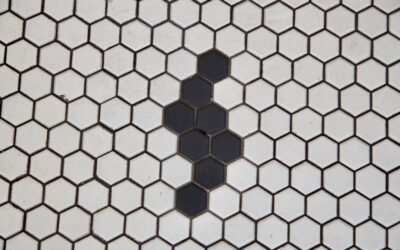
Small hexagons are available in porcelain, ceramic, glass, and natural stone. White hex mosaic with dark grout remains the most iconic combination, but modern palettes include black, gray, blue, green, and multicolor blends.
Medium Hexagons (4 to 6 Inches)
Medium hexagons bridge the gap between mosaic-scale detail and large-format impact. They read as individual tiles rather than overall texture, allowing each tile’s color and surface variation to contribute to the pattern. Medium hexagons work well on bathroom floors, kitchen backsplashes, and accent walls.
Large Hexagons (8 to 12 Inches)
Large hexagonal tiles make bold design statements. Each tile is significant enough to stand on its own, and the hexagonal grid creates a dramatic geometric floor that draws immediate attention. Large hex tiles work best in rooms with enough square footage for the pattern to develop — at least 40 to 50 square feet.
Large hexagons in concrete-look, marble-look, and wood-look finishes are particularly popular in 2026. These realistic surfaces gain added dimension from the unexpected hexagonal format.
Oversized Hexagons (14 Inches and Larger)
Oversized hex tiles create expansive geometric patterns with minimal grout lines. They require perfectly flat subfloors and experienced installation but deliver a high-impact modern look. Oversized hexagons work best in large open spaces — foyers, great rooms, and commercial lobbies.
Hexagon Tile Materials
Porcelain
Porcelain hexagon tiles offer the widest range of sizes, colors, and surface finishes. They are waterproof, scratch-resistant, and suitable for floors, walls, indoor, and outdoor applications. Porcelain hexagons cost $3 to $15 per square foot depending on size and quality.
Ceramic
Ceramic hexagons provide a more affordable alternative to porcelain at $2 to $8 per square foot. They work well for wall applications and light-traffic floor areas. Ceramic is softer and more porous than porcelain, so it is not recommended for heavy commercial traffic or outdoor use.
Marble
Natural stone hexagon tiles in marble, particularly Carrara and Calacatta varieties, create luxurious bathroom and entryway floors. Marble hexagons are typically available in mosaic sizes (1 to 2 inches) and medium sizes (4 to 6 inches). They require sealing to prevent staining and cost $8 to $25 per square foot.
Cement (Encaustic)
Cement hexagon tiles feature pigmented patterns that extend through the full tile thickness. They are handmade, artisanal products with rich colors and slight variations that give each tile character. Cement hex tiles cost $8 to $20 per square foot and require sealing before grouting and periodic resealing.
Terrazzo
Terrazzo hexagon tiles combine the geometric impact of the hex shape with the colorful, speckled character of terrazzo. They create playful, contemporary floors that work especially well in bathrooms, laundry rooms, and retail spaces.
Design Ideas for Hexagon Floor Tile
Classic White Hex with Dark Grout
Small white hexagonal mosaics with dark charcoal or black grout create the timeless vintage bathroom look. This combination has endured for over a century because it is clean, bright, and visually interesting. The dark grout lines define each hexagon clearly, creating a graphic pattern that never feels dated.
Hex-to-Plank Transition
One of the most popular hex tile trends creates an organic transition between hexagonal tile and wood-look planks (either real hardwood or luxury vinyl plank). The hex tiles scatter and thin out along the transition line, creating a fragmented boundary that looks like the tile is dissolving into the wood floor. This dramatic effect works beautifully at the boundary between a tiled entryway or kitchen and a wood-floored living area.
Multicolor and Ombre Patterns
Mixing hexagon tiles in multiple colors creates custom patterns ranging from subtle gradients to bold geometric designs. An ombre effect that transitions from dark to light across the floor creates visual movement and depth. Three-color combinations using a base tone, an accent tone, and a neutral create sophisticated patterns that feel curated rather than random.
Patterned Hex Tiles
Individual hexagonal tiles with printed or encaustic patterns create kaleidoscopic effects when arranged together. Each tile’s pattern connects with its neighbors to form larger designs that emerge across the floor. These patterned hex tiles make powerful statements in small spaces like powder rooms and entryways.
3D Hexagon Effects
Hexagonal tiles with shaded or tonal printing create the illusion of three-dimensional cubes on a flat surface. This optical effect adds remarkable visual depth to walls and floors. The classic tumbling blocks pattern uses three shades of the same color on hexagonal tiles to produce a convincing 3D cube grid.
Mixed Sizes
Combining small and large hexagons in a single installation creates visual hierarchy and interest. Large hex tiles form the primary field, while small hex mosaics fill accent areas or create borders. This mixed-scale approach works particularly well in bathrooms where the shower floor uses small hex mosaics for slip resistance while the main bathroom floor features larger hexagons.
Layout Planning
Starting Point
Plan your hex tile layout from the center of the most visible area and work outward. Hexagonal grids do not align with room walls the way square tiles do, so perimeter cuts will be irregular. Starting from the center ensures the pattern is symmetrical and the most visible area has full tiles.
Orientation
Hexagons can be oriented with a flat edge at the top (pointy tops facing left and right) or with a point at the top (flat edges on the sides). The orientation affects how the pattern interacts with the room shape and how perimeter cuts align with walls. Lay out a dry run of tiles before committing to adhesive to confirm the best orientation for your space.
Cutting
Hexagonal tiles require more cuts at room perimeters than square tiles. The angled edges create irregular cuts against straight walls that must be carefully measured and executed. A wet saw handles these cuts precisely. Plan for 15 to 20 percent extra material to account for increased cutting waste.
Installation Tips
Subfloor Preparation
Hexagon tiles require the same flat, clean subfloor as any tile installation. Flatness is especially critical for large hexagons, which will rock on uneven surfaces and create visible lippage at edges. Self-level the subfloor if needed to achieve flatness within 1/8 inch over 10 feet.
Thinset Application
Apply modified thinset mortar with the appropriate notched trowel. For mosaic hex sheets, use a 1/4-inch V-notch trowel. For large hexagons, use a 1/4-inch by 3/8-inch U-notch trowel. Back-butter large hexagonal tiles to ensure full coverage and prevent hollow spots.
Grouting
Hexagonal tiles have more grout joints per square foot than square tiles, which means grouting takes longer and uses more material. Work in small sections and clean excess grout before it hardens. For mosaic hex tiles, use a grout float at a 45-degree angle and work diagonally across the tile sheets.
Choose grout color carefully — it has a dramatic impact on the final appearance. Matching grout minimizes the grid pattern and creates a more unified surface. Contrasting grout emphasizes each hexagon and creates a bolder graphic effect.
Cost Considerations
Hexagon floor tiles cost $2 to $25 per square foot for materials depending on size and material. Installation costs $8 to $18 per square foot — slightly higher than standard square tile due to the increased cutting and layout complexity. A typical 50-square-foot bathroom hex tile installation costs $500 to $1,500 for materials and labor.
Budget for 15 to 20 percent extra tile material. The hexagonal shape generates more waste during perimeter cuts than square tiles, and having matching replacement tiles for future repairs is important since hex tile designs change frequently.
Final Thoughts
Hexagon floor tile offers a unique combination of geometric impact, design versatility, and practical performance that few other tile shapes can match. Whether you choose tiny mosaics for a classic bathroom floor or oversized hex tiles for a bold entryway statement, the honeycomb geometry adds visual interest and organic beauty to any space. Plan your layout carefully, budget for extra material, and select a grout color that complements your design vision for results that will look stunning for decades.
Prefer to explore on your own?
See how new flooring looks in your actual room in seconds — free, no signup.
Try the free Floor Studio →