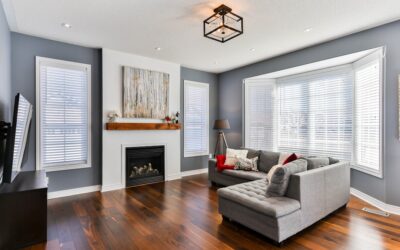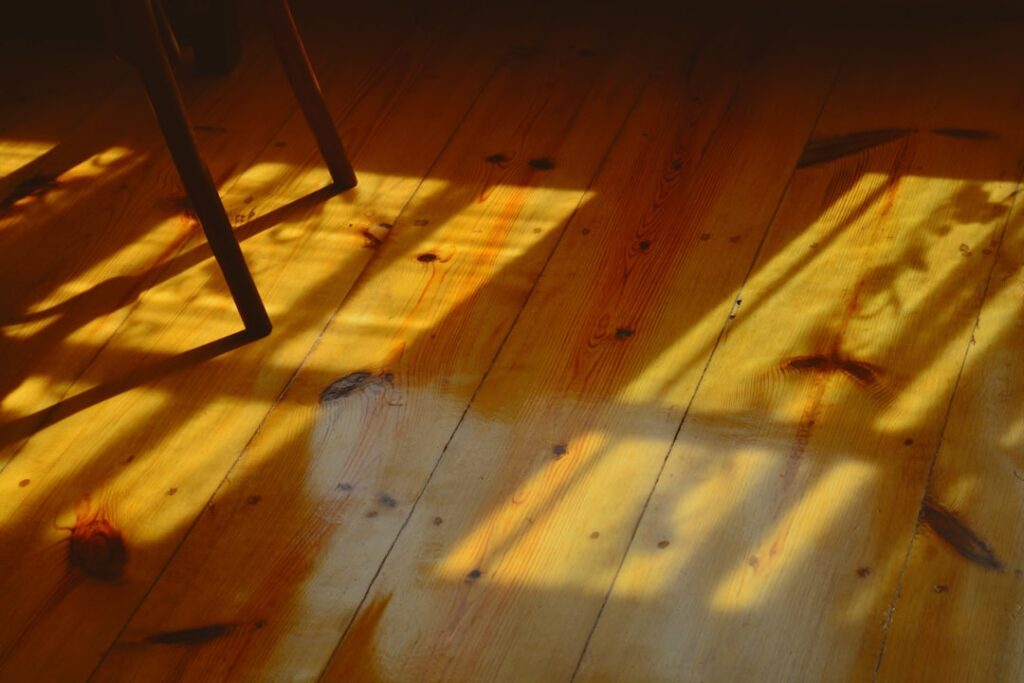
Hickory is the toughest commercially available domestic hardwood — a 1820 Janka rating that hits 41% harder than red oak and dents less than even Brazilian cherry. Hickory hardwood floors handle dog claws, dropped cast iron pans, and 30 years of family traffic with character that improves rather than degrades. The trade-off is that hickory is also the most visually busy domestic species, with dramatic grain swings and color variation from cream sapwood to chocolate heartwood within a single board. That bold look is either the reason you choose it or the reason you do not.
Hardness and Durability
The Janka hardness test measures the force needed to push a steel ball halfway into a wood sample. Hickory comes in at 1820 lbf, compared to red oak at 1290 lbf, hard maple at 1450 lbf, and white oak at 1360 lbf. In practical terms, hickory shrugs off impacts that would dent softer floors visibly.
This makes hickory the smart pick for entryways, kitchens, mudrooms, and homes with large dogs or active kids. The trade-off is that hickory is harder to sand and refinish than oak — plan on bringing in a pro with industrial equipment for refinishes rather than DIY.
Grain Pattern and Color Range
Hickory features the widest natural color range of any common American hardwood. A single board can move from blonde sapwood through caramel to dark walnut-brown heartwood. Grain runs straight to wavy with frequent knots, mineral streaks, and bird-peck marks.
This visual energy is what divides homeowners. If you want a quiet, uniform floor, choose maple or white oak. If you want a floor that looks like reclaimed wood without paying reclaimed prices, hickory is unbeatable. Rustic and “character” grades emphasize the variation; “select” or “first” grades minimize it but cost 30-50% more.
Solid vs. Engineered Hickory
Solid hickory comes in 3/4-inch thick boards, typically 2 1/4 to 5 inches wide. It can be sanded and refinished 5-7 times over its lifespan, which is genuinely 100+ years with care. Solid hickory must be installed above grade only and acclimated 7-14 days before nail-down install.
Engineered hickory uses a hardwood veneer (usually 2-4 mm) over a plywood core. It is dimensionally stable, can go over concrete or radiant heat, and accepts glue-down or floating installation. Refinishability depends on veneer thickness — only the 4 mm products handle a full sand-and-finish.
Cost Per Square Foot
Solid 3/4-inch hickory in standard widths runs $4-$7 per sq ft for materials, $9-$14 installed. Engineered hickory runs $4-$9 per sq ft for materials, $8-$14 installed. Wide-plank hickory (6-7 inches and up) commands a $1-$3 per sq ft premium.
Premium prefinished products from brands like Shaw, Bruce, and Mohawk hit $9-$13 per sq ft for materials. Custom-milled wide hickory from regional sawmills runs $7-$10 per sq ft for unfinished material. Add $2-$4 per sq ft for site-applied finishing.
Finish Options
Polyurethane (oil-modified or water-based) is the standard finish, providing a hard scratch-resistant surface in matte, satin, or semi-gloss sheens. Site-applied finishes look slightly more natural; factory finishes (aluminum oxide reinforced) wear better and come with 25-year warranties.
Penetrating oils like Rubio Monocoat and Bona Naturale leave hickory looking almost raw — the natural color and grain show through with zero plastic film. These cost more in labor and need annual maintenance oil but produce the most beautiful surface for hickory’s wild grain.
Best Rooms and Worst Rooms
Best uses: living rooms, bedrooms, hallways, dining rooms, kitchens (with vigilance about water near sinks). The hardness rewards high-traffic placement. Open-concept main floors benefit from running hickory continuously to avoid awkward transitions.
Skip hickory in basements (use engineered only) and bathrooms (use tile or LVP). Hickory expands and contracts more than most woods with humidity changes — never install in a space that swings outside 30-50% relative humidity. Run a humidifier in winter if you live north of the Mason-Dixon line.
Installation Considerations
Solid hickory is harder on installer tools and takes longer to nail than oak. Expect $2-$4 per sq ft labor for nail-down, $3-$5 for glue-down engineered. Pre-drill if face-nailing trim pieces. Cleat nails (rather than staples) reduce splitting in this dense species.
Acclimation is non-negotiable. Open the bundles in the room of installation, stack with stickers between layers, and wait at least 7 days. Skipping this step is the most common cause of post-install gapping and cupping in hickory floors.
Resale Value and Market Appeal
Real hardwood remains a top-three buyer-requested feature, and hickory specifically appeals to buyers wanting a rustic, farmhouse, or mountain-modern aesthetic. Resale ROI for a hickory floor install runs 70-80% in most markets, climbing higher in rural and Western states.
Hickory hardwood ages beautifully, picking up patina rather than wear. Combined with the toughness rating, it tends to last longer than the homeowner’s tenure in the house — making it one of the smarter long-term flooring investments available.
Maintenance Routine
Sweep or dust mop daily in high-traffic areas to keep grit from acting like sandpaper underfoot. Vacuum weekly with a soft brush attachment — beater bars dent even hardwoods this hard with prolonged use. Damp mop once a month with Bona Hardwood Cleaner or a similar pH-neutral product, never wet-mopping or letting water pool.
Place felt pads under all furniture and replace them annually. Use rugs in entryways with non-staining rug pads designed for hardwood. Maintain indoor humidity 30-50% year-round. With this routine, a quality hickory floor looks 90% as good at year 20 as it did at year 1.
Prefer to explore on your own?
See how new flooring looks in your actual room in seconds — free, no signup.
Try the free Floor Studio →