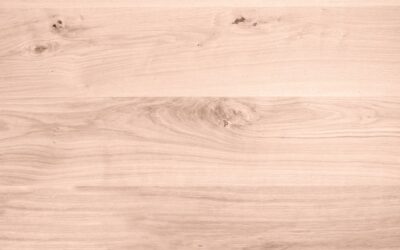
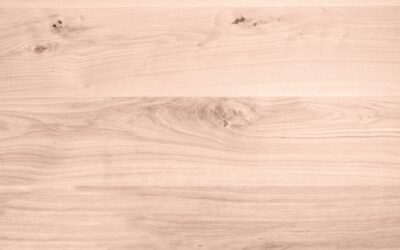
If you want a floor that laughs at dog nails and dropped cast-iron pans, hickory is the toughest common wood you can put down, and buying it raw gives you total control over the final color. Unfinished hickory hardwood flooring arrives as bare planks that get sanded, stained, and sealed in your home, so the finish flows seamlessly wall to wall with no factory bevels breaking up the surface. It is the choice of homeowners who want a custom look on the hardest domestic species available and are willing to trade a few days of jobsite mess to get it.
Why Hickory Stands Apart
Hickory posts a Janka hardness rating of roughly 1,820, making it the hardest widely available domestic hardwood, well above red oak at 1,290 and maple at 1,450. That density translates into real-world dent and scratch resistance that busy families and pet owners notice immediately. It is the same wood used for tool handles and drumsticks precisely because it shrugs off impact.
The other signature of hickory is dramatic color variation. A single board can run from pale, almost white sapwood to deep reddish-brown heartwood, often within a few inches. That wild contrast is either the reason you love it or the reason you look elsewhere; there is very little middle ground with hickory.
The Case for Buying It Unfinished
Prefinished hickory is convenient, but raw hickory unlocks options a factory floor cannot match. When you finish on site, you control the exact stain color, the sheen, and the smoothness, and you get a floor with no micro-beveled edges to collect dust or interrupt the plane.
- Custom color: match any stain, from a natural clear coat that celebrates the contrast to a dark walnut that tames it.
- Seamless surface: site sanding creates one flat plane with square, tight edges instead of factory V-grooves.
- Perfect transitions: the floor can be sanded flush into existing hardwood in an addition or remodel.
- Repairability: a site-finished floor is easy to screen and recoat years later to refresh the whole surface.
For remodels where new flooring meets old, unfinished is often the only way to get an invisible transition. That flexibility is the core appeal of unfinished hickory hardwood flooring.
The Trade-Offs
Site finishing means dust, odor, and downtime. Expect the sanding, staining, and coating process to take three to five days, during which the room is off limits and the house needs ventilation. Water-based finishes cut the smell and cure faster but cost more; oil-based polyurethane is cheaper and slightly ambers the wood but takes longer between coats.
Hickory is also genuinely hard to work. Its density dulls saw blades quickly, resists nail penetration, and can splinter if boards are not pre-drilled at the ends. Staining evenly is another challenge; the alternating sapwood and heartwood absorb pigment at different rates, so blotching is a real risk without a conditioner. This is not the easiest DIY floor, and hiring a seasoned crew often pays for itself in a better result.
Grades and What They Cost
Hickory grades control how much of that famous contrast shows up:
- Select grade: more uniform color, fewer knots, calmer look, higher price.
- #1 Common (Natural): moderate contrast and character, the most popular pick.
- Character or Rustic grade: maximum color swing, knots, and mineral streaking, lowest cost.
Material pricing for unfinished hickory, before labor:
- Unfinished hickory, common grade: $4 to $7 per sq ft
- Select grade: $6 to $9 per sq ft
- Wide plank unfinished hickory: $7 to $11 per sq ft
Installation runs $3 to $5 per sq ft, and site sanding plus finishing adds another $3 to $6 per sq ft. All in, a 300-square-foot room typically lands between $3,000 and $6,600. Because raw hickory skips the factory finish premium, the material itself is often cheaper than prefinished, with the savings redirected into labor.
Finishing Hickory the Right Way
A careful finishing sequence is the difference between a floor that looks custom and one that looks blotchy. Follow this proven order:
- Sand progressively through 36, 60, 80, and 100 grit to remove mill marks without over-polishing, which can seal the grain and repel stain.
- Vacuum thoroughly and tack the surface so no dust contaminates the finish.
- Apply a pre-stain wood conditioner to even out absorption between sapwood and heartwood.
- Stain to your target color, wiping consistently, then let it dry fully per the product spec.
- Seal with two to three coats of polyurethane, screening lightly between coats, at 65 to 75°F for a proper cure.
Always test your stain on scrap or a closet corner first; hickory can look wildly different from the can to the board. Aim for indoor humidity between 35 and 55 percent during and after the job.
Solid vs. Engineered Unfinished Hickory
Most unfinished hickory is solid 3/4-inch material, which is ideal because it gives you the full thickness to sand and multiple future refinishes. Engineered unfinished hickory exists but is less common; it suits concrete slabs and radiant heat where solid wood is risky. If your subfloor is plywood or OSB on an above-grade level, solid unfinished hickory is the natural, and usually more economical, choice.
Caring for a Site-Finished Hickory Floor
Once the finish has fully cured, hickory is one of the lowest-maintenance floors you can own thanks to its density. Give the finish time before heavy use; oil-based polyurethane reaches a walkable state in about 24 hours but does not fully harden for two to three weeks, so keep rugs and heavy furniture off during that window to avoid trapping the cure or leaving marks.
After that, routine care is simple. Dust mop or vacuum with a soft head a few times a week, wipe spills promptly, and clean with a product made for polyurethane-finished wood. Skip vinegar solutions and steam mops, both of which degrade the finish over time. Add felt pads under furniture legs and walk-off mats at entries to keep abrasive grit off the surface, and your hickory floor will hold its clarity for many years before it ever needs a screen and recoat.
How Unfinished Hickory Compares
Against prefinished hickory, the unfinished route trades convenience for control, giving you custom color and a seamless bevel-free surface at the cost of several days of jobsite finishing. Against unfinished oak, hickory brings far greater hardness and bolder grain contrast but is more difficult to stain evenly and to install. Against exotic hardwoods like Brazilian cherry, hickory offers comparable durability at a lower, domestic price, though it lacks the deep uniform red tone some buyers want. For homeowners who value custom finishing and maximum domestic hardness, unfinished hickory is tough to beat on value. And because you are paying for bare wood rather than a factory finish, the material cost often comes in below comparable prefinished lines, letting you redirect the savings toward a skilled finisher who can coax an even, blotch-free color out of hickory’s tricky grain.
Is Unfinished Hickory Right for You
Choose unfinished hickory if you want the hardest domestic floor available, a fully custom stain color, and a seamless bevel-free surface, and you can tolerate a few days of jobsite finishing. Skip it if you want zero disruption or a perfectly uniform color, since hickory’s contrast and the site-finish process both demand patience. Handled by a skilled crew, though, few floors combine this level of durability with this much design freedom, and it will outlast almost anything else you could put underfoot. Take the time to sample stains on your own boards, control your indoor humidity, and let each coat cure fully, and the result is a genuinely one-of-a-kind floor built to serve for generations.
Prefer to explore on your own?
See how new flooring looks in your actual room in seconds — free, no signup.
Try the free Floor Studio →