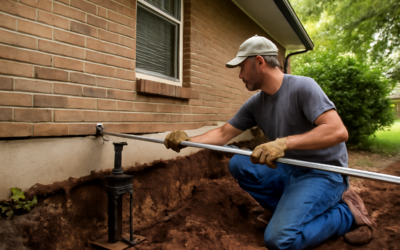
A marble that rolls across the kitchen, a bedroom door that will not latch, and a hairline crack running diagonally from a window corner are rarely separate problems. Together they usually point to a settling foundation, and the fix is leveling the house. The house leveling cost for most homeowners falls between $2,000 and $10,000, but a minor crawl space shim job can be under $1,000 while a full slab pier installation can exceed $25,000. Knowing what drives that spread helps you read contractor bids with confidence and avoid paying for more than your home needs.
- Average House Leveling Cost at a Glance
- Cost by Foundation Type
- Factors That Drive the Price Up or Down
- Hidden Costs After Leveling
- Regional Price Differences
- What Happens During a Typical Leveling Job
- Signs Your House Needs Leveling
- When to Call a Licensed Professional
- How to Keep House Leveling Cost Under Control
Average House Leveling Cost at a Glance
National pricing in 2026 breaks down roughly like this. Your local labor rates, soil conditions, and access will push the final number up or down.
| Repair Scope | Typical Price Range |
|---|---|
| Minor shimming of existing piers (crawl space) | $500 to $2,500 |
| Adding steel support jacks (per post) | $300 to $1,200 |
| Pier and beam re-leveling (whole house) | $3,000 to $8,000 |
| Slab leveling with push or helical piers | $8,000 to $25,000+ |
| Mudjacking or polyurethane foam lifting | $600 to $3,500 |
| Replacing rotted sill plate or beam sections | $1,500 to $6,000 |
Most homeowners with a pier-and-beam home land in the $3,000 to $6,000 range. Slab homes cost more because crews must drive steel piers through the soil to bedrock or load-bearing strata, and each pier runs $1,000 to $3,000 installed.
Cost by Foundation Type
Pier and Beam (Crawl Space) Foundations
Crawl space homes are the easiest and cheapest to level because the crew can reach the support structure directly. A typical job involves jacking sagging beams back to level, adding steel shims or new concrete pier blocks, and sometimes installing adjustable steel posts. Whole-house re-leveling generally costs $3,000 to $8,000. If moisture has rotted the girders or sill plate, carpentry adds $20 to $50 per linear foot of replaced lumber.
One advantage of this system is that it can be re-shimmed later. Many pier-and-beam houses need minor adjustments every 5 to 10 years as soil moisture shifts, and a follow-up visit usually costs $300 to $800.
Slab-on-Grade Foundations
Leveling a concrete slab requires lifting the entire structure from below. Contractors typically use one of three methods:
- Pressed concrete piers: stacked concrete cylinders hydraulically driven into the soil; $500 to $1,200 per pier.
- Steel push piers: driven to refusal on bedrock or dense soil; $1,000 to $2,500 per pier.
- Helical piers: screwed into the ground like giant augers, ideal for lighter loads and poor soils; $1,500 to $3,000 per pier.
An average 1,800 sq ft house might need 8 to 15 piers along the settled section, putting total costs between $8,000 and $25,000. A full perimeter job on a larger home can reach $40,000.
Basement Foundations
Basement homes that are settling usually need wall piering or wall anchors in addition to leveling. Expect $10,000 to $30,000 for comprehensive repair, depending on whether walls are bowing, how many piers are required, and whether a sump or drainage system must be added at the same time.
Factors That Drive the Price Up or Down
- Degree of settlement: lifting a floor 1/2 inch is simple; correcting 2 to 3 inches of drop takes more piers, more time, and often more cosmetic repair afterward.
- Soil type: expansive clay soils common in Texas, Oklahoma, and Colorado swell and shrink with moisture and often require deeper piers.
- Access: crawl spaces under 18 inches of clearance may need excavation to create working room, adding $500 to $2,000.
- Home size and weight: two-story brick homes need more lifting capacity and more support points than a single-story frame house.
- Engineering and permits: a structural engineer’s evaluation costs $300 to $800, and many cities require a permit for foundation work at $100 to $500.
- Plumbing under slabs: lifting a slab can stress drain lines, so a hydrostatic plumbing test ($250 to $600) before and after is common.
Hidden Costs After Leveling
The foundation invoice is rarely the final bill. When a house moves back to level, finishes that adjusted to the sag often crack or shift again. Budget for these follow-up items:
- Drywall crack repair and repainting: $300 to $1,500.
- Door and window adjustments: $75 to $250 per opening for planing, rehanging, or new strike plates.
- Flooring repairs: cracked tile, separated laminate seams, or buckled hardwood can cost $3 to $15 per sq ft to fix. Tile is the most vulnerable because grout and thinset cannot flex.
- Brick veneer tuckpointing: $500 to $2,500 if exterior mortar joints cracked during settlement or lifting.
- Drainage correction: gutters, downspout extensions, and regrading to keep water away from the foundation, $500 to $4,000.
If you are planning new floors, schedule leveling first. Installing LVP, engineered hardwood, or tile on an out-of-level subfloor voids most flooring warranties, which typically demand flatness within 3/16 inch over 10 feet. Leveling the structure and then using a self-leveling underlayment for minor dips produces a far better result than trying to hide the problem with thicker underlayment.
Regional Price Differences
Where you live changes both the likely cause of settlement and the price of fixing it. In Texas, Oklahoma, and Louisiana, expansive clay and long droughts make foundation movement so common that competition keeps per-pier pricing near the low end, often $900 to $1,500 for a steel push pier. In the Northeast and Pacific Northwest, labor rates run 20 to 40 percent higher, and older homes on rubble or block foundations can add engineering complexity. Coastal Florida and the Gulf states often see settlement from sandy fill and high water tables, which pushes contractors toward helical piers.
Seasonality matters too. Foundation companies tend to be busiest in late summer when drought cracks appear, and scheduling in late fall or winter can sometimes bring shorter wait times and a little more room to negotiate. Soil must not be frozen for exterior excavation, so northern states see a spring rush once the ground thaws.
What Happens During a Typical Leveling Job
For a crawl space home, a crew usually spends one to three days on site. They take elevation readings with a digital manometer or laser, set temporary hydraulic jacks under sagging beams, and raise the structure slowly, often no more than 1/4 inch per day on older homes to reduce plaster and drywall cracking. Permanent steel shims or adjustable posts on new concrete footings then take the load. Slab jobs take three to seven days because crews excavate beside or through the slab at each pier point, drive piers, lift in coordinated stages, then backfill and patch. Expect some dust and noise, but most families stay in the home throughout the work.
Signs Your House Needs Leveling
Not every crack means an expensive repair is coming. Watch for combinations of these warning signs, especially if they are getting worse over months:
- Sloping floors you can feel when walking, or a level reading off by more than 1 inch across a room.
- Stair-step cracks in brick or block, or diagonal drywall cracks at door and window corners.
- Doors that swing open on their own, stick, or show uneven gaps at the top.
- Gaps between baseboard and floor, or between walls and ceilings.
- Soft or bouncy spots in the floor above a crawl space.
- Cabinets or countertops pulling away from the wall.
A simple self-check is to run a 6-foot level and a laser level across several rooms and note the readings. Homes typically settle a small amount in the first few years, and small uniform settling is usually harmless. Differential settlement, where one corner drops more than the rest, is what causes real damage.
When to Call a Licensed Professional
Foundation work is structural, and it is not a DIY project beyond basic observation. Improperly jacking a beam can crack plaster, rupture plumbing, or shift a load path in ways that are dangerous and expensive to undo. Contact a licensed structural engineer or foundation repair contractor if you see cracks wider than 1/4 inch, floors out of level more than 1 inch in 20 feet, rapidly worsening symptoms, or water entering through foundation cracks.
An independent engineer’s report is worth paying for before you collect contractor bids. Foundation companies naturally recommend the solutions they sell, and some push full perimeter piering when a few interior shims or drainage fixes would do. An engineer who is not selling the repair can specify exactly how many piers are needed and where, which lets you compare bids on equal terms.
How to Keep House Leveling Cost Under Control
- Get three written bids that specify pier type, number of piers, depth targets, and warranty terms.
- Ask about warranties: reputable contractors offer transferable lifetime warranties on pier work, which also help at resale.
- Fix drainage first: in some cases, redirecting downspouts and correcting grading stops movement without major lifting.
- Control crawl space moisture: a vapor barrier and dehumidifier ($1,500 to $5,000 for encapsulation) protect wood beams from rot that drives repeat repairs.
- Do not wait: settlement usually gets worse, and a $4,000 repair today can become a $15,000 job after a few wet seasons.
- Check insurance and financing: standard homeowner policies rarely cover settlement, but many foundation companies offer 12- to 60-month financing plans.
Understanding the real house leveling cost for your foundation type helps you plan the repair alongside cosmetic work and new flooring. Start with an honest diagnosis, fix water problems, and choose a contractor who backs the job with a solid warranty. Your floors, doors, and walls will all stay straighter for it.