Living near the water comes with a flooring problem most inland homeowners never face: constant humidity, salty air, blowing sand, and the very real chance of storm-driven water intrusion. Choosing the right island flooring means picking materials that shrug off all of that while still looking like the breezy coastal retreat you want. Solid hardwood, the dream floor for many, is often the worst choice in a salt-air, high-humidity environment. This guide breaks down which floors actually thrive on the coast, what they cost, and how to install them to last.
- The Coastal Climate Challenge
- Best Flooring Types for the Coast
- Why Vinyl and Tile Win at the Beach
- What Coastal Flooring Costs
- Pros and Cons for Coastal Homes
- Install Tips for Salt and Humidity
- Designing for the Coastal Look
- Maintenance in Salt and Sand
- Flooring for Elevated and Piling Homes
- Budgeting for a Coastal Build
- Choosing the Right Coastal Floor
The Coastal Climate Challenge
Island and coastal homes deal with relative humidity that can sit above 80 percent for months, plus salt that accelerates corrosion and can dull finishes. Add wind-blown sand that acts like sandpaper underfoot and the periodic threat of flooding, and you have an environment that punishes any floor not built for it. The winning strategy is simple: choose waterproof or highly water-resistant materials and stable cores that do not swell.
Best Flooring Types for the Coast
Here is what holds up in a salt-and-humidity setting:
- Luxury vinyl plank (SPC): Waterproof, stable, and sand-friendly. The top all-around coastal choice.
- Porcelain tile: Impervious to water and salt, easy to rinse sand off, and cool underfoot in the heat.
- Polished or stained concrete: Indestructible against flooding, increasingly popular for ground-floor and beach houses.
- Engineered hardwood: A stable wood option for above-grade rooms, though less ideal than vinyl or tile in direct salt exposure.
Why Vinyl and Tile Win at the Beach
For most coastal homeowners, SPC vinyl and porcelain tile are the clear winners. Vinyl’s rigid waterproof core ignores humidity and dries out completely if a storm pushes water in, while a 20-mil wear layer resists the abrasive sand that grinds finishes down. Porcelain tile is even more bulletproof against water and salt, and you can simply hose or mop the sand away. Both also stay cooler than dark wood in intense coastal sun.
What Coastal Flooring Costs
Typical installed ranges:
- Luxury vinyl plank: $4 to $8 per square foot.
- Porcelain tile: $8 to $18 per square foot.
- Polished concrete: $5 to $12 per square foot.
- Engineered hardwood: $7 to $14 per square foot.
A 1,200-square-foot beach house main floor in SPC vinyl runs roughly $6,000 to $9,500 installed. Budget extra if the home is on pilings with plywood subfloors that need leveling.
Pros and Cons for Coastal Homes
The tradeoffs to weigh:
- Vinyl pro: Waterproof, warm, sand-tolerant. Con: Lower-grade planks can fade in intense UV without inhibitors.
- Tile pro: Fully waterproof and easy to clean. Con: Hard and cold; grout needs sealing.
- Concrete pro: Survives flooding entirely. Con: Hard underfoot and shows cracks.
- Engineered wood pro: Real wood warmth. Con: Less salt-tolerant than vinyl or tile.
Install Tips for Salt and Humidity
Acclimate planks in the conditioned home for at least 48 hours so they adjust to coastal humidity before locking together. Leave the full perimeter expansion gap, typically 1/4 to 3/8 inch, because warm, humid coastal air causes more movement. Over concrete, always lay a vapor barrier and test slab moisture first. For homes that flood, design the ground floor with waterproof tile or concrete and keep any wood upstairs.
Designing for the Coastal Look
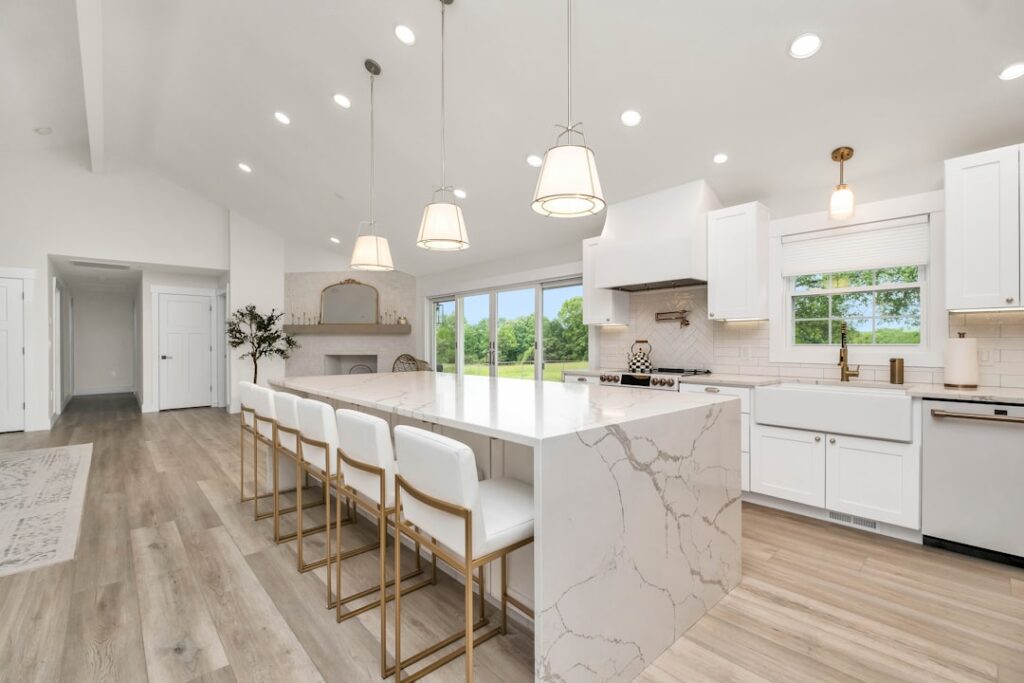
Beyond durability, island homes have a distinct aesthetic, and your flooring choice can lean into it. Light, weathered, and whitewashed plank looks evoke driftwood and sun-bleached decks, and they hide tracked-in sand better than dark finishes. Wide planks in pale oak or gray tones read airy and casual, the opposite of the formal dark hardwood common inland. For tile, large-format porcelain in sand, shell, or pale stone looks reduces grout lines and the maintenance that comes with them. If you love the look of real wood but worry about salt, an SPC plank with a convincing bleached-oak print gives you the coastal style with none of the moisture risk, which is why it is the runaway favorite in beach communities.
Maintenance in Salt and Sand
Coastal floors live a harder life, so a simple routine pays off. Sweep or vacuum daily in high-traffic and entry areas to remove the abrasive sand that grinds down wear layers and finishes, and place sturdy walk-off mats at every door from the beach, pool, and deck. Damp-mop vinyl and tile with a pH-neutral cleaner to lift salt residue, and rinse exterior-adjacent tile thoroughly. Keep indoor humidity controlled with AC or a dehumidifier to protect any engineered wood, and reseal tile grout periodically since salt accelerates wear. For homes that experience occasional flooding, mop out standing water quickly and run fans; waterproof vinyl, tile, and concrete will dry and recover where wood and laminate would be ruined.
Flooring for Elevated and Piling Homes
Many island homes sit on pilings or are elevated above flood level, and that construction shapes the flooring decision. Raised homes typically have plywood subfloors rather than slabs, which makes floating vinyl plank and engineered wood straightforward to install, but the subfloor must be flat and securely fastened to avoid squeaks and movement. Ground-level enclosures and garages under elevated homes should use waterproof tile or sealed concrete, since they are the most likely to take on water in a storm surge. For the main living levels upstairs, you have more freedom to use engineered hardwood or premium vinyl for comfort and style. Designing from the bottom up, with the most waterproof materials on the lowest, most flood-prone levels, is the smartest coastal strategy.
Budgeting for a Coastal Build
Coastal flooring budgets benefit from a room-by-room mindset. Put your money into durable, waterproof materials in the ground floor, entries, and wet areas where the climate is harshest, and save premium engineered wood for upstairs living spaces that stay dry and conditioned. Always order extra material to cover waste and to keep matching planks or tiles on hand for repairs, since salt and sand accelerate wear and you will likely replace a board or two over the years. Factor in the higher cost of UV-stable, marine-friendly products, which resist fading better in intense coastal sun. Spending a little more on the right materials up front saves you from premature replacement in an environment that punishes shortcuts.
Choosing the Right Coastal Floor
Match the material to the room and the risk. Ground floors and anything that might flood should be tile, concrete, or SPC vinyl, never solid wood or laminate. Upstairs living areas can take engineered hardwood for warmth and resale appeal. Prioritize a thick wear layer and UV resistance for sun-drenched rooms, prep the subfloor properly, and your island flooring will stand up to salt, sand, and humidity for decades of carefree coastal living.
Prefer to explore on your own?
See how new flooring looks in your actual room in seconds — free, no signup.
Try the free Floor Studio →