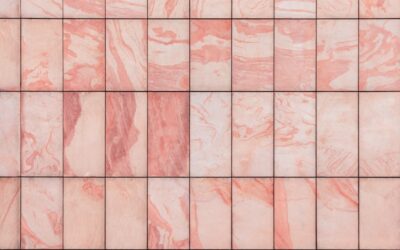
One bold wall transforms a generic builder kitchen into a designed space. The trick is picking a wall that already wants attention — usually behind the range, behind open shelving, or the wall opposite the main entry. A kitchen accent wall works because the eye locks onto the contrast and the rest of the kitchen recedes into supporting role. Choose the wrong wall or the wrong material, and the kitchen looks chopped up instead of designed. Here is how to plan one that actually elevates the space.
Part of our Kitchen Remodeling guide — explore the full guide →
Pick the Right Wall First
Three walls are accent-wall candidates in most kitchens:
- Range wall (behind the cooktop and hood) — the most natural focal point, already drawing eyes to the cooking zone
- Open shelving wall — accent material peeks between dishes and adds visual depth
- Banquette or breakfast nook wall — anchors a seating area without competing with cabinets
Avoid making the wall opposite a window your accent. Backlight from the window flattens the texture and washes out colors. The accent wall needs side or front lighting to read properly.
Tile as an Accent Material
Tile remains the most popular kitchen accent material because it handles steam, splashes, and heat. Three tile families dominate:
- Zellige (handmade Moroccan tile) — irregular, glossy, $15 to $35 per sq ft
- Subway tile in non-standard layouts — herringbone, vertical stack, or mixed-size patterns, $5 to $15 per sq ft
- Patterned cement or encaustic tile — bold geometric prints, $10 to $25 per sq ft
For a range wall, full-height tile from countertop to ceiling reads as a single architectural feature. Stopping the tile partway up the wall almost always looks unfinished.
Painted Accent Walls
Paint is the lowest-cost option at $30 to $80 in materials for a single accent wall. The wall color needs enough contrast to read as intentional. Three reliable directions:
- Deep navy or forest green against white cabinets — Benjamin Moore Hale Navy or Farrow & Ball Studio Green
- Terracotta or burnt orange against natural wood cabinets — Sherwin-Williams Cavern Clay
- Soft black or charcoal as a backdrop for open shelving — Benjamin Moore Soot or Iron Mountain
Use a satin or eggshell finish, not flat. Kitchens generate grease and steam that flat paint absorbs and stains. Satin wipes clean and reflects just enough light to give walls dimension.
Wood and Wood-Look Walls
Real wood paneling brings warmth that tile and paint cannot match. Options range from $4 per sq ft DIY to $30 per sq ft for installed reclaimed planks:
- Shiplap — pine boards with overlapping edges, $4 to $8 per sq ft
- Vertical board and batten — adds height to short walls, $6 to $12 per sq ft installed
- Reclaimed barnwood — character and patina, $15 to $40 per sq ft
- Slat wall (vertical wood strips) — modern, often used behind banquettes, $20 to $40 per sq ft
Apply a clear polyurethane sealer to any wood near a cooking surface. Unsealed wood absorbs grease and odors and turns dark within a year.
Brick and Brick Veneer
Real brick veneer adds industrial warmth and works especially well in farmhouse and loft kitchens. Material runs $10 to $20 per sq ft. Installation requires mortar work and is best left to a mason — figure $15 to $25 per sq ft for professional install.
Brick veneer panels (faux brick made from polyurethane or thin clay) install with construction adhesive in a single afternoon. The look is convincing from a distance and the cost drops to $4 to $10 per sq ft material plus DIY labor.
Wallpaper Comeback
Modern peel-and-stick wallpaper is genuinely kitchen-appropriate when you choose vinyl-coated or PVC-based products that resist moisture and grease. Three approaches that work:
- Bold botanical prints in a breakfast nook
- Geometric patterns on a single wall opposite cabinets
- Faux materials (concrete, plaster, terrazzo) for texture without weight
Reliable brands include Tempaper, Spoonflower, and Chasing Paper. Cost runs $40 to $100 per roll covering 25 to 30 sq ft. Install takes one to three hours per wall depending on pattern matching.
Stone Slab Accent Walls
Running countertop material up the wall behind the range turns the backsplash into a statement. Quartz, marble, and quartzite slabs install seamlessly with no grout lines and create a high-end custom look.
Material costs range from $50 to $200 per sq ft installed depending on stone choice. The visual impact is enormous — a single 5 by 8 foot slab behind a cooktop can carry the design weight of an entire kitchen. Pair with simple cabinets and minimal hardware so the slab stays the star.
Lighting the Accent Wall
An accent wall without proper lighting falls flat. Three lighting strategies bring out the texture and color:
- Wall washers — recessed cans angled at the wall from 12 inches away, $80 to $150 each
- Picture lights — small fixtures mounted above the wall pointing down, $50 to $200 each
- Sconces — flanking sconces frame the wall and add ambient light, $100 to $400 per pair
For tile or stone walls with texture, side lighting (light coming from beside rather than directly above) emphasizes the dimensional quality. Flat overhead light flattens the texture.
Cost Estimates for a Typical 6 by 8 Foot Accent Wall
For a 48 sq ft wall behind a range, here is what each option lands at fully installed:
- Paint accent wall — $80 to $200 (DIY)
- Subway tile in herringbone — $400 to $1,200 installed
- Zellige tile — $1,200 to $2,500 installed
- Shiplap — $250 to $600 installed
- Brick veneer (faux panels) — $300 to $800 DIY
- Real brick veneer — $1,000 to $2,500 installed
- Quartz or marble slab — $2,500 to $9,500 installed
- Peel-and-stick wallpaper — $80 to $300 DIY
Common Design Mistakes
Three mistakes show up repeatedly in kitchens that try and fail with accent walls. The first is choosing too many competing finishes — when the cabinets, hardware, and accent wall all clamor for attention, the kitchen feels chaotic. Pick one bold element and let everything else support it.
The second is stopping the accent material too low or with awkward boundaries. Tile that ends at the bottom of upper cabinets but does not reach the ceiling looks cut off. Run accent materials to natural stopping points — corners, ceiling, or the underside of cabinets.
Third is forgetting the rest of the kitchen. The accent wall sets a tone that should echo subtly elsewhere. If the wall is terracotta tile, repeat the warmth with brass hardware and a warm wood cutting board displayed on the counter. The accent wall is the loudest note, but the rest of the kitchen needs to be in the same key.