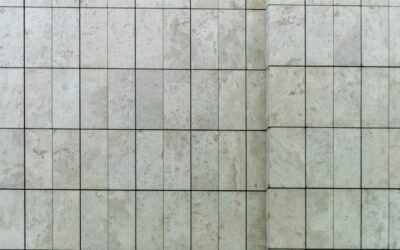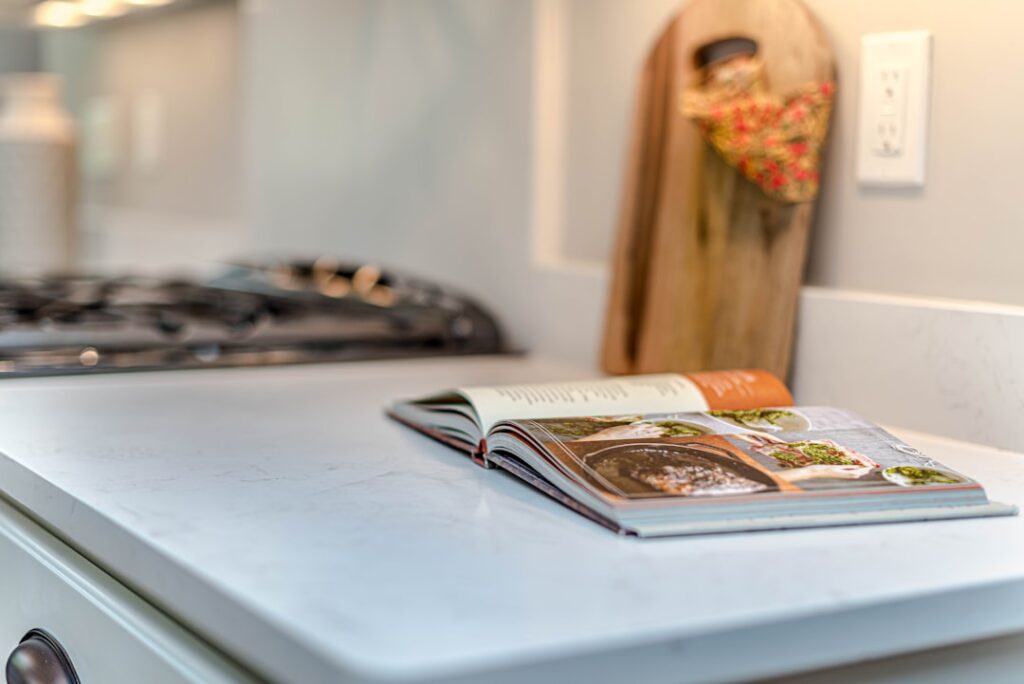
For years, tile countertops meant a grid of four-inch squares with grout lines that trapped grime and dated a kitchen the moment they were installed. That reputation no longer holds. A large format tile countertop built from oversized porcelain panels delivers the seamless, stone-like look people want from a quartz or granite slab, but at a fraction of the cost and with a surface that resists heat, scratches, and stains as well as anything on the market. Understanding how these tops work helps you decide whether one belongs in your kitchen or bath.
Large format simply means the tile is big. The industry generally defines it as any tile with at least one side longer than 15 inches, but the panels used for countertops go much further, commonly 24 by 48 inches, 30 by 60 inches, and gauged porcelain slabs that reach 5 by 10 feet. At those dimensions, a standard kitchen counter can be topped with a single panel or two, so the grout lines that plagued old tile counters nearly disappear.
Why Homeowners Choose Large Format Tile
The driving appeal is the slab look at a lower price. A full porcelain slab counter can approach the cost of natural stone, but tile-format porcelain panels let a homeowner or a capable installer achieve a similar seamless appearance for less. Beyond cost, porcelain brings a genuinely tough surface. It is fired at extreme temperatures, which makes it dense, non-porous, and highly resistant to heat, so setting a hot pan directly on it will not scorch or crack the surface the way it can with solid-surface or laminate.
Porcelain also refuses to stain. Because the body is vitrified and essentially non-absorbent, wine, oil, coffee, and citrus wipe away without leaving a mark, and unlike natural stone or even some quartz, it never needs sealing. Ultraviolet stability means the color will not fade near a sunny window, which makes large format porcelain a strong choice for outdoor kitchens as well as indoor ones.
Sizes, Thickness, and Finishes
Countertop porcelain comes in a few thicknesses, and the choice matters. Thin gauged panels around 6 millimeters are light and easy to handle but usually need to be laminated over a substrate for counter use. Thicker slabs at 12 to 20 millimeters can be fabricated much like stone, with mitered edges that create the illusion of a thick solid top. Finishes range from high-gloss polished surfaces that mimic marble to matte and textured looks that read like honed stone or concrete.
Pattern realism has come a long way. Modern printing puts convincing marble veining, granite speckle, and concrete mottling on the surface, and premium panels carry the pattern through the body so a chipped edge is less obvious. When you shop, look at a full panel rather than a small sample, because large-scale veining only makes sense at full size, and ask whether the veining is randomized across panels or repeats.
Large Format Tile Countertop Cost
Pricing spans a wide range depending on the product and who installs it. As a rough guide:
- Porcelain tile or panel material: $5 to $30 per square foot depending on brand and thickness.
- Professional fabrication and installation of full gauged slabs: $30 to $60 per square foot installed, competitive with mid-grade quartz.
- DIY installation of standard large format tiles over a substrate: often under $20 per square foot in materials.
The big variable is edge treatment. A simple exposed tile edge with a metal or matching trim is inexpensive, while a mitered edge that hides the seam and creates a thick modern profile requires skilled fabrication and raises the price. Sinks are another factor. Undermount sinks look cleanest but demand precise cutting; a drop-in sink is far simpler and cheaper to accommodate on a tile top.
Pros and Cons to Weigh
No surface is perfect, and large format porcelain has real tradeoffs. On the plus side, it is heat-proof, scratch-resistant, stain-proof, never needs sealing, and is UV-stable for outdoor use. It is also lighter than stone, which can simplify cabinet loading and transport.
The drawbacks come down to fragility during handling and edge vulnerability. Large thin panels can crack if flexed or dropped, which is why fabrication is best left to shops with the right suction tools and cutting equipment. The exposed edge of a tile, if not mitered or trimmed, can chip under a sharp impact. And while the field of the counter is nearly seamless, any seam that does exist is filled with a color-matched epoxy rather than grout, so it should be placed thoughtfully. Finally, cutting and drilling porcelain requires diamond tooling and patience, which pushes many homeowners toward professional installation.
How These Countertops Are Installed
There are two common approaches. In the panel method, a fabricator treats the porcelain like a stone slab, cutting it to shape, mitering the edges, and bonding it to the cabinets much as they would install quartz. In the tile method, larger tiles are set on a rigid substrate such as plywood topped with cement board, using a high-quality thin-set applied with full coverage to avoid voids under the tile that could crack it.
- Build a flat, rigid substrate that will not flex, since porcelain cannot tolerate movement.
- Dry-fit the panels to plan seam placement and sink and cooktop cutouts.
- Cut openings with a diamond blade and drill corners to prevent stress cracks.
- Set the tile in a full bed of thin-set with back-buttering for complete coverage.
- Fill any seams with matching epoxy and finish exposed edges with trim or a mitered return.
Is a Large Format Tile Countertop Right for You?
A large format tile countertop makes the most sense for homeowners who want the clean, uninterrupted look of stone, value heat and stain resistance, and either have the budget for skilled fabrication or the DIY skill to work with porcelain carefully. It is especially compelling for outdoor kitchens, laundry rooms, and bathrooms where its toughness and UV stability shine. If you love the material but worry about handling the big panels yourself, a fabricator experienced with porcelain slabs is money well spent, since the surface itself will outlast almost anything else you could put on your cabinets.