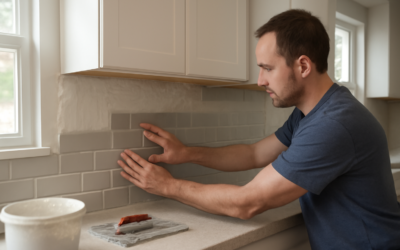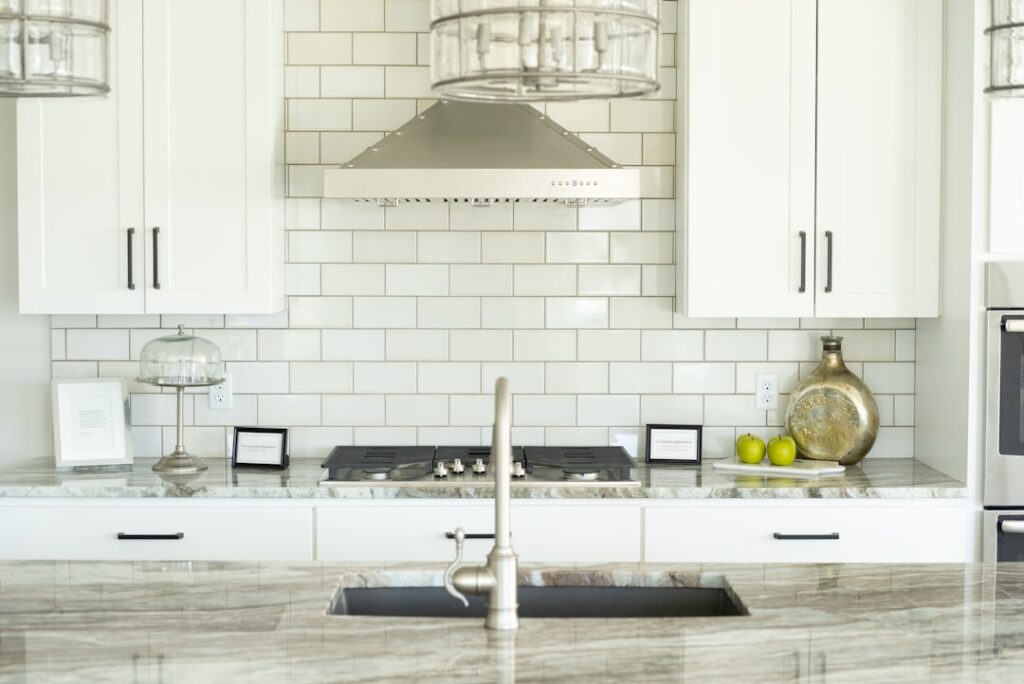
A large tile backsplash has become one of the most sought-after looks in modern kitchens, trading the busy grid of small subway tiles for the clean, seamless appearance of big-format slabs and oversized tiles. By using fewer, larger pieces, you dramatically reduce grout lines, which means less visual clutter, easier cleaning, and a high-end, contemporary feel. Whether you want a dramatic full-height slab behind the range or a sleek run of large-format porcelain, this style delivers major impact. It also comes with its own installation challenges, so it helps to understand the options, costs, and techniques before you start.
Part of our Kitchen Remodeling guide — explore the full guide →
This guide covers large tile backsplash ideas, materials, costs, installation, and the mistakes to avoid.
- Why Choose a Large Tile Backsplash?
- Popular Large Tile Backsplash Ideas
- Best Materials for Large Tile Backsplashes
- How Much Does a Large Tile Backsplash Cost?
- Installation Considerations
- DIY vs. Hiring a Pro
- Grout and Finishing
- Common Mistakes to Avoid
- Layout and Design Planning
- Maintenance and Long-Term Care
- Is a Large Tile Backsplash Right for You?
Why Choose a Large Tile Backsplash?
- Fewer grout lines: Large tiles mean fewer seams, so the wall looks cleaner and is far easier to wipe down.
- Modern, seamless look: Big-format tile and slabs read as sleek and upscale, ideal for contemporary and minimalist kitchens.
- Easier maintenance: Less grout means fewer places for grease and grime to collect.
- Showcase natural patterns: Large marble-look and stone-look tiles let dramatic veining flow across the wall.
- Faster coverage: Bigger tiles cover more area per piece, which can speed installation on flat walls.
Popular Large Tile Backsplash Ideas
Full-height slab behind the range
A single large slab or a few big tiles running from countertop to hood or ceiling creates a striking focal point. Marble-look porcelain and quartz slabs are popular for this dramatic, low-grout statement.
Large-format porcelain
Tiles measuring 12×24, 24×24, or larger, up to true large-format sheets, give a clean, gridded but minimal look. Matte finishes feel modern while polished finishes add glamour.
Marble and stone-look
Large porcelain tiles that mimic Carrara, Calacatta, or soapstone bring the beauty of natural stone with less maintenance and cost. Veining that continues across large pieces looks luxurious.
Countertop-matching slab
Continuing the countertop material up the wall as a backsplash slab creates a seamless, waterfall-like effect that feels custom and cohesive.
Concrete and terrazzo looks
Large tiles in concrete or terrazzo patterns suit industrial and contemporary kitchens, adding subtle texture without small-tile busyness.
Best Materials for Large Tile Backsplashes
- Porcelain: The most popular choice. Durable, water-resistant, available in large formats and countless looks, and moderately priced.
- Natural stone slabs (marble, quartzite): Beautiful and premium, but porous and needing sealing; higher cost.
- Quartz slabs: Engineered, nonporous, and low-maintenance, ideal for matching a quartz countertop.
- Large glass tiles: Reflective and modern, though they show installation flaws and need careful setting.
- Ceramic: A budget-friendly option in large formats, though less durable than porcelain.
How Much Does a Large Tile Backsplash Cost?
Costs vary with material and whether you hire a pro. General ranges:
- Large-format porcelain or ceramic tile: $7 to $20 per square foot for materials.
- Natural stone or quartz slab: $40 to $100 or more per square foot for the slab.
- Professional installation: $10 to $25 per square foot in labor, higher for slabs due to weight and precision.
- Typical backsplash (30 sq ft): roughly $500 to $1,500 for large-format tile installed, and considerably more for slab.
Large-format tile can cost more to install than small tile because it demands a very flat wall and specialized handling, but the material efficiency and reduced grout can offset some of that.
Installation Considerations
Large tiles and slabs are less forgiving than small mosaics, so preparation is everything.
- Flat substrate is critical: Large tiles bridge across high and low spots and can crack or lippage if the wall is not flat. Flatten the wall or use a leveling method first.
- Back-butter the tile: Apply thinset to both the wall and the back of the tile to ensure full coverage and prevent voids that lead to cracks.
- Use a leveling system: Tile leveling clips and wedges keep large tiles flush and prevent lippage where edges sit proud of one another.
- Proper thinset and notch: Use a large-format mortar (LFT/LHT) and the correct notched trowel for full coverage under big tiles.
- Support the weight: Heavy slabs may need temporary support ledges while the mortar sets.
- Cutting: Large porcelain and slabs require a quality wet saw or a rail cutter and careful handling to avoid breakage.
DIY vs. Hiring a Pro
Installing large-format tile is more demanding than a standard subway backsplash. Handling heavy, brittle sheets, achieving a flat substrate, and avoiding lippage take skill and the right tools. A confident DIYer can tackle 12×24 porcelain on a small, flat backsplash, but true large-format sheets and stone slabs are best left to experienced tile setters. If you DIY, invest in a leveling system, large-format mortar, and a good wet saw, and practice your cuts on scrap first.
Grout and Finishing
One of the appeals of large tile is minimal grout, but the grout you do use matters. Choose a color that blends with the tile for a seamless look, or a subtle contrast for definition. Use a high-quality grout, and consider epoxy or a stain-resistant grout in a kitchen where grease is common. Keep grout lines as tight as the tile and manufacturer allow, often 1/16 to 1/8 inch, to preserve the clean look. Caulk the joint where the backsplash meets the countertop rather than grouting it, so the flexible seam does not crack.
Common Mistakes to Avoid
- Skipping wall prep: An uneven wall causes lippage and cracked tiles. Flatten it first.
- Insufficient mortar coverage: Voids behind large tile lead to cracks; always back-butter.
- Not using leveling clips: Large tiles show even tiny height differences; use a leveling system.
- Wrong thinset: Standard thinset can sag under heavy tile; use large-format mortar.
- Rushing the cuts: Big porcelain chips and cracks easily; use a wet saw and go slow.
Layout and Design Planning
With large tiles, layout planning matters even more than with small mosaics, because there is less flexibility to fudge alignment and each tile is a prominent visual element. Start by finding the focal point, usually the wall behind the range or the main run of counter, and plan your layout so full tiles land in the most visible areas and any cut pieces fall at the edges or corners. Dry-lay the tiles on the floor or mark the wall first so you can visualize the grid and avoid awkward slivers next to cabinets or outlets.
For marble-look and veined tiles, sequencing matters. Lay the tiles out and arrange them so the veining flows naturally from one piece to the next, rather than clashing at the seams. Some premium tiles are sold in matched sets designed for book-matching, where mirror-image veining creates a dramatic butterfly pattern. Plan outlet and switch locations too; on a large-tile backsplash, cutting a clean rectangular opening for an outlet is more demanding than on small tile, and a poorly placed outlet can land awkwardly in the middle of a showcase tile. Thinking through the layout before mixing any mortar saves costly mistakes.
Maintenance and Long-Term Care
One of the strongest arguments for a large tile backsplash is how easy it is to keep clean, but the care still depends on the material. Porcelain and glazed ceramic are nearly maintenance-free; a wipe with a damp cloth and mild cleaner removes grease and splatter, and the minimal grout lines give grime few places to hide. Sealing is generally unnecessary for the tile itself, though sealing cement-based grout lines helps them resist staining and makes cleaning easier.
Natural stone slabs and tiles require more attention. Marble, quartzite, and other stones are porous and must be sealed periodically to resist water, oil, and acidic kitchen spills like lemon juice and wine, which can etch or stain unsealed stone. Quartz slabs, being engineered and nonporous, need no sealing and clean up easily, which is part of why they pair so well with matching quartz countertops. Whatever material you choose, avoid abrasive pads and harsh chemicals on polished surfaces, and address spills on stone promptly. With appropriate care, a large tile backsplash stays looking sharp and contemporary for many years.
Is a Large Tile Backsplash Right for You?
A large tile backsplash is a great choice if you want a sleek, modern, low-maintenance kitchen wall with minimal grout and a high-end feel. It shines in contemporary and transitional kitchens and pairs beautifully with quartz and stone countertops. The main considerations are the higher demand on wall prep and installation skill, and the cost of premium slabs. If your walls are flat and your budget allows, the payoff is a stunning, easy-to-clean focal point.
With the right material, careful preparation, and proper installation technique, a large tile backsplash transforms a kitchen into a clean, contemporary space that feels custom and effortless. Whether you choose big-format porcelain or a dramatic stone slab, fewer grout lines and bold, continuous surfaces give your kitchen a look that stays stylish and easy to maintain for years.
Prefer to explore on your own?
See how new flooring looks in your actual room in seconds — free, no signup.
Try the free Floor Studio →