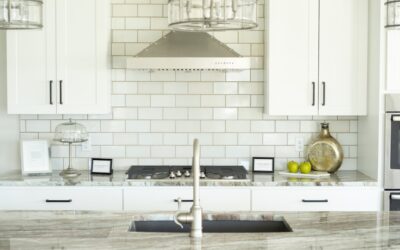
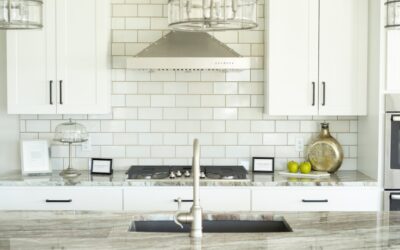
The classic 3×6 subway tile has ruled kitchens for a century, but scaling up changes everything. A large subway tile backsplash uses tiles in the 4×12, 4×16, or even 6×24 range, and the difference in the finished wall is dramatic. You get sweeping horizontal lines, far fewer grout joints to scrub, and a look that reads modern rather than farmhouse. If you have felt that standard subway tile looks a little too busy or dated, going bigger is often the fix that pulls a kitchen into the current decade.
Part of our Kitchen Remodeling guide — explore the full guide →
What Counts as a Large Subway Tile
Traditional subway tile follows a 1:2 or 1:3 length-to-height ratio in a compact format, most commonly 3 inches by 6 inches. Once you move past that footprint, the industry loosely calls the tile “large” or “oversized.” The most popular jumbo dimensions are 4×12 and 4×16, which keep the elongated brick proportion while stretching the horizontal run. Wider planks like 6×24 and 8×24 push the look toward a sleek, almost seamless field of stone or matte ceramic.
Material matters as much as size here. Large-format subway tile shows up most often in glazed ceramic and porcelain, but you will also find it in honed marble, quartzite, and glass. Porcelain is the workhorse choice for a busy kitchen because it resists staining, tolerates heat behind a range, and wipes clean with a damp cloth. Glass reflects light beautifully but shows every fingerprint and installation flaw, so it rewards a careful tile setter.
Why Homeowners Choose Bigger Tile
Fewer grout lines is the headline benefit. A wall covered in 3×6 tile can carry more than a hundred joints; the same wall in 4×16 tile might have a third of that. Grout is the part of any backsplash that stains, cracks, and demands scrubbing, so cutting the linear footage of grout is a genuine maintenance win. Homeowners who cook often, or who have battled grease-darkened joints behind a stove, appreciate this immediately.
The visual payoff is the second draw. Large tile makes a small kitchen feel larger because the eye reads the wall as a continuous surface instead of a grid of small units. Long horizontal tiles stretch a galley kitchen visually, and a big-format matte tile in soft white or greige gives you a clean, gallery-like backdrop that lets your countertops and cabinet hardware stand out. When you want a large subway tile backsplash to feel calm and upscale, that reduction of visual noise is exactly the point.
Popular Layout Patterns
Layout drives the personality of the finished wall more than color does. The safest and most common choice is a straight stack or a 50 percent offset running bond, where each row shifts by half a tile. With oversized tile, many designers pull the offset back to a one-third or even one-quarter jump instead of the traditional halfway brick pattern, because a 50 percent offset on a 16-inch tile creates a very long, obvious step that can look unbalanced.
- Horizontal running bond: the default, widens the room and hides minor wall waviness.
- Vertical stack: runs tiles upright to draw the eye toward the ceiling in a room with low upper cabinets.
- Straight stacked grid: perfectly aligned joints for a crisp, contemporary, almost tile-less look.
- Herringbone: possible with 4×12 or 4×16 planks for a bolder statement wall behind a range.
Grout color is your other big lever. A matching grout, such as bright white grout with a white tile, nearly erases the joints and maximizes the seamless effect. A contrasting grout, like a warm gray against white, celebrates the brick pattern and gives the wall texture and definition. Test a small area before committing, because contrast that looks subtle on a sample board can read much stronger across a full wall.
What It Costs to Install
Budgeting a backsplash breaks into materials and labor. Large-format ceramic and porcelain subway tile typically runs $4 to $12 per square foot at home centers and tile shops, with premium glass and natural stone climbing to $15 to $30 or more. A standard kitchen backsplash covers roughly 30 square feet of wall, so tile alone often lands between $150 and $600 for a mid-range choice.
Professional installation usually adds $8 to $15 per square foot depending on your region, wall prep, and pattern complexity. A herringbone or diagonal layout costs more than a simple horizontal run because of the extra cuts and waste. All in, expect a pro-installed backsplash to fall between $700 and $1,500 for an average kitchen, while a confident DIYer can complete the same project for the cost of materials plus $150 to $250 in tools and consumables.
Installation Tips for Big Tile
Oversized tile is less forgiving than small tile because a bowed or bumpy wall telegraphs through the flat face. Start by checking the drywall with a straightedge and skim-coating any low spots. Use a quality thin-set mortar rated for large-format tile, and back-butter each piece so you get full coverage behind the tile and avoid hollow spots that can crack later.
Because a large subway tile backsplash has fewer joints holding everything in alignment, a small error compounds visually. Set your first row against a level ledger board rather than trusting the countertop, which is rarely perfectly flat. Use tile leveling clips, not just spacers, to keep adjacent tile edges flush and prevent lippage, where one tile sits proud of its neighbor. Cut outlets cleanly with an angle grinder and a diamond blade, and plan your layout so a full tile lands at the most visible sightline, tucking cut pieces into corners and under upper cabinets.
Care and Long-Term Maintenance
Daily upkeep is simple. Wipe the tile with a damp microfiber cloth and a mild dish-soap solution; skip abrasive pads that can dull a glossy glaze. Seal the grout after it fully cures, generally 48 to 72 hours after installation, and reseal every one to two years to keep grease and moisture from soaking in. If you chose matte porcelain, you will find it hides water spots and smudges far better than glossy glass, which is worth remembering when you shop.
Done right, a large-format subway backsplash is close to a lifetime surface. Porcelain does not fade, the reduced grout footprint means less to maintain, and the timeless brick proportion resists trends the way a full accent-color wall never can. For most kitchens, going bigger with subway tile is the rare upgrade that costs about the same as the standard version while looking noticeably more expensive.
Prefer to explore on your own?
See how new flooring looks in your actual room in seconds — free, no signup.
Try the free Floor Studio →