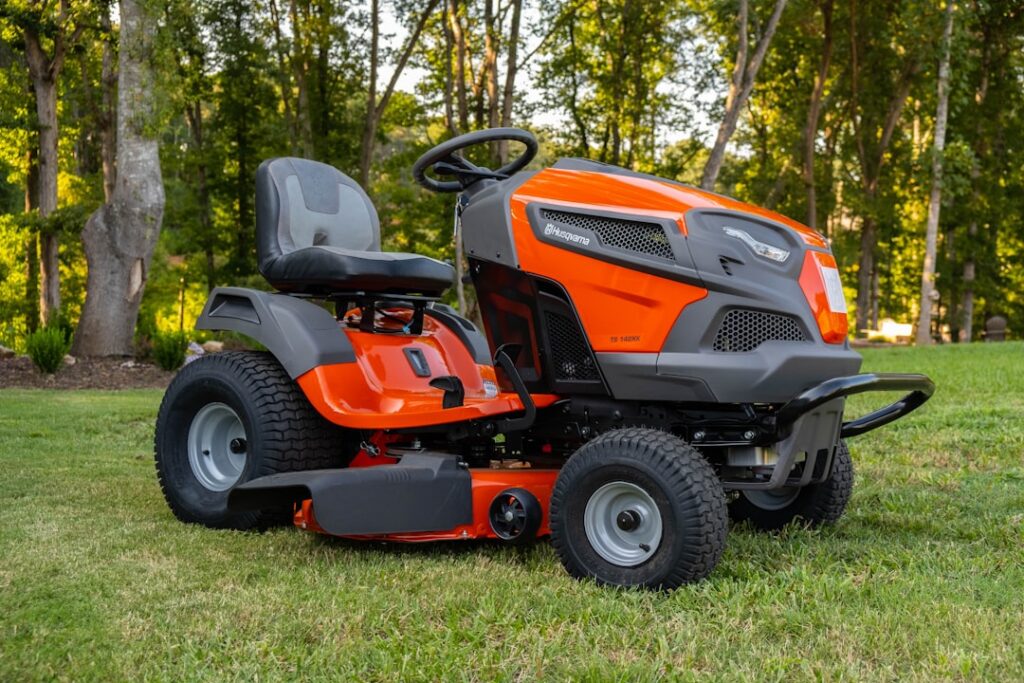
After twenty-plus years running crews and maintaining my own two acres, I’ll tell you straight: half the lawn mower attachments people buy end up rusting in the shed. The other half genuinely change how you work. The trick is knowing which is which before you spend $300 on a tow-behind aerator you’ll use twice. This guide walks through the accessories that bolt onto push mowers and riding mowers, what they cost, and whether the money makes sense for the average homeowner.
Compatibility is the first thing to sort out. Push-mower accessories are mostly limited to bagging and mulching. Riding mowers and lawn tractors open up a whole catalog because they can tow, mount front implements, and run off a wider deck. Before you buy anything, check your deck size, your brand’s mounting standard, and whether you have a rear hitch.
Baggers, Mulching Kits, and Side Discharge
These three deck accessories decide where your clippings go, and they’re the most-used attachments of all. A rear bagger collects clippings into one or two hoppers, usually holding 6 to 8 bushels on a lawn tractor. Factory baggers run $250 to $450 depending on brand; a two-bin John Deere or Cub Cadet unit lands near the top of that range. They’re worth it if you bag leaves in fall or don’t want to rake grass off flower beds.
Mulching kits are the cheaper, smarter buy for most people. A kit is usually just a mulching blade and a plug that blocks the discharge chute, forcing clippings to recirculate under the deck until they’re fine enough to fall between the grass and feed the soil. Expect $30 to $80. I run mulch mode nine months a year and only switch to bagging for leaves.
- Rear bagger: $250-$450, best for leaf cleanup and dust-free finishes
- Mulching kit: $30-$80, feeds the lawn and cuts your workload
- Side-discharge chute: often free with the mower, fastest for tall grass
Dethatchers and Aerators
Thatch is the layer of dead stems that builds up between the soil and the green blades. When it gets past half an inch, water and fertilizer can’t get through. A tow-behind dethatcher drags spring tines through the turf to rip that layer loose. These run $90 to $200 and clamp to your rear hitch. For a push mower, there are tow-behind versions and even dethatching blades that swap in for the standard cutting blade around $15 to $25.
Core aerators pull plugs of soil to relieve compaction, and they matter most on clay soils and high-traffic yards. A tow-behind plug aerator with a weight tray costs $130 to $300; you load it with 100 to 150 pounds of bricks or sandbags so the hollow tines actually penetrate. Honestly, most homeowners aerate once a year at most, so renting one for $50 a day often beats owning. If you’re on heavy clay and do it every fall, buying pays off in three seasons.
Timing matters as much as the tool. Aerate cool-season grasses like fescue and bluegrass in early fall when soil is moist but not soaked, and follow immediately with overseeding so seed drops into the open holes. Dethatch in spring or fall, never in the heat of summer, because tearing the turf when it’s stressed just invites weeds. The right attachment used at the wrong time does more harm than good, so plan the calendar before you plan the purchase.
Carts, Dump Trailers, and Sprayers
If I could only keep one riding-mower attachment, it’d be the tow-behind dump cart. A poly cart with a 650 to 1,200-pound capacity and a tilt-to-dump bed runs $130 to $350. It hauls mulch, firewood, gravel, soil, and bagged leaves, and it saves your back more than anything else on this list. Look for pneumatic tires and a real dump latch, not a bolt you have to remove.
Tow-behind broadcast spreaders ($90 to $180) spin out seed, fertilizer, or ice melt across a 6 to 12-foot swath, and they’re far more even than hand-cranking. Tow-behind sprayers with a 15 to 25-gallon tank ($150 to $400) let you treat weeds or apply liquid fertilizer over a big property in one pass. For anything under a quarter acre, a hand sprayer does fine; the tow unit earns its keep on an acre or more.
Snow Blades and Snow Blowers
Live where it snows and your lawn tractor can double as a winter machine. A front-mount snow blade (dozer blade) is the simplest and cheapest option at $180 to $350; it angles left and right and pushes snow up to about 6 inches deep. Add tire chains and 100 pounds of rear wheel weights or you’ll just spin.
A two-stage snow blower attachment is a serious piece of gear, often $1,500 to $2,500, and it usually requires a power take-off (PTO) drive and a mounting frame specific to your tractor. That’s dealer territory. For most homeowners with a standard driveway, the blade plus a $700 walk-behind snow blower beats trying to convert the tractor. Reserve the tractor blower for long rural drives.
Striping Kits, Sulkies, and Comfort Add-Ons
A lawn striping kit is a weighted roller or brush that mounts behind the deck and bends the grass to create those ballpark stripes. Basic roller kits cost $60 to $150 and mount to most decks with universal brackets. It’s pure aesthetics, but if you take pride in the lawn, it’s a cheap thrill.
A sulky is a single-wheel or two-wheel platform that lets you ride behind a commercial walk-behind mower instead of walking miles a day. At $200 to $500 they’re aimed at pros, not weekend homeowners. Comfort add-ons round out the list: sun canopies ($60 to $150) that clamp to the tractor frame and knock down heat on open lots, high-back seat upgrades, and cup holders. None are essential, but a canopy in July changes your whole afternoon.
Ground-Engaging Tools for Bigger Properties
Own a lawn tractor and a few acres, and a set of ground-engaging implements turns it into a light utility machine. A tow-behind box blade or grader blade ($120 to $300) levels gravel driveways, spreads topsoil, and cuts down ruts. A cultivator or single-bottom plow ($100 to $250) breaks ground for a garden plot without renting a tiller. These pull off the same rear hitch as your cart, so no special mounting is needed.
Be honest about your soil and horsepower before buying, though. A 15-horsepower lawn tractor will drag a plow through loose loam but will spin its wheels in hard clay, and adding 100 pounds of wheel weights only gets you so far. For serious ground work you want a garden tractor or subcompact, not a mowing tractor. Match the tool to what the machine can actually pull, or it becomes shed decoration.
Matching Attachments to Your Brand and Deck
Fitment is where people waste money. Deck-mounted accessories like baggers and mulching plugs are brand and deck-size specific, so a bagger built for a 42-inch Cub Cadet won’t seal on a 54-inch Husqvarna. Always match the model number, not just the width. John Deere, in particular, sells attachments keyed to specific series like the S100 or X300, and mixing them across series causes gaps and clogging.
Tow-behind gear is the exception. Carts, spreaders, aerators, dethatchers, and sprayers all hook to a standard rear hitch pin, so a Husqvarna cart tows fine behind a John Deere or Cub Cadet. If your tractor lacks a hitch, universal hitch kits cost about $20. Here’s my quick buying order for a typical homeowner:
- Mulching kit first, because it improves every mow
- Dump cart second, for the sheer utility
- Bagger third, if you deal with leaves
- Everything else only when a real, repeating need shows up
Buy the attachment that solves a problem you actually have every week, and skip the ones that solve a problem you have once a year. Rent those instead. Do that, and your shed stays clear and your money goes to the tools that earn their keep. When in doubt, call your local dealer with your exact model number before you order, because a five-minute phone call beats a return shipment and a restocking fee every single time.