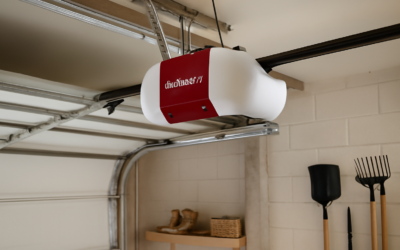
Walk into any professional installer’s van and you’ll almost always find the same brand on the shelf. A Liftmaster garage door opener is the workhorse of the trade because it balances quiet operation, reliable smart features, and parts that dealers actually stock. If you’re replacing a builder-grade unit that rattles the whole house or shopping for a new build, understanding the lineup saves you from overpaying or under-buying.
Part of our Garage Doors guide — explore the full guide →
The Liftmaster garage door family spans belt, chain, and jackshaft drives with horsepower ratings, battery backup, and myQ connectivity that vary by tier. Let me break down what actually matters when you’re standing in front of the options.
Liftmaster Garage Door Drive Types Explained
The drive mechanism determines how quiet your opener runs and how much it costs. There are three you’ll actually consider for a home:
- Belt drive: A reinforced rubber belt moves the trolley. It’s the quietest option, ideal when a bedroom sits above or beside the garage. Models like the 87504-267 run near-silent.
- Chain drive: A metal chain does the work. It’s louder and cheaper, and it holds up well in unheated garages or detached structures where noise doesn’t matter.
- Jackshaft (wall-mount): The 8500W mounts beside the door rather than on the ceiling, freeing overhead space for storage racks or a car lift. It suits high, cathedral, or low-headroom ceilings.
For most attached garages, a belt drive is the upgrade people notice immediately. The difference between a 15-year-old chain unit and a new belt drive is the difference between a jolt and a whisper.
Horsepower and Door Weight
Horsepower ratings on these openers range from 1/2 HP up to 1-1/4 HPC (horsepower comparable). Don’t just grab the biggest number. Match the motor to your door:
- 1/2 HP: Fine for a standard single or lightweight double door up to about 9 feet wide.
- 3/4 HP: The sweet spot for heavier insulated double doors, 16 feet wide, or carriage-style wood doors.
- 1-1/4 HPC: For oversized, solid-wood, or glass-and-aluminum doors that push 400-plus pounds.
An insulated 16-by-7-foot steel door often weighs 130 to 200 pounds, so a 3/4 HP motor gives you smooth lift and long-term durability without straining. Undersizing the motor is the fastest way to burn out an opener early.
myQ Smart Features Worth Having
Nearly every current Liftmaster opener includes myQ, the brand’s app-based control system. From your phone you can open or close the door, check whether it’s open, and get alerts if it’s been left up. That last feature alone has saved countless homeowners from driving back home mid-commute.
The genuinely useful extras include real-time notifications, scheduled auto-close, and integration with a myQ-compatible garage camera. Amazon Key In-Garage Delivery also runs through myQ if you want packages placed inside rather than on the porch. Note that Google Home and some other platforms have limited direct integration, so confirm compatibility before you count on voice control.
Battery Backup and Code Requirements
If you live in California, battery backup isn’t optional. Since 2019, state law has required residential openers to keep working during a power outage, and Liftmaster builds this into most current models. Even outside California, backup is worth it. When a storm knocks out power, you can still get your car out without wrestling the manual release.
The onboard battery typically delivers around 20 cycles on a full charge and signals you with a chirp and an LED when it needs replacement, usually every one to three years. Keep the receipt and note the battery part number; it’s a $30 to $50 item you’ll want on hand rather than scrambling for during an outage.
Security 2.0 and Safety Sensors
Every modern unit uses Security+ 2.0 rolling-code technology, which generates a new code each time you press the remote so a code grabber can’t clone your signal. Pair that with the photo-eye safety sensors mounted about 6 inches off the floor on each side of the door, and you have both intrusion protection and the reversing safety that prevents the door from closing on a pet or child.
If your door ever refuses to close and the light blinks, the culprit is almost always misaligned or dirty photo-eyes. Wipe the lenses, confirm both indicator lights glow steady, and check that nothing bumped the bracket. It’s a two-minute fix that saves an unnecessary service call.
Installation Costs and DIY Considerations
The opener itself runs $200 to $500 depending on drive type and features, with the wall-mount jackshaft models at the top of that range. Professional installation typically adds $150 to $350, so budget $350 to $850 all in. A pro can usually swap a like-for-like unit in two to three hours.
A handy homeowner can install a belt or chain drive in an afternoon with a stepladder, a socket set, and a drill, but the jackshaft and any door with a broken torsion spring belong to a professional. Springs store enormous energy and cause serious injuries every year. If your door doesn’t lift smoothly by hand when disconnected, fix the springs and balance first, then install the opener.
Remotes, Accessories, and Troubleshooting
A garage door opener is a system you interact with every single day, so the way you control it and the way you keep it running matter as much as the motor spec. The right accessories make entry effortless for the whole family, and a little troubleshooting know-how saves you costly service calls for problems you could fix in minutes. Both are worth understanding before you buy and after you install.
Remotes, Keypads, and Accessories
The opener is only half the system. How you actually get in and out day to day comes down to the accessories, and Liftmaster’s ecosystem is deep. Every unit ships with at least one visor remote and a wall control button, but most homeowners add a few extras that make life easier.
- Wireless keypad: Mounts outside the door so family members or a dog walker can enter a code without a remote. Runs $30 to $50.
- Extra remotes: A three-button remote handles multiple doors; keychain remotes are handy for a second car.
- In-car control: HomeLink and Car2U systems in many vehicles pair directly, so you skip the clip-on remote entirely.
- Smart wall control: Upgraded panels add a motion-detecting light, a lock button, and a temperature readout.
One tip that saves frustration: when you buy a new opener, reprogram or clear all old remotes and keypad codes, especially if you bought the house from someone else. It takes two minutes with the LEARN button on the motor unit and closes an easy security gap that too many people ignore.
Troubleshooting Common Problems
Before you call for service, a handful of issues are things you can fix yourself in a few minutes. Knowing them saves an $85 to $150 service-call fee. The most frequent culprit, as mentioned, is the safety sensors, but there are a few others worth checking.
If the door reverses before touching the floor, the close-force or travel limits may need adjustment; both are dials or buttons on the motor head. If the remote works up close but not from the driveway, the antenna wire hanging from the motor may be tucked up or damaged, cutting range. And if the door won’t budge and the opener hums or clicks, the drive gear or a snapped belt or chain is the likely cause on an older unit.
- Door reverses immediately: Clean and realign the photo-eyes; check for obstructions in the track.
- Weak remote range: Straighten the antenna wire; replace the remote battery.
- Grinding noise, no movement: Worn plastic drive gear, a common wear item on 10-plus-year units.
- Opener runs but door stays put: Trolley disconnected, or a broken belt or chain.
A yearly tune-up, tightening hardware, lubricating the chain or rollers, and testing the auto-reverse by laying a 2×4 flat under the door, keeps the whole system running smoothly and heads off most of these failures before they strand your car in the garage.
Which Model Should You Buy?
For a typical attached two-car garage, a 3/4 HP belt-drive model with battery backup and myQ hits the sweet spot on quiet, features, and price. If you have a detached garage where noise is a non-issue, save money with a chain drive. Reserve the wall-mount jackshaft for low-headroom situations or when you want the ceiling clear for a storage lift.
Whichever you choose, register the product for warranty coverage, which typically runs a lifetime motor warranty, five years on parts, and one to five years on the belt or battery. Keep the manual, note the model number, and you’ll have a Liftmaster garage door opener that runs quietly and reliably for well over a decade.