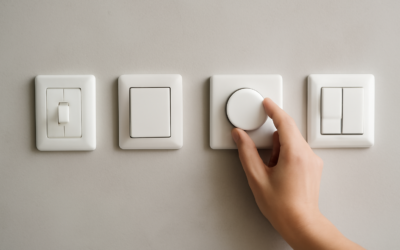
Flip a switch in a dark room and you might catch a faint blue flash inside the wall plate. Seeing light switch sparks can be unsettling, but a tiny, brief arc is often a normal part of how a switch works. The danger lies in telling that harmless spark apart from the warning signs of a failing switch or wiring problem. Large sparks, repeated flashes, buzzing, heat, or a burning smell are not normal, and ignoring them can lead to a fire. Here is how to read what your switch is telling you and what to do about it.
Why a Small Spark Can Be Normal
Every time you turn a switch on or off, you are physically breaking or completing an electrical circuit. At the instant the contacts separate or meet, electricity can briefly jump the tiny gap, producing a small arc you might see as a quick blue spark. This is called load arcing, and a faint, momentary flash, especially when switching something with a higher draw like a vacuum or space heater, is usually nothing to worry about. The spark is contained inside the switch and gone in a fraction of a second.
The Warning Signs You Should Never Ignore
The line between normal and dangerous is about size, frequency, and what comes with the spark. Treat any of the following as a hazard:
- Large or bright sparks that you can clearly see and that seem to “pop.”
- Repeated or constant sparking every time you use the switch.
- Buzzing, crackling, or humming coming from the switch or wall.
- A warm or hot switch plate when you touch it.
- Scorch marks, discoloration, or melting on the switch or cover.
- A burning, fishy, or acrid smell near the switch.
Any one of these points to loose connections, worn contacts, an overloaded circuit, or damaged wiring, all of which can overheat and start a fire.
What Causes Dangerous Sparking
Several underlying problems turn a harmless arc into a real risk. Loose wire connections are the most common; over time, screws back out and wires work loose, creating gaps where electricity arcs and generates heat. Worn-out switches simply fail after years of use, their internal contacts pitted and unreliable. Overloaded circuits draw more current than the switch and wiring are rated for, and aging or damaged insulation can let conductors arc where they should not. Moisture intrusion, especially in bathrooms or exterior switches, adds another path for trouble.
What to Do Right Now
If your switch shows any of the warning signs above, stop using it and act safely:
- Turn off the breaker that feeds that switch at the main electrical panel. Do not just leave the switch off; cut the power at the source.
- Stop using the circuit until the problem is resolved.
- Look, do not touch. Never poke at a sparking, hot, or scorched switch with the power on.
- If there is smoke, melting, or flame, keep the breaker off, leave the area, and call the fire department if needed.
Replacing a Worn Switch
A simple worn switch is a common DIY repair, but only if you are confident and the power is fully off. Confirm the circuit is dead with a non-contact voltage tester before touching any wires. Note how the wires connect, transfer them to the new switch terminal for terminal, and make sure every screw is snug, since loose connections are exactly what cause arcing. Switches cost only a few dollars, so there is no reason to reinstall a questionable one. If you see scorched wires, melted insulation, aluminum wiring, or anything you do not recognize, stop and bring in a professional.
Dimmers, GFCIs, and Special Switches
Some switches deserve extra attention. Dimmer switches generate a little heat as a normal part of how they work, so a dimmer that is mildly warm is usually fine; one that is hot to the touch, buzzing, or controlling more wattage than it is rated for is not. Match the dimmer to your bulb type, since old dimmers paired with LED bulbs can flicker, buzz, and run warm. In bathrooms, kitchens, garages, and outdoor locations, switches and outlets are often tied to GFCI protection; if a switch in a damp area sparks or the GFCI keeps tripping, moisture or a fault may be the cause, and that is worth investigating promptly. Smart switches and timers have electronics inside that can fail too, so apply the same warning signs to them.
What Sparking Can Cost You If Ignored
It is tempting to live with a slightly sparky switch, but the stakes are high. Loose connections and arcing generate heat, and over months that heat can char insulation, melt the switch body, and ignite nearby framing or insulation inside the wall. Electrical faults are a significant cause of home fires, and the early warning signs, buzzing, warmth, scorching, and a faint burning smell, are exactly the symptoms homeowners tend to dismiss. A replacement switch costs only a few dollars and a service call is modest, while the damage from an electrical fire is measured in tens of thousands and can put your family at risk. Treating warning signs early is always the cheaper path.
When to Call a Licensed Electrician
Some problems are beyond a switch swap, and electrical work carries real risk of shock and fire. Call a licensed electrician if:
- Sparking continues after you replace the switch.
- You find scorched, melted, or discolored wiring.
- Multiple switches or outlets spark, buzz, or feel warm.
- Breakers trip repeatedly on that circuit.
- Your home has older wiring you are not familiar with.
An electrician can test the circuit, tighten or replace connections, check for overloading, and confirm the wiring is safe. The cost of a service call is small compared to the cost of an electrical fire.
The Bottom Line
A single, faint blue spark as you flip a switch is usually normal arcing and nothing to fear. But large, repeated, or noisy sparks, along with heat, scorch marks, or a burning smell, are clear hazards. When in doubt, shut off the breaker and bring in a licensed electrician. Electricity is unforgiving, and treating warning signs seriously is always the safer call.