Most homeowners shopping for carpet hear the word Berber and assume they are looking at one product. They are not. They are looking at the broadest category in residential carpeting — looped pile carpet — which covers everything from $1.49 builder-grade rolls to $9 per square foot New Zealand wool. The choice you make inside this category affects vacuum performance, snag resistance, and how the floor looks five years from now.
- What Makes a Carpet Looped Pile
- Level Loop, Multi-Level, and Pattern Loop
- Berber Explained
- Fiber Choices and What They Cost
- Where Looped Pile Belongs and Where It Does Not
- Pros That Drive Buyers to It
- The Snag Problem and How to Prevent It
- Installation Costs and What to Expect
- Cleaning and Long-Term Care
What Makes a Carpet Looped Pile
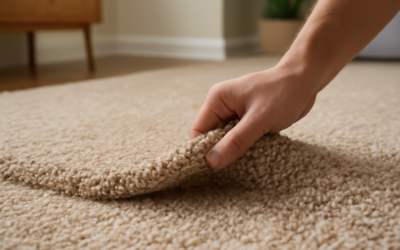
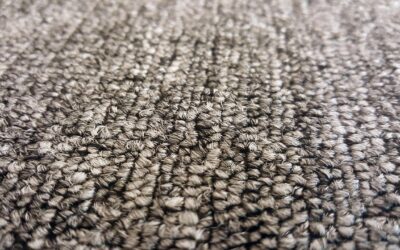
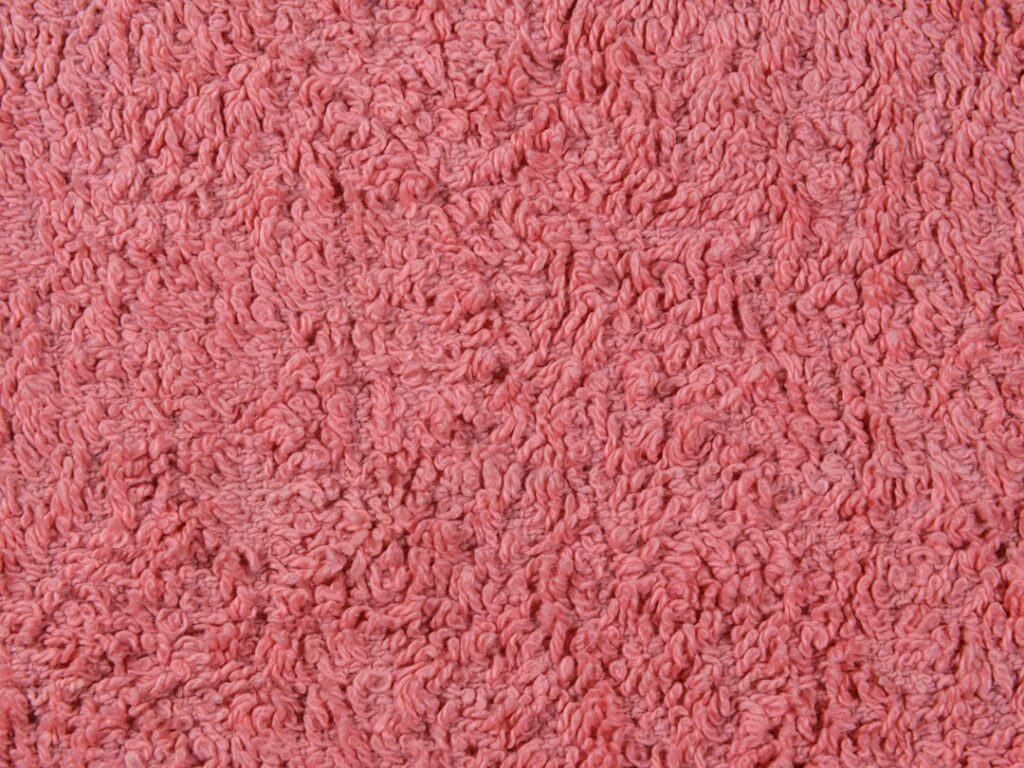
In looped pile construction, the yarn is fed through the backing in continuous loops that stay intact instead of being cut. Each tuft is a closed arc of fiber, which gives the carpet a tighter, denser surface compared to cut pile equivalents. The closed-loop structure resists matting, hides dirt better, and stands up to heavy foot traffic without flattening.
The trade-off is texture. Looped carpet feels firmer underfoot and shows less softness than a cut pile of the same fiber. That density is exactly why builders favor it for offices, hallways, and rental properties where durability matters more than plushness.
Level Loop, Multi-Level, and Pattern Loop
Three distinct constructions live inside the looped category. Level loop keeps every loop the same height — about 1/8 to 3/8 inch tall. The result is a uniform, low-profile surface that vacuums easily and shows tracking minimally. Mohawk SmartStrand Silk Level Loop and Shaw Cobblestone are common examples around $3 to $5 per sq ft.
Multi-level loop mixes two or three loop heights to create subtle texture and pattern. Stanton Atelier and Karastan Smartstrand Sirona are higher-end versions running $6 to $9 per sq ft. Pattern loop is multi-level designed to form geometric or organic patterns — herringbone, basketweave, even subtle florals — and dominates high-end residential installs in the $7-plus range.
Berber Explained
Berber is a specific aesthetic within looped pile carpet, not a separate category. True Berber uses a chunky, looped wool yarn with random flecks of darker color woven through a lighter base. The look originated with the Berber people of North Africa and the term now applies broadly to any short, dense, multicolor looped construction.
Real wool Berber from brands like Karastan or Couristan costs $8 to $14 per sq ft and lasts 20-plus years in a home setting. Olefin Berber from big-box stores starts at $1.79 per sq ft, looks similar at install, and shows traffic patterns within 3 years. The fiber matters more than the loop in this category.
Fiber Choices and What They Cost
Fiber selection drives both budget and lifespan. Here is how the four main options compare in real-world use:
- Olefin (polypropylene) — $1.50 to $3 per sq ft, fades in UV, stain-resistant, 5 to 8 year life
- Nylon 6 or 6,6 — $3 to $6 per sq ft, resilient, takes stain treatments well, 12 to 15 year life
- Triexta (SmartStrand) — $4 to $7 per sq ft, naturally stain-resistant, 15 to 20 year life
- Wool — $7 to $14 per sq ft, naturally fire-resistant, ages beautifully, 25-plus year life
If you have kids or pets, triexta and nylon win on stain resistance. Wool wins on luxury feel and longevity but requires more careful cleaning.
Where Looped Pile Belongs and Where It Does Not
Looped pile carpet excels in high-traffic zones — stairs, hallways, family rooms, home offices, and basements that see daily use. The tight construction resists crushing under furniture and hides shoe traffic patterns far better than plush cut pile.
It performs poorly in homes with cats and large dogs. Claws catch on individual loops and pull entire runs of yarn loose, creating long unsightly runs that are nearly impossible to repair invisibly. If you have pets that scratch carpet, choose a cut pile or a very low-profile commercial-grade looped product with extra-tight construction (under 10 stitches per inch).
Pros That Drive Buyers to It
The case for looped pile is mostly practical. Closed loops resist crushing and matting, which extends the visible lifespan by years. The dense surface vacuums easily because dirt sits on top of the loops instead of working down to the backing. Tight construction also makes looped carpet excellent for stairs — the loops grip the nosing and resist seam separation.
Looped pile shows less footprint tracking than cut pile, which makes it the smart choice for showrooms, formal living rooms, and any space where you do not want vacuum lines visible all the time. Many designs hide dirt and shedding hair remarkably well between vacuumings.
The Snag Problem and How to Prevent It
The biggest drawback of looped pile is its vulnerability to snags. A pulled loop can run several inches if not addressed immediately. Trim — do not pull — any snagged loop with sharp sewing scissors flush with the surrounding carpet. Pulling unravels more loops within the same row.
Move furniture by lifting rather than dragging. Vacuum heads with spinning brush bars can catch loops in cheaper carpets, so look for a vacuum with a brush-off setting (Miele C3 and Sebo K3 do this well). Keep pet nails trimmed and place rugs in high-claw zones near food bowls and door entries.
Installation Costs and What to Expect
Looped pile carpet costs $0.75 to $1.50 per sq ft to install if you supply the carpet, or $4 to $9 per sq ft installed with materials included from a flooring retailer. Stairs add about $5 to $8 per step extra. A 200 sq ft bedroom with mid-grade triexta typically runs $900 to $1,400 fully installed.
Insist on power-stretched installation rather than knee-kicker only. Power stretching pulls the carpet taut across the room and prevents the wrinkles and ripples that destroy looped carpet within a year. A reputable installer charges the same for power stretching and quietly skips it on cheap jobs.
Cleaning and Long-Term Care
Vacuum looped pile twice a week in main traffic areas and once weekly elsewhere. Use a vacuum with adjustable height or a beater bar that can be disabled — aggressive brushes on tight loops fuzz the surface over time. Spot-clean spills within 10 minutes using cold water and a neutral pH cleaner like Folex ($8 a bottle).
Professional hot water extraction every 12 to 18 months keeps looped construction at its best. Avoid encapsulation cleaning on textured loop patterns — the chemical residue collects in the loop bases and dulls the surface within months. The right care turns looped pile carpet from a builder-grade choice into a 15-year investment that ages gracefully.