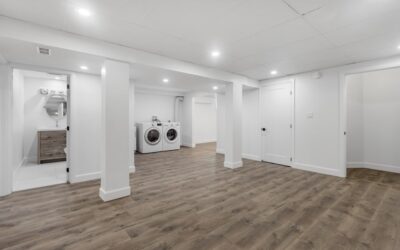
Choosing the best LVP for basement installation requires prioritizing three things: a 100% waterproof core, dimensional stability at below-grade temperatures, and a construction that handles concrete subfloor conditions. Not every luxury vinyl plank meets these requirements. After evaluating dozens of products, we rank four that excel specifically in basement environments.
Basements present unique challenges — moisture migration through concrete slabs, potential flooding, temperature fluctuations, and subfloor imperfections. The right LVP flooring handles all of these while looking as good as any main-level floor in your home.
Why LVP Is the Best Basement Flooring
Luxury vinyl plank is the most popular basement flooring choice in 2026 for good reason. Its waterproof core eliminates the primary risk that destroys other flooring types in below-grade spaces. A basement sump pump failure, water heater leak, or heavy rain seepage that would ruin hardwood, laminate, or carpet only requires wiping up and drying with LVP — the flooring itself is unaffected.
Beyond waterproofing, LVP installs directly over concrete without the extensive subfloor systems that hardwood or carpet padding require. The click-lock floating installation allows the floor to expand and contract independently from the concrete slab, which is important because basement concrete undergoes seasonal movement. And at $2 to $7 per square foot for materials, LVP is cost-effective for the large square footage that basements typically involve.
What to Look for in Basement LVP
SPC rigid core (required). SPC (stone polymer composite) cores are dimensionally stable across temperature ranges, which matters in basements where temperatures can swing from 55 degrees in winter to 80 degrees in summer. WPC (wood polymer composite) cores are also waterproof but expand slightly more with temperature changes. For basements, SPC is the preferred construction.
Attached underlayment pad (preferred). An attached cork or IXPE pad serves multiple purposes in basements: it adds cushion over hard concrete, provides a thermal barrier between your feet and the cold slab, and dampens sound. Products without attached pads require separate underlayment, adding cost and installation time. Do not use standard foam padding under SPC vinyl — it can compress and cause click-lock failure.
Thick wear layer (20 mil minimum). Basements often serve as family rooms, playrooms, and home gyms — all high-activity uses. A 20-mil or thicker wear layer ensures the floor handles this use without showing wear for 15 to 25 years.
Low VOC emissions. Basements have less air circulation than above-grade rooms. Choose products that are FloorScore certified or meet GREENGUARD Gold standards to ensure minimal off-gassing in a lower-ventilation space.
Top 4 Basement LVP Products for 2026
#1 COREtec Pro Plus — Best Overall
COREtec Pro Plus is our top pick for basement LVP. Its patented COREtec construction features an SPC rigid core with an attached cork underlayment that provides comfort, sound absorption, and thermal insulation directly over concrete. The 20-mil wear layer handles heavy residential and light commercial traffic without issue.
COREtec invented the rigid-core LVP category, and their manufacturing expertise shows in the click-lock precision. Planks engage cleanly and stay locked even under the dimensional stress of basement temperature fluctuations. The attached cork pad is genuinely effective — you can feel the difference compared to pad-less products installed directly on concrete.
At $3.50 to $5.50 per square foot for materials, COREtec Pro Plus is a mid-to-premium product. It is available through specialty flooring retailers and select online stores. For basements, the cork pad and SPC construction justify the premium over budget alternatives. The lifetime residential warranty covers manufacturing defects, and the product is FloorScore certified for indoor air quality.
#2 Lifeproof Sterling Oak — Best Value
Lifeproof Sterling Oak (and the broader Lifeproof collection at Home Depot) offers excellent basement performance at a more accessible price point. The rigid SPC core is waterproof and dimensionally stable, and the attached IXPE pad provides basic cushioning over concrete. The 22-mil wear layer is actually thicker than some premium competitors.
Lifeproof’s biggest advantage is availability and price. You can walk into any Home Depot and buy Lifeproof the same day at $2.50 to $3.80 per square foot. No special ordering, no waiting. For homeowners on a timeline or a budget, Lifeproof delivers 90% of the performance of COREtec at 60% to 70% of the price.
The trade-off is in the details. Lifeproof’s click-lock system is slightly less refined than COREtec’s, the attached pad is thinner (less thermal insulation), and the color options are more limited. But for basement applications where maximum budget efficiency matters, Lifeproof is the smart choice. See our luxury vinyl plank basement guide for installation details specific to this product.
#3 Shaw Floorte Pro — Best Commercial-Grade
Shaw Floorte Pro brings commercial-grade construction to residential basements. This product line features an SPC rigid core, a 30-mil wear layer (the thickest on our list), and an attached pad. The 30-mil wear layer makes Floorte Pro the most durable option for basements that serve as home gyms, workshops, or heavy-traffic family rooms.
Shaw is one of the largest flooring manufacturers in the world, and Floorte Pro reflects their manufacturing scale with consistent quality, extensive color options, and wide availability through Shaw-authorized dealers. The product carries a lifetime residential warranty and is certified for low VOC emissions.
At $3.50 to $5.00 per square foot, Shaw Floorte Pro is priced similarly to COREtec. The 30-mil wear layer gives it a durability edge, but COREtec’s cork pad provides a warmer, softer feel underfoot. Choose Floorte Pro if your basement will see heavy use; choose COREtec if comfort is the priority.
#4 MSI Everlife — Best Budget SPC
MSI Everlife provides a solid SPC rigid-core basement floor at the most affordable price on our list. The Cyrus and Prescott collections within the Everlife line feature attached IXPE pads, 20-mil wear layers, and a wide selection of wood-look colors at $2.00 to $3.50 per square foot.
MSI distributes through Floor & Decor and other specialty retailers. Their Everlife line has gained popularity rapidly due to its combination of rigid-core construction, reasonable pricing, and visual quality. The click-lock system is reliable, and the product performs well on concrete subfloors.
The limitation of MSI Everlife compared to premium products is the thinner attached pad and slightly less detailed surface texturing. In a basement where aesthetics are secondary to function and budget, MSI Everlife is an excellent choice. For main-level living spaces, you may prefer a more visually refined product.
Product Comparison Table
| Feature | COREtec Pro Plus | Lifeproof Sterling Oak | Shaw Floorte Pro | MSI Everlife |
|---|---|---|---|---|
| Core type | SPC | SPC | SPC | SPC |
| Wear layer | 20 mil | 22 mil | 30 mil | 20 mil |
| Attached pad | Cork | IXPE | IXPE | IXPE |
| Material cost (per sq ft) | $3.50 – $5.50 | $2.50 – $3.80 | $3.50 – $5.00 | $2.00 – $3.50 |
| Plank width | 7″ standard | 7″ – 8.7″ | 7″ standard | 7″ – 9″ |
| Warranty (residential) | Lifetime | Lifetime | Lifetime | Lifetime |
| Low VOC certified | FloorScore | FloorScore | FloorScore | FloorScore |
| Best for | Overall comfort | Budget + availability | Heavy-use basements | Maximum value |
| Where to buy | Specialty retailers | Home Depot | Shaw dealers | Floor & Decor |
Concrete Subfloor Preparation
Proper concrete preparation is essential for a successful basement LVP installation. Even waterproof flooring requires a sound substrate to perform long-term. For more guidance, see our vinyl plank over concrete guide.
Clean the concrete. Sweep, vacuum, and remove all debris, paint, adhesive residue, and drywall compound from the slab surface. LVP click-lock systems are sensitive to debris — even a small pebble under a plank can create an annoying bump and prevent proper locking.
Check for flatness. Place a 6-foot straightedge on the concrete and check for gaps. Most LVP manufacturers require the subfloor to be flat within 3/16 inch over a 10-foot span. High spots can be ground down with a concrete grinder. Low spots can be filled with self-leveling compound. Do not skip this step — an uneven subfloor causes click-lock failures, gaps between planks, and creaking underfoot.
Address cracks. Hairline cracks in basement concrete are cosmetic and do not affect LVP installation. Cracks wider than 1/4 inch should be filled with flexible concrete patch compound. Active cracks (those that continue to widen) indicate structural issues that should be evaluated by a professional before installing any flooring.
Moisture Considerations
While LVP itself is waterproof, excessive moisture vapor from the concrete slab can create problems including mold growth beneath the flooring and condensation between the floor and the pad. Test your basement concrete for moisture before installation.
Calcium chloride test: Place a calcium chloride moisture test kit on the concrete, seal it, and measure moisture emission after 72 hours. Most LVP manufacturers require emissions below 5 pounds per 1,000 square feet per 24 hours. Test kits cost $15 to $30 and are available at home centers.
Plastic sheet test: Tape a 2-foot by 2-foot piece of plastic sheeting to the concrete with all edges sealed. Wait 72 hours and check for condensation under the plastic. If moisture is visible, the slab has elevated moisture levels that may need a vapor barrier or additional testing.
If moisture is high: Apply a concrete moisture vapor barrier (epoxy-based) before installing LVP. Products like Bostik MVP4 or Mapei Planiseal VS create a vapor-impermeable layer over the concrete. SPC vinyl with an attached pad installed over a sealed slab provides excellent moisture management for most basement conditions.
Basement-Specific Installation Tips
Acclimate the product. Store LVP boxes in the basement for at least 48 hours before installation. This allows the planks to reach the ambient temperature of the basement, reducing expansion or contraction after installation.
Maintain expansion gaps. Leave a 1/4-inch gap between the LVP and all walls, columns, pipes, and fixed objects. Basements experience temperature changes that cause SPC vinyl to expand and contract. Without proper expansion gaps, planks can buckle or push against walls.
Plan for moisture escape. If your basement has a sump pump, do not install LVP directly over or against the sump pit. Leave access to the pit and use a removable cover that does not restrict sump pump operation. If your basement has floor drains, keep them accessible — do not cover them with LVP.
Start from the driest wall. In basements where one wall has occasional moisture seepage, start your installation from the opposite (dry) wall. This places the more visible, uncut planks in the dry area and positions cut edges (more vulnerable to edge infiltration during extreme water events) near the problem wall where they are likely covered by furniture or shelving.
Consider a dehumidifier. Even with waterproof LVP, maintaining basement humidity below 60% prevents mold growth on and under the flooring. A basement dehumidifier protects your flooring investment and improves overall comfort.
Frequently Asked Questions
What is the best flooring for a basement?
Luxury vinyl plank (LVP) with an SPC rigid core is the best basement flooring for most homeowners. It is 100% waterproof, installs directly over concrete, handles temperature fluctuations, and costs $2 to $7 per square foot. Our top picks are COREtec Pro Plus (best overall) and Lifeproof (best value).
Can you put LVP directly on concrete basement floor?
Yes. SPC luxury vinyl plank installs directly on clean, flat concrete without additional subfloor preparation. If the product includes an attached pad, no separate underlayment is needed. Check concrete for flatness (within 3/16 inch over 10 feet) and moisture levels before installation.
Do I need underlayment for LVP in a basement?
If your LVP has an attached pad (cork or IXPE), no additional underlayment is needed. If your product lacks an attached pad, install a thin IXPE underlayment designed for SPC vinyl. Do not use standard foam or cork underlayment meant for laminate — it can be too thick and compress unevenly under rigid SPC planks.
Is WPC or SPC better for basement?
SPC (stone polymer composite) is better for basements. SPC cores are more dimensionally stable across temperature ranges, more resistant to indentation from heavy furniture, and thinner for easier transition management. WPC works in basements but is slightly more prone to expansion with temperature swings.
How much does it cost to install LVP in a basement?
For a 600-square-foot basement, expect $1,200 to $4,200 for mid-range LVP materials and $2,100 to $7,200 total with professional installation. DIY installation saves $900 to $2,400 in labor. The total depends on product tier, concrete preparation needs, and your local labor market.
Will LVP get moldy in a basement?
The LVP itself will not mold — vinyl is inorganic. However, moisture trapped between the LVP and concrete can promote mold growth on the concrete surface or the pad material. Prevent this by testing concrete moisture before installation, using a vapor barrier if needed, and maintaining basement humidity below 60% with a dehumidifier.
Prefer to explore on your own?
See how new flooring looks in your actual room in seconds — free, no signup.
Try the free Floor Studio →