Mapei Ultraflex LFT large format tile mortar is a professional-grade, polymer-modified thinset engineered specifically for the big, heavy tiles that have taken over modern floors and walls. The “LFT” stands for Large Format Tile, and that is exactly the problem this product solves. When you set a 12×24 inch, 24×48 inch, or larger tile in ordinary thinset, the tile can slump, sag on a wall, or fail to make full contact, leaving hollow spots and lippage. Ultraflex LFT is a medium-bed, non-slumping mortar formulated to support that weight, hold tiles in place without sliding, and build up to a thicker bed that keeps big tiles flat. If you are tackling a large-format tile project, understanding how this mortar works and how to use it correctly makes the difference between a flat, durable installation and a lifetime of cracked grout and lippage.
Part of our Tile & Grout guide — explore the full guide →
What Makes It a “Large Format” Mortar
Standard thinset is designed to be applied in a thin layer, typically around 3/16 inch after the tile is set. The Tile Council of North America defines “large format” tile as any tile with at least one edge 15 inches or longer, and these tiles need special handling. Ultraflex LFT is a medium-bed mortar, meaning it is formulated to be applied and remain stable at greater thicknesses, up to about 3/4 inch on the wall or floor, without shrinking excessively or slumping. Two properties matter most:
- Non-slumping: The mortar holds its ridges and does not compress out flat under a heavy tile, so the tile does not sink and lippage stays controlled.
- Non-slip (non-sag): On walls, large tiles want to slide down before the mortar sets. Ultraflex LFT grabs and holds them in place.
Where and When to Use It
Ultraflex LFT is the right choice for:
- Large-format porcelain and ceramic tile on floors and walls, especially anything 15 inches or larger on a side.
- Heavy natural stone and thick tiles that need a supportive bed.
- Slightly uneven substrates where the thicker bed helps accommodate minor variation (though it is not a substitute for proper floor prep).
- Wall installations where sag resistance keeps big tiles from sliding.
It is a polymer-modified mortar that meets ANSI A118.4 and A118.11 standards, and it bonds well to a range of substrates including concrete, cement backer board, and properly prepared surfaces. For very demanding jobs, Mapei also makes Ultraflex LFT Rapid, a fast-setting version for when you need to grout the same day.
Coverage: How Much You Need
Coverage depends heavily on trowel size, which for large tiles is bigger than you might expect. Large-format installations typically call for a 1/2 inch square-notch trowel or larger, and often a slant/euro-notch trowel that collapses cleanly for better coverage. As a rough guide, a 50-pound bag of Ultraflex LFT covers roughly 40 to 95 square feet depending on trowel notch size and how flat the substrate is. Bigger notches and rougher substrates use more mortar per bag. Always buy an extra bag beyond your calculation so you do not run out mid-tile; you cannot pause a large tile halfway.
Mixing It Correctly
Getting the mix right is critical for performance:
- Add mortar to water, not the other way around, using the water ratio on the bag (roughly 5 to 6 quarts per 50-pound bag, but follow the label).
- Mix with a low-speed drill (under 300 rpm) and a mixing paddle to a smooth, lump-free, creamy consistency that holds a trowel ridge.
- Let it slake. Allow the mixed mortar to rest about 3 to 5 minutes, then remix briefly. Slaking lets the chemicals fully activate and is a step beginners often skip.
- Do not over-water. Adding extra water to make it easier to spread weakens the bond and increases shrinkage. Mix only what you can use within its working time.
Application for Flat, Lippage-Free Tile
Technique is where large-format installs succeed or fail:
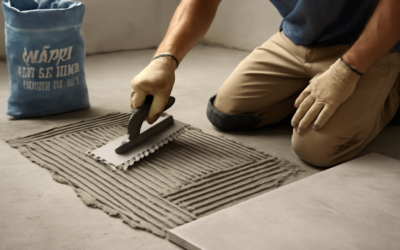
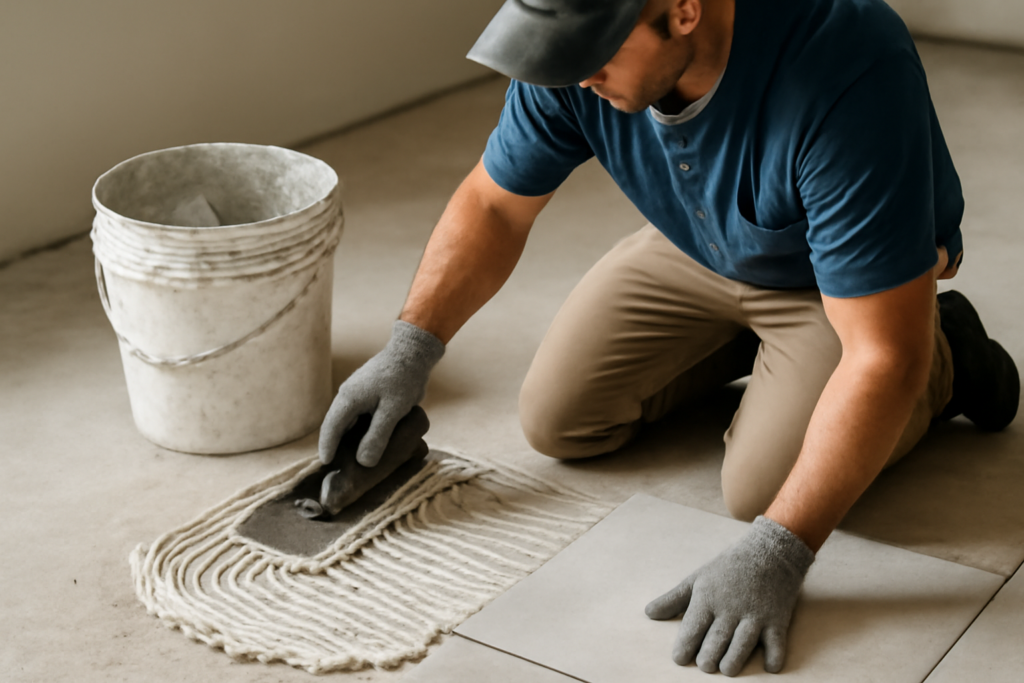
- Key in a thin coat first. Flatten a skim layer onto the substrate with the flat side of the trowel, then comb on the full bed with the notched side.
- Back-butter the tile. For large format, spreading a thin layer of mortar on the back of the tile as well as the substrate is essentially mandatory. This ensures full contact and is the best defense against hollow spots.
- Comb in one direction and collapse the ridges by setting the tile with a slight back-and-forth motion perpendicular to the notch lines, which pushes out air and closes voids.
- Aim for 90 to 95 percent mortar coverage under the tile (interior) and full coverage in wet or exterior areas. Periodically lift a set tile to check.
- Use a leveling system. Tile leveling clips and wedges hold adjacent large tiles flush while the mortar cures, dramatically reducing lippage.
- Beat in the tile with a rubber mallet and a beating block to seat it fully and flatten.
Cure and Set Times
Standard Ultraflex LFT typically allows foot traffic and grouting after about 24 hours in normal conditions, though cooler temperatures and low airflow slow curing, so waiting longer is safer. The Rapid version can be grouted in a few hours. Full cure and the mortar’s ultimate strength develop over several days. Do not rush grouting; grouting too early can trap moisture and disturb tiles that have not fully set. Keep the area within the temperature range on the bag (generally above 50 degrees Fahrenheit) during cure.
What It Costs
Ultraflex LFT is a mid-to-premium priced mortar reflecting its performance. A 50-pound bag typically runs roughly $30 to $50 at tile suppliers and home centers, with the Rapid version costing a bit more. It is more expensive than basic thinset, but for large tiles the upgrade is worth it, using cheap thinset under a big heavy tile is a false economy that leads to hollow, lippage-ridden, crack-prone results.
Common Mistakes to Avoid
- Using standard thinset under large tiles, which slumps and cannot support the weight, causing lippage and hollow spots.
- Skipping back-buttering, the number-one cause of poor coverage on big tiles.
- Over-watering the mix to make it spread easier, weakening the bond.
- Combing in swirls instead of straight lines, which traps air; always comb one direction and collapse the ridges.
- Not flattening the substrate first; medium-bed mortar accommodates minor variation but cannot fix a wavy floor. The TCNA flatness requirement for large tile is strict.
- Ignoring a leveling system, then living with visible lippage on a floor of big tiles.
- Mixing more than you can use before it starts to set, wasting product.
Substrate Prep and Flatness Requirements
No mortar, however good, can rescue a poorly prepared substrate, and large-format tile is especially unforgiving of unevenness. The Tile Council of North America sets a strict flatness standard for large tile: the surface should not vary more than 1/8 inch over 10 feet and no more than 1/16 inch over 2 feet. Because big tiles are rigid and cannot flex to follow a wavy floor, any high spot or dip telegraphs into lippage, that annoying height difference between adjacent tile edges that you feel underfoot and see in raking light. Before you open a bag of Ultraflex LFT, check the floor with a long straightedge and correct problems: grind down high spots and fill low areas with a self-leveling underlayment or patch compound.
Prep also means the substrate must be clean, structurally sound, and appropriate for tile. Concrete should be cured, free of curing compounds, dust, and sealers that block adhesion. Cement backer board must be properly fastened with no flex. On floors, an uncoupling or crack-isolation membrane is often recommended under large tile to prevent substrate cracks from transferring up into the tile, and Ultraflex LFT bonds well within such systems. Wood subfloors need to be stiff enough (adequate joist spacing and a proper double-layer or backer-board substrate) because deflection cracks grout and tile.
Environmental conditions during install and cure matter too. Work within the temperature range on the bag, generally above 50 degrees Fahrenheit, and avoid installing in direct hot sun or drafts that flash-dry the mortar surface and cause skinning, which ruins the bond. Take a few extra minutes to key the mortar firmly into the substrate so it grips, and periodically pull a set tile to verify you are achieving the coverage you need. That habit catches problems while they are still fixable, long before grout goes in.
Mapei Ultraflex LFT is purpose-built for a very specific and increasingly common challenge: setting large, heavy tiles flat and keeping them there. Its non-slump, non-sag formula supports the weight, its medium-bed thickness accommodates minor substrate variation, and its polymer modification delivers a strong, flexible bond. Pair it with proper substrate flattening, generous back-buttering, straight-line troweling, and a tile leveling system, and you will get the flat, seamless, lippage-free large-format installation that makes modern tile look so good, a result cheap thinset simply cannot deliver.
Prefer to explore on your own?
See how new flooring looks in your actual room in seconds — free, no signup.
Try the free Floor Studio →