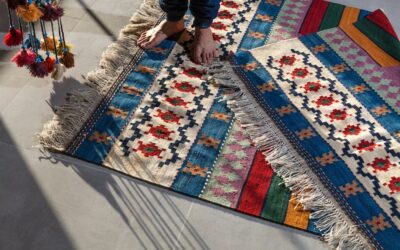
The single most common rug mistake in a primary suite is going too small, and it shrinks the entire room visually by 20 to 30 percent. A well-chosen master bedroom rug does the opposite. It anchors the bed, softens hardwood or tile, dampens echo, and pulls the headboard, nightstands, and dresser into one cohesive zone. Get the size right, pick the correct pile for how you live, and your bedroom feels intentional and finished without rearranging a single piece of furniture.
Start With Bed Size, Not Room Size
The bed sets the proportion. A standard rule that works in 90 percent of master bedrooms: the rug should extend at least 24 inches beyond the sides and foot of the mattress. That gives your bare feet a soft landing every morning and visually expands the bed.
- King bed (76 by 80 inches): use a 9 by 12 foot rug
- Queen bed (60 by 80 inches): use an 8 by 10 foot rug
- Full bed (54 by 75 inches): use a 6 by 9 or 8 by 10 foot rug
- Tight room with a queen: consider two 3 by 5 runners on each side of the bed
Smaller rugs at the foot of the bed (5 by 8 or less) almost always read as undersized and chop the room visually. If budget is tight, two flanking runners outperform one too-small area rug.
Three Placement Options That Actually Work
There are really only three credible layouts. Pick based on furniture placement and traffic.
The first and most common: the rug sits centered under the bed with two-thirds of the rug sticking out past the foot. Nightstands sit either on the rug or off it; both look intentional as long as you commit. The second: the rug extends beyond the headboard wall slightly and runs the full length of the bed. This works in larger suites with a bench at the foot. The third: a horizontal rug placed only across the lower third of the bed, leaving the head and pillows on bare floor. Best for radiant heat floors or when the original wood is too pretty to cover.
Pile Height and How You Live
Pile is comfort. A bedroom is the one room where you can justify a 1-inch shag because no one drags chairs across it. That said, household details matter:
- Low pile (under 0.4 inches): easiest to vacuum, friendly to robot vacuums, ideal under a rolling office chair tucked in a corner
- Medium pile (0.4 to 0.75 inches): the sweet spot for most masters, plush underfoot and still vacuums in five minutes
- High pile or shag (over 0.75 inches): luxurious but traps dust mites and pet hair, plan on a deep clean every 4 to 6 months
If you have allergies, low pile wool or a tightly woven flatweave is the cleanest choice. Synthetic shag can off-gas VOCs for the first 6 to 8 weeks; air it out in a garage before installing.
Materials That Suit a Bedroom
Bedrooms see low foot traffic and rare spills, so material choice is mostly about feel and budget. Wool is the gold standard at 8 to 18 dollars per square foot. It is naturally stain resistant, lasts 20 to 30 years, and feels warm in winter. New Zealand wool blends from brands like Loloi or Nourison run 800 to 2,200 dollars for a 9 by 12.
Polypropylene and polyester rugs (2 to 5 dollars per square foot) are budget-friendly and now come in surprisingly good shags. A 9 by 12 polyester shag from Safavieh or Rugs USA runs 250 to 500 dollars. Viscose and bamboo silk look stunning but stain from one glass of water; reserve them for low-use suites where you never eat or drink.
Pad It Properly Underneath
A rug pad adds about 30 percent to the rug’s lifespan and prevents slipping on hardwood. For a master bedroom rug, use a 1/4-inch felt-and-rubber pad like the Mohawk Ultra Premium, around 80 dollars for a 9 by 12. It adds noticeable plushness underfoot without making the rug feel mushy.
Avoid thin rubber waffle pads on hardwood; the rubber can off-gas plasticizers that yellow polyurethane finishes within a year. Felt-rubber blends and 100 percent wool pads are safe on every floor type.
Color and Pattern That Calms Instead of Stimulates
The bedroom should feel like a retreat. That generally means lower-contrast patterns and softer color palettes than a living room. Neutral tones, muted vintage prints, or tonal florals in the same color family as your bedding work well. A high-contrast geometric in black and white can feel energizing on day one and exhausting after a month.
If your walls are a strong color, ground them with a rug in a similar but quieter tone. If your walls and bedding are neutral, the rug can carry the personality of the room: a faded Persian-style print, a chunky natural jute layered with sheepskin, or a tonal Berber-inspired pattern.
Layering for Visual Depth
Layering rugs is one of the easiest design moves in a bedroom. Start with a large, flat natural-fiber rug (jute or sisal in 9 by 12 for around 350 dollars), then layer a smaller wool or vintage rug on top angled diagonally or centered under the bed. The layer creates instant depth and lets you change the smaller rug seasonally without recommitting to a huge purchase.
Two sheepskins or a faux mongolian fur at each side of the bed are another easy layer. They cost 30 to 90 dollars each and turn a flat hardwood floor into a five-star hotel feel.
Care and Cleaning Schedule
A master bedroom rug needs less maintenance than any other rug in the house, but it still benefits from a routine. Vacuum once a week with the beater bar off (or on the highest setting). Rotate the rug 180 degrees once a year to even out sun fade and foot traffic. Professional cleaning every 18 to 24 months at about 0.40 dollars per square foot keeps a wool rug looking new for decades.
Spot clean spills within 60 seconds using cold water and a white cloth. Avoid spraying carpet cleaners directly on wool; the high pH strips lanolin and shortens the rug’s life. The right master bedroom rug, sized correctly and cared for routinely, becomes one of the longest-lasting furnishings in the entire house.