
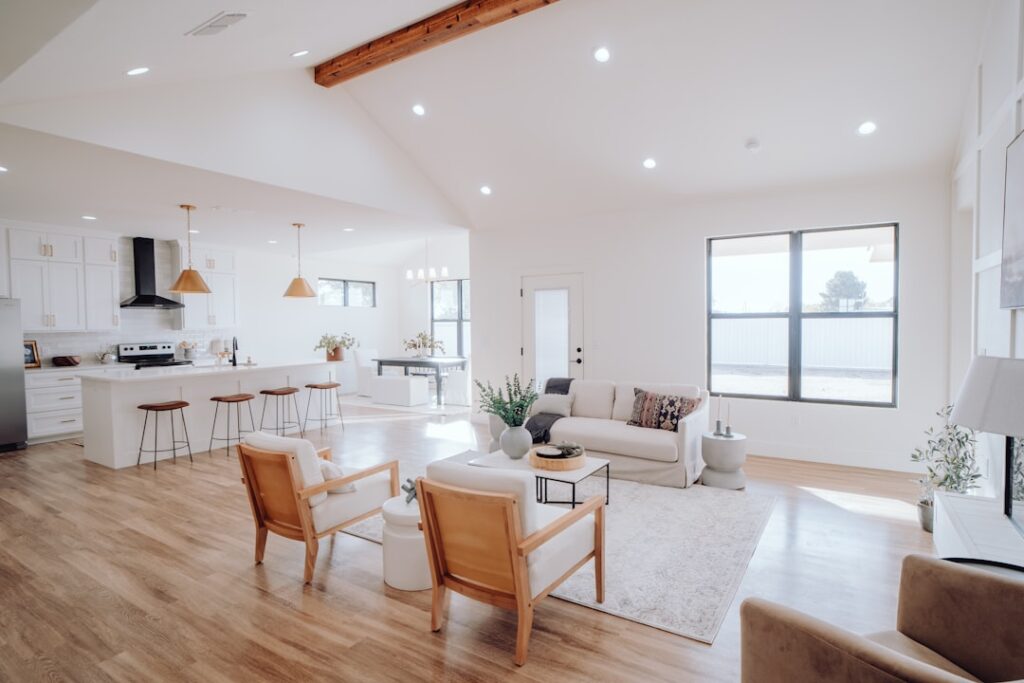
Glossy floors look stunning in a showroom and reveal every footprint, scratch, and dust bunny the moment you live on them. That is why so many homeowners are switching to matt flooring, low-sheen surfaces that hide imperfections, read as more upscale, and demand far less daily wiping. Whether you are choosing hardwood, laminate, vinyl, or tile, the finish you pick changes the look and the upkeep as much as the material itself. Here is how matte stacks up against gloss.
- What “Matte” Actually Means on a Floor
- The Big Advantage: Hiding Imperfections
- Matte Versus Gloss: The Full Comparison
- Matte Options Across Flooring Types
- Maintenance and Cleaning Differences
- When Gloss Still Makes Sense
- How Sheen Affects a Room’s Feel
- Matte Finish and Resale Appeal
- Choosing the Right Finish for Your Floor
What “Matte” Actually Means on a Floor
Finish is measured by sheen, the percentage of light a surface reflects. The scale runs from flat matte to high gloss:
- Matte (flat): roughly 0 to 10 percent sheen; almost no reflection.
- Satin: about 25 to 35 percent; a soft, low glow that is the most popular middle ground.
- Semi-gloss: around 50 to 60 percent; noticeably shiny.
- High gloss: 70 percent and up; mirror-like reflection.
When people say matte flooring, they usually mean anything in the flat-to-satin range, where the surface looks natural rather than polished.
The Big Advantage: Hiding Imperfections
This is the reason matte wins for real-world living. A glossy surface acts like a mirror, so it broadcasts every scratch, scuff, smudge, and speck of dust. A matte finish scatters light instead of reflecting it, which visually absorbs minor flaws. Pet claws, kids’ toys, and dragged furniture leave marks that practically vanish on a low-sheen floor but glare on a high-gloss one. For busy households, that single trait makes matte the lower-maintenance, better-looking choice over time.
Matte Versus Gloss: The Full Comparison
Each finish has a place. Weigh the trade-offs against your home:
- Hiding scratches: matte wins easily.
- Showing dust and footprints: matte hides them; gloss shows everything.
- Brightening a dark room: gloss reflects more light and can make a space feel bigger.
- Formal, dramatic look: high gloss delivers it.
- Natural, modern look: matte and satin lead current design trends.
- Slip resistance: matte textures are often slightly grippier underfoot.
For most homes, satin is the practical sweet spot, low enough sheen to hide wear, with a touch of warmth that pure flat finishes can lack.
Matte Options Across Flooring Types
You can get a matte finish in nearly any material. The look applies broadly:
- Hardwood: matte and satin polyurethanes or natural oil finishes; oil-finished oak is a popular ultra-matte look.
- Laminate: embossed matte textures that mimic raw, wire-brushed wood.
- Luxury vinyl plank: low-sheen surfaces that read as authentic timber.
- Tile: matte-glazed and honed porcelain, common in wood-look and stone-look planks.
Matte costs essentially the same as gloss within a given product line, so the choice is about look and upkeep, not budget.
Maintenance and Cleaning Differences
Matte floors are forgiving day to day but have their own care rules. Because they do not reflect, you will not see every smudge, which means less frequent deep cleaning. They do show grease and oily residue more than gloss in some cases, so use a cleaner formulated for low-sheen or oil finishes rather than a glossy floor polish, which can leave a hazy film. Never use shine-restoring products on a matte floor; they defeat the whole purpose. A damp microfiber mop and a pH-neutral cleaner keep matte surfaces looking right. Skip wax on factory-finished matte hardwood unless the manufacturer specifies it.
When Gloss Still Makes Sense
Matte is not always the answer. A high-gloss floor can be the right call in a small or dark room that needs the reflected light to feel larger and brighter, or in a formal space, an entry foyer, a grand dining room, where the dramatic shine is the point. Traditional and luxury interiors sometimes lean on gloss for that polished, high-end statement. Just go in knowing that gloss demands more frequent cleaning to keep it looking flawless, since it hides nothing.
How Sheen Affects a Room’s Feel
Finish does more than hide scratches; it changes how a room reads. Matte and satin floors feel calm, natural, and contemporary, letting the wood grain or material texture take center stage rather than the shine. They suit modern, rustic, and Scandinavian interiors particularly well. High gloss, by contrast, draws the eye and creates a sense of formality and depth, which is why it shows up in traditional and luxury spaces. Sheen also interacts with light: in a sun-drenched room, a matte floor stays comfortable and glare-free, while gloss can create hot spots of reflected light that some people find distracting.
Think about the mood you want before you choose. If you want the floor to recede and the furnishings to shine, go matte. If you want the floor itself to be a statement, gloss delivers that drama.
Matte Finish and Resale Appeal
Current buyer taste favors matte and satin, which is worth considering if you may sell. Over the past decade, design trends have moved decisively away from the glossy floors of the early 2000s toward natural, low-sheen looks that read as current and high-end. A matte or satin wide-plank floor in a neutral tone has the broadest appeal to today’s buyers and is unlikely to look dated quickly. High gloss can feel out of step in a casual or modern home, though it still works in formal traditional settings. If resale is on your mind, a satin finish is the safest bet, modern enough to feel fresh, forgiving enough to stay looking clean during showings.
Choosing the Right Finish for Your Floor
For everyday living, matt flooring is the smarter default: it hides the scratches and footprints that real life produces, suits today’s natural design trends, and asks less of you between cleanings. Reserve high gloss for the rooms where you specifically want drama or extra light. If you are torn, satin splits the difference and is the most popular finish for a reason. Whatever material you choose, match the sheen to how the room is used, and a matte or satin finish will keep your floor looking newer, longer, with far less effort.
Prefer to explore on your own?
See how new flooring looks in your actual room in seconds — free, no signup.
Try the free Floor Studio →

