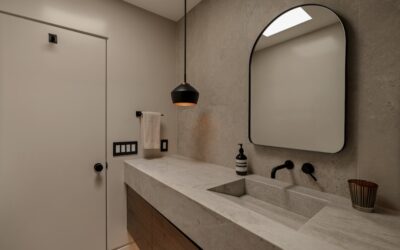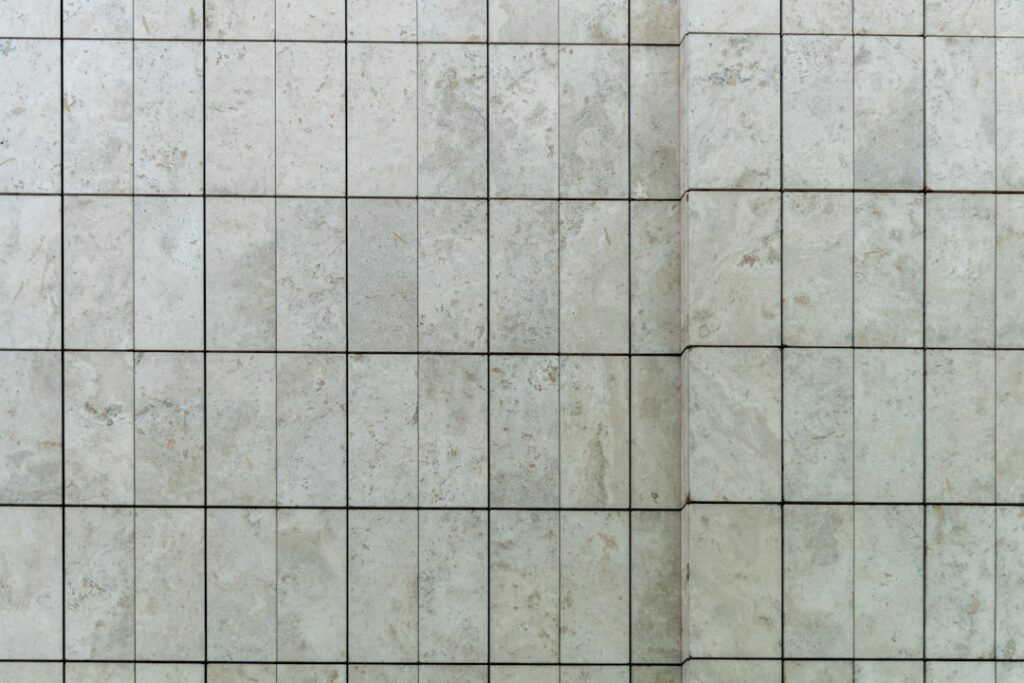
Polished tile is finally losing its decades-long grip on the showroom. Matte tile flooring — with its subtle texture, low-glare surface, and superior slip resistance — has overtaken high-shine as the default specification for kitchens, bathrooms, entries, and outdoor patios. The aesthetic shift away from gloss reflects a real performance argument: matte tile delivers DCOF wet ratings 30 to 60 percent higher than polished, masks etching and water spots, and reads as more sophisticated under the warm LED lighting that has replaced halogen.
Part of our Tile & Grout guide — explore the full guide →
What “Matte” Actually Means
Matte refers to the surface finish, not the underlying tile body. A matte porcelain and a polished porcelain can come from the same production run, separated only by whether the surface gets diamond-polished after firing. The matte finish either skips polishing entirely (true matte or “natural” finish) or receives a light honing that smooths the surface without creating mirror reflectivity. Sheen levels typically run 5 to 30 on the 60-degree gloss meter scale — polished tile reads 80 to 95.
Some manufacturers offer three finish levels on the same tile: polished, satin or lappato (partially polished, 40 to 60 gloss), and matte. Each carries a different DCOF rating and different price.
The DCOF Slip Resistance Story
DCOF — Dynamic Coefficient of Friction — measures wet slip resistance using a BOT 3000E meter under ANSI A326.3 testing. Building codes require 0.42 minimum for interior floors expected to get wet. Polished porcelain typically lands 0.30 to 0.40 wet, technically failing code in bathroom and kitchen applications. Matte porcelain hits 0.45 to 0.65 wet, comfortably exceeding minimums. Heavily textured “anti-slip” matte tiles reach 0.70+ but feel rough underfoot and trap soil.
For exterior patios, look for R11 or R12 European slip ratings (equivalent to roughly 0.55 to 0.65 wet DCOF). For kitchen and bath floors, 0.45 to 0.55 wet is the sweet spot.
Top Brands and Collections
The major Italian and Spanish mills lead the matte category. Florim USA’s Industrial and Mark collections deliver concrete and metal looks in 12-by-24 and 24-by-48 formats with R10 ratings. Atlas Concorde’s Marvel Pro and Boost collections offer marble visuals with honed-matte finishes. Daltile Marble Attache and Volume 1.0 hit budget-friendly price points. MSI Surfaces’ Brixstyle, Praia, and Iconic series have flooded the mid-market with matte options.
Premium specifications from Mirage, Ceramica Sant’Agostino, Caesar, and Lea Ceramiche deliver large-format 24-by-48 and 48-by-48 matte porcelain at $9 to $16 per square foot. Mid-market brands run $4 to $7. Budget options from MSI, LL Flooring, and Floor & Decor land $2.50 to $4.50.
Where Matte Beats Polished
Five environments where matte is the clear winner. Kitchens: hides water spots, oil splatters, and the inevitable etching from spilled wine and citrus. Bathrooms: superior slip resistance when wet and forgives mineral deposits from hard water. Entries and mudrooms: doesn’t show every tracked-in footprint the way polished does. Outdoor patios and covered porches: handles rain and pool spray without becoming an ice rink. Commercial restrooms: meets ADA slip requirements without sacrificing aesthetic.
Polished tile still has a place in formal entries, ballrooms, and any space where dramatic light reflection and visual impact matter more than barefoot grip.
Honest Drawbacks of Matte
Matte tile shows more dirt than polished. The micro-texture that delivers slip resistance also grabs onto grease, food residue, and grime. In a high-traffic restaurant kitchen, matte porcelain needs daily scrubbing or it starts looking dingy. Grout staining is more visible against matte surfaces because the eye reads contrast more sharply without reflective bounce.
Cleaning matte tile also requires the right products. Acidic cleaners (vinegar, bathroom cleaners with citric acid) can dull the matte finish further over time on through-body porcelain and especially on natural stone. Stick to pH-neutral tile cleaners like StoneTech KlenzAll, Aqua Mix Concentrated Stone & Tile, or Bona PowerPlus Hard-Surface.
Size and Layout Trends
Large format dominates. 24-by-48-inch matte porcelain has become the residential default, with 12-by-24 in second place. Some manufacturers now produce 48-by-48 and even 60-by-120-inch slab tiles for nearly seamless floors. Larger tiles mean fewer grout lines (less cleaning, more visual continuity) but demand much flatter subfloor preparation — ANSI A108.02 tolerances for tile over 15 inches require 1/8 inch in 10 feet of subfloor flatness.
Plank-format matte porcelain (8-by-48 or 9-by-60) competes directly with LVP for the wood-look market. The 1/3 offset pattern is now the TCNA-recommended layout for any tile over 15 inches; full 50 percent brick offset can produce visible lippage on slightly bowed planks.
Installation Specifics
Large-format matte tile requires medium-bed mortar (Mapei Ultraflex LFT, Laticrete 257 Titanium, Custom MegaLite) applied with a 1/2-inch by 1/2-inch notched trowel. Backbutter every tile, and use a leveling clip system (RLS, T-Lock, Tuscan SeamClip) to prevent lippage between adjacent tiles. Grout joints run 1/16 to 1/8 inch for rectified-edge tiles, 3/16 to 1/4 inch for non-rectified.
For wet area installs, ANSI A118.10 waterproofing membrane (Schluter Kerdi, Laticrete Hydro Ban, Mapei Mapelastic AquaDefense) is mandatory under the thin-set. ASTM C627 testing shows properly installed matte porcelain handles Extra Heavy traffic loads in commercial settings.
Sealing and Care
Porcelain and ceramic don’t require sealing — the body is non-porous. Grout, however, absolutely needs sealing. Apply Aqua Mix Sealer’s Choice Gold, Miracle 511 Impregnator, or StoneTech BulletProof penetrating sealer 24 to 48 hours after grout cures, and reapply every 18 to 24 months in wet areas.
Daily care: sweep or vacuum to remove grit. Damp-mop weekly with a pH-neutral cleaner. Avoid waxes, acrylic polishes, and “tile shine” products — they fill the micro-texture and reduce slip resistance.
Is Matte the Right Call
For 90 percent of residential floor tile applications today, yes. Matte tile flooring delivers superior safety, hides everyday wear better than polished, and reads as more sophisticated in current design idioms. Spec a DCOF wet rating appropriate to the room, choose a brand with established US distribution for replacement availability, and install with proper leveling. Done right, matte tile is a 30- to 50-year floor that looks better at year 10 than it did on day one.
Prefer to explore on your own?
See how new flooring looks in your actual room in seconds — free, no signup.
Try the free Floor Studio →