After two decades of setting tile, I can tell you exactly what separates a modern backsplash from a dated one: fewer grout lines, bigger formats, quieter patterns, and disciplined color. Modern design isn’t about chasing whatever tile is trending on social media this month — it’s about restraint. The busiest thing in a modern kitchen should be the food, not the wall behind the stove. In this guide I’ll walk through the materials, layouts, and installation details that actually read as contemporary in 2026, along with real prices so you can budget the project honestly.
Part of our Kitchen Remodeling guide — explore the full guide →
- The Defining Traits of a Modern Backsplash
- Slab Backsplashes: The Cleanest Look Available
- Large-Format Tile: Modern on a Tile Budget
- Zellige and Handmade Tile, Used the Modern Way
- Fluted, Textured, and Dimensional Tile
- Modern Color and Finish Direction for 2026
- Details That Make or Break the Modern Look
- Budgeting a Modern Backsplash Project
- Lighting: The Multiplier Nobody Budgets For
The Defining Traits of a Modern Backsplash
When a designer hands me plans for a contemporary kitchen, the backsplash spec almost always follows the same rules. Large-format tile or full slabs to minimize grout joints. Grout colored to match the tile so the field reads as one surface. Matte or honed finishes rather than high gloss. Edges finished with metal profiles like Schluter trim instead of bullnose tile. And the splash frequently runs full height — countertop to ceiling or countertop to hood — rather than stopping at a 4-inch strip or an 18-inch band.
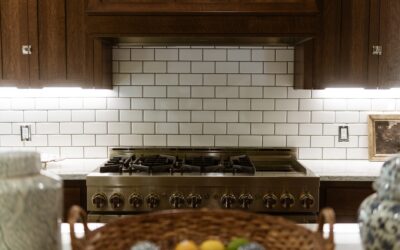
The old formula was 3×6 beveled subway tile with contrasting grout. That look is now firmly transitional, not modern. If you want modern, think bigger, flatter, and calmer.
Slab Backsplashes: The Cleanest Look Available
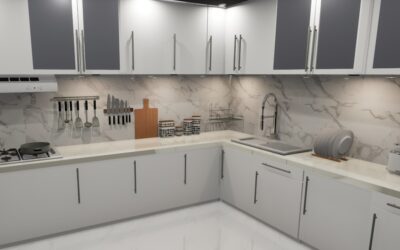
The strongest modern statement is no tile at all — a single slab of quartz, porcelain, or stone running the full wall. No grout lines, no pattern repeats, just continuous material. When the slab matches the countertop, the counter appears to flow up the wall, and the effect is seamless in a way tile can’t replicate.
| Slab Material | Installed Cost (per sq ft) | Notes |
|---|---|---|
| Quartz slab | $70–$120 | Matches countertop exactly; heat caution behind ranges |
| Porcelain slab (6mm) | $60–$110 | Heatproof, huge formats up to 5’x10′ |
| Quartzite/marble slab | $80–$180 | Natural veining; marble needs sealing |
A typical 30-square-foot backsplash in slab material lands between $2,000 and $4,500 installed. That’s two to three times the cost of mid-range tile, but it’s the single biggest visual upgrade you can make in a modern kitchen. One caution from the field: gas ranges with high-BTU burners can discolor some quartz over time. Behind a serious cooktop, I spec porcelain slab instead — it’s fired at over 2,000°F and doesn’t care about your wok burner.
Large-Format Tile: Modern on a Tile Budget
If slab pricing stings, large-format porcelain gets you 80 percent of the look at half the cost. Formats I’m installing constantly right now: 12×24, 24×24, 24×48, and 4×24 planks. Material runs $4 to $15 per square foot, with installation adding $10 to $25 depending on your market and the format — big tile on a wall takes skill and the right thinset, so wall installs of 24×48 cost more labor than 12×24.
Three layout moves that keep large format looking modern:
- Stack bond, not offset. Stacked vertical or horizontal grids read contemporary; 50 percent brick offset reads traditional. If you must offset large format, keep it to one-third to avoid lippage on cupped tiles anyway.
- Tight joints with matching grout. I run 1/16″ to 1/8″ joints with rectified tile and grout within a shade of the tile color. The grid nearly disappears.
- Vertical orientation for height. Standing 12x24s on end draws the eye up, which is exactly what a full-height splash wants.
Zellige and Handmade Tile, Used the Modern Way
Handmade Moroccan zellige exploded in popularity, and it can absolutely read modern — if you use it with discipline. The modern application is a single color, usually a soft white, clay, or deep green, laid in a straight stack or tight offset with minimal grout. The undulating glaze surface provides all the visual interest; the layout stays quiet. Zellige runs $12 to $30 per square foot for material, and expect installation to cost more than standard tile because every handmade piece varies in size and thickness. Budget $25 to $45 per square foot all-in. My tip: order 15 to 20 percent overage instead of the usual 10, because you’ll cull the most irregular pieces.
Fluted, Textured, and Dimensional Tile
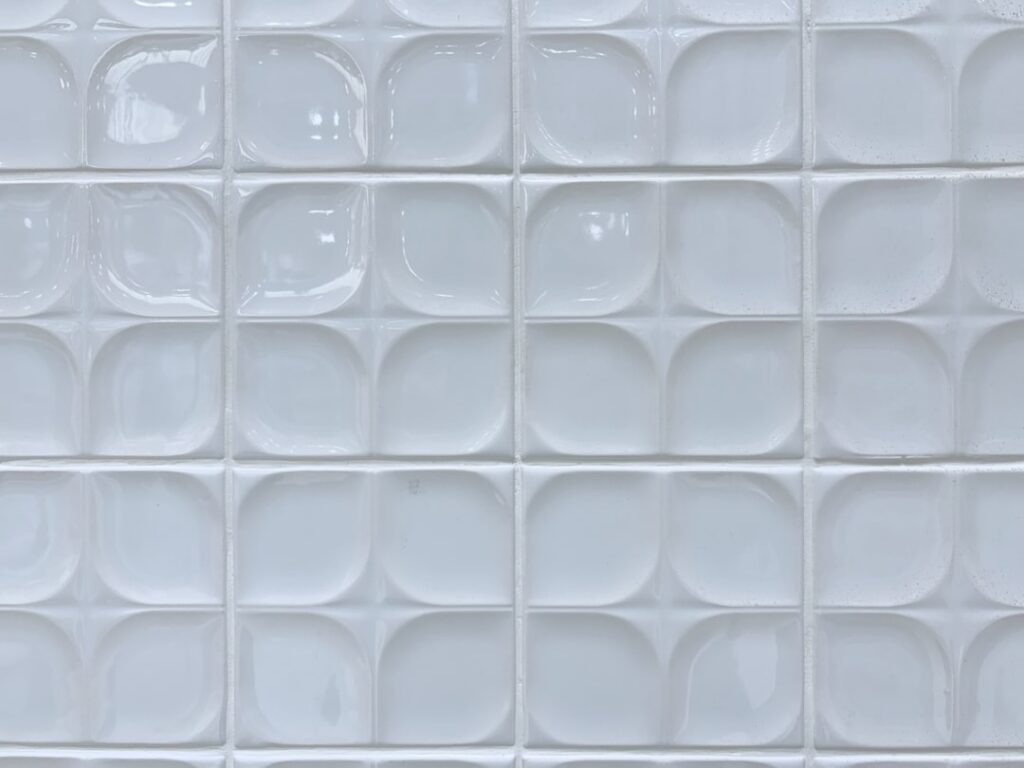
The strongest 2026 trend I’m seeing in modern kitchens is texture in place of pattern. Fluted ceramic (thin vertical ribs), reeded porcelain, and low-relief dimensional tiles give a wall depth without adding color noise. These pair beautifully with flat-panel cabinets and waterfall countertops. Prices run $10 to $25 per square foot for material. Two field warnings: fluted tile behind a range collects grease in the grooves, so keep the textured tile flanking the cooking zone and run smooth tile or slab directly behind the burners; and dimensional tile is slow to cut cleanly, so labor quotes run 20 to 30 percent higher.
Modern Color and Finish Direction for 2026
What I’m being asked to install this year, in order of frequency:
- Warm whites and creams in matte finishes — stark bright white is fading fast
- Earth tones — terracotta, clay, ochre, and olive in single-color fields
- Deep greens and inky blues, especially in zellige and glazed brick formats
- Stone-look porcelain mimicking travertine, limestone, and soft-veined marble
- Tone-on-tone neutrals — greige tile, greige grout, greige cabinets, layered by texture
Finish-wise, matte and honed surfaces dominate. Glossy tile still has a place in dark colors where you want light reflection in a moody kitchen, but the default modern spec is matte. Metallic accents have shifted from stainless to brushed brass and matte black in trims and fixtures.
Details That Make or Break the Modern Look
I’ve seen expensive tile ruined by cheap detailing more times than I can count. If you want the backsplash to look genuinely modern, sweat these items:
- Edge trim. Exposed tile edges get metal profiles — Schluter Jolly or Rondec in matte black, brushed nickel, or brass, about $15 to $30 per 8-foot stick. Never leave a raw cut edge or use a glued-on pencil trim in a contemporary kitchen.
- Outlets. Nothing dates a sleek splash like almond-colored outlets in the middle of the field. Spec horizontal outlets low near the counter, use screwless flat cover plates color-matched to the tile, or better, put strip outlets under the upper cabinets so the wall stays clean.
- Symmetry at the range wall. I always center the layout on the range and hood, then let cuts fall at the corners. Guests never look at corners; they stare straight at the cooking wall.
- Caulk, not grout, at changes of plane. The counter-to-splash joint and inside corners get color-matched silicone. Grouted corners crack within a year and instantly cheapen the job.
Budgeting a Modern Backsplash Project
For a typical kitchen with 25 to 35 square feet of splash area, here’s what complete projects are costing in 2026: budget large-format porcelain done well, $700 to $1,500. Mid-range with zellige or fluted tile and quality trims, $1,500 to $3,000. Slab quartz or porcelain, $2,500 to $5,000. Full-height installations add 40 to 80 percent more square footage than a standard 18-inch band, so decide on height before you fall in love with a $28-per-foot tile.
Lighting: The Multiplier Nobody Budgets For
Here’s a field observation that surprises clients: the same modern backsplash looks twice as expensive with under-cabinet lighting and half as expensive without it. Matte tile, texture, and slab veining all depend on light raking across the surface to register at all — in a dim kitchen, a $4,000 porcelain slab reads as a flat gray wall. Plan LED strip or puck lighting under the uppers before tile day, because the wiring has to be roughed in first. Warm white (2700K–3000K) flatters creams, earth tones, and brass trim; anything above 4000K turns warm modern palettes clinical. A quality dimmable LED strip system runs $150–$400 for a typical kitchen and is, dollar for dollar, the best companion purchase to any backsplash on this page. One more lighting note from installs: glossy tile under strip lighting shows every trowel wave as a shimmer line, so if you’re going glass or high-gloss, the wall needs to be dead flat — skim-coat first or choose matte and forgive yourself the prep.
Timing matters too. The backsplash is always the last hard finish in a kitchen: after cabinets, after countertops are templated and set, after the hood is hung, and ideally after wall paint. Tile day itself is quick — a pro clears a standard modern splash in one day plus a grout morning — so resist the urge to squeeze it in early. Templating slab splashes off unfinished walls is how $2,000 pieces of porcelain end up a quarter inch short at the window casing.
If I had to distill twenty years of backsplash work into one sentence of advice for a modern kitchen, it’s this: choose one hero — a slab, a texture, or a color — and make every other decision boring on purpose. Match the grout, hide the outlets, trim the edges in metal, and run it to the ceiling if the budget allows. Quiet consistency is what modern actually means, and it’s also what still looks current when the trend cycle rolls over in ten years.