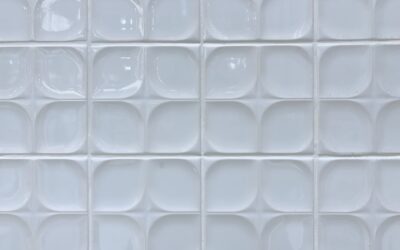
Tile trends move slower than fashion but faster than appliances. A pattern that felt fresh in 2018 — herringbone subway, gray hex — now reads dated. Trendy tiles for 2026 lean into texture, irregularity, and large scale. Zellige’s handmade variation, fluted three-dimensional surfaces, and 24-inch by 48-inch large-format porcelain are leading the charge. Here’s a breakdown of what’s hot, what’s worth chasing, and which trends will still look smart in 10 years.
Part of our Tile & Grout guide — explore the full guide →
Zellige: The Hand-Glazed Comeback
Moroccan zellige is the defining tile of the decade. Each 4-inch by 4-inch piece is hand-glazed, hand-cut, and slightly irregular — colors vary subtly, edges aren’t perfectly square, and the surface ripples with kiln-fired imperfections. The look reads as artisan rather than mass-produced.
Costs run $15 to $35 per square foot for material. Brands to look at include Cle Tile, Zia Tile, Riad Tile, and Bedrosian’s hand-glazed line. Lead times can stretch 4 to 12 weeks because pieces are hand-made overseas.
Pro tip: order 15% to 20% overage. The variation that makes zellige beautiful also makes it impossible to swap in tiles from a future batch with the same dye lot.
Fluted and Three-Dimensional Surfaces
Vertical fluted tile creates strong shadow lines that lend texture to feature walls, vanity backsplashes, and powder room accents. Look for Daltile Mystique, Marazzi Linea, and Florida Tile Berkshire Vertical for porcelain options at $5 to $12 per square foot.
For higher-end installations, hand-pressed ceramic in fluted patterns from Heath Ceramics or Fireclay Tile delivers a more pronounced texture at $20 to $50 per square foot. The pieces require careful installation — grout joints must align vertically across the entire wall or the visual rhythm collapses.
Terrazzo: Back With a Modern Twist
Mid-century terrazzo is having its moment again, but the 2026 version skews larger in scale. Where 1950s terrazzo featured tiny aggregate chips, current designs use bold 1-inch to 3-inch chips in contrasting colors against muted backgrounds.
Porcelain terrazzo-look tile runs $4 to $9 per square foot for material — Daltile Volume 1.0, Florida Tile Pietra Pinwheel, and Marazzi Confetti Terrazzo. True cement terrazzo costs significantly more — $25 to $80 per square foot — and requires specialty installation.
Best applications: entry foyers, powder rooms, and modern kitchen floors. Avoid in stark white kitchens where the busy pattern fights with marble countertops.
Large-Format Porcelain Slabs
The 24-inch by 48-inch and 48-inch by 96-inch porcelain slab is reshaping high-end kitchens. A single piece covers an entire backsplash, eliminates grout lines, and creates the look of book-matched marble without the cost or maintenance.
Pricing runs $7 to $30 per square foot for material, but installation is the catch — large-format slabs require specialized tools (suction-cup lifts, large-format trowels) and CTEF-certified installers. Plan on $15 to $35 per square foot in installation labor.
Brand spotlight: Daltile Stare, Florida Tile Marfil, Marazzi Allmarble, and Italian imports from Atlas Concorde and Florim. The Italian brands lead on visual realism but carry import lead times of 4 to 8 weeks.
Color Trends Worth Watching
- Warm whites and creams replacing crisp gray — Calacatta replaces Carrara
- Deep forest greens and olive — especially in handmade ceramic and zellige
- Terra cotta and burnt umber — the Mediterranean revival
- Soft sage and muted blue — calming bathroom palettes
- Matte black accent tiles — used sparingly as banding or floor borders
Cool gray, the dominant color of 2015-2020, is fading fast. New construction and remodels are pivoting to warmer, more saturated tones that feel less corporate and more residential.
Patterns That Are Out
Worth knowing what to avoid. Gray hex floor tile reads dated almost immediately now. Glossy white subway tile with dark gray grout — once the inevitable kitchen backsplash — has been largely replaced by stacked subway, handmade-look subway, or full-height zellige fields.
Wood-look tile in narrow planks (5-inch widths) feels dated against the current preference for 8-inch to 12-inch wide planks. Tumbled travertine and rustic stone, ubiquitous in early-2000s builds, are now firmly in “Mediterranean revival” territory — fine if you commit to the full aesthetic, jarring if used as accent in an otherwise modern home.
Where to Use Each Trend
Match the trend to the space:
- Zellige: kitchen backsplashes, powder room walls, full-height shower walls
- Fluted ceramic: vanity backsplashes, feature walls, fireplace surrounds
- Terrazzo: foyers, powder rooms, modern kitchen floors
- Large-format porcelain: kitchen backsplashes, shower walls, fireplace surrounds, statement floors
- Wood-look porcelain plank: living rooms, kitchens, sun-soaked open floor plans
Budget-Conscious Trend Shopping
Designer zellige at $25 per square foot can be substituted with Bedrosian’s handmade-look ceramic at $8 to $14. Large-format slab from Italian importers at $20 per square foot has Daltile Stare alternatives at $7. Fluted designer ceramic at $40 has porcelain look-alikes at $9.
The substitutes work best when used in field applications. For feature walls and statement zones, the premium material’s depth and irregularity are worth the price tag — your eye reads the difference up close.
Installation Pro Tips
Hire a CTEF Certified Tile Installer for anything more complex than 12-inch by 12-inch field tile. Large-format slabs need lippage-leveling systems like Raimondi RLS or Tuscan SeamClips. Zellige needs slightly wider grout joints (1/16-inch to 1/8-inch) to absorb its irregular sizing.
Match grout color thoughtfully. White grout on white zellige reads seamless. Light gray grout on white field tile telegraphs every joint. For warm-toned tile, choose grout in the same temperature family — sand, beige, or warm gray — not cool gray.
Picking Trends That Age Well
Trendy tiles work best when you commit to the aesthetic with confidence. The looks most likely to age gracefully — zellige, large-format porcelain in classic veining, fluted ceramic — share one quality: they reference timeless materials rather than chasing novelty. Choose based on the room’s lighting, your home’s overall design vocabulary, and how the pattern will look five years from now, not just at install day.
Prefer to explore on your own?
See how new flooring looks in your actual room in seconds — free, no signup.
Try the free Floor Studio →