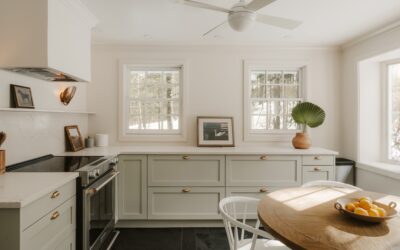
Walk into any newly remodeled kitchen or great room and there’s a good chance you’ll spot a fan with weathered wood blades and a matte black cage. The modern farmhouse ceiling fan has become one of the most requested fixtures I install, and for good reason. It marries the cozy, lived-in feel of a country farmhouse with the crisp geometry of contemporary design. Get the size, mounting, and finish right, though, and it does far more than move air. It anchors the whole room.
This style isn’t a single product. It’s a look built from a handful of recognizable ingredients: reclaimed or faux-barnwood blades, iron or matte-black hardware, exposed bulb or lantern-style light kits, and often a distressed or two-tone finish. Below I’ll walk you through everything that actually matters when you’re shopping, so you don’t end up with a fan that’s too small, too loud, or wildly out of scale.
What Defines the Farmhouse Fan Look
The design language borrows from old barns and rural workshops but cleans it up. Blades are typically finished to look like aged oak, walnut, or gray driftwood, sometimes with a subtle grain that reads as reclaimed lumber. The motor housing and downrod usually come in matte black, oil-rubbed bronze, or a galvanized-steel look. Many models add a caged light kit reminiscent of an old work lamp, holding one to five Edison-style bulbs.
What makes it “modern” rather than purely rustic is restraint. You won’t see ornate scrollwork or glossy brass. The lines are simple, the palette is muted, and the proportions lean clean. That balance is exactly why the style works in spaces ranging from a rustic screened porch to a minimalist white kitchen.
Getting the Size Right
Sizing is where most homeowners go wrong, and an undersized fan looks like an afterthought. Fan span is measured blade tip to blade tip. Use the room’s square footage as your guide:
- Up to 75 sq ft (bathrooms, small offices): 29 to 36 inches
- 76 to 175 sq ft (bedrooms, kitchens): 42 to 48 inches
- 176 to 350 sq ft (living rooms, dining rooms): 52 to 56 inches
- Over 350 sq ft (great rooms, open concepts): 60 to 72 inches, or consider two fans
For a typical 12-by-15-foot living room, a 52-inch fan is the safe default. In a soaring great room with an open floor plan, don’t be afraid to go to 60 or 72 inches. A large fan running on low moves the same air more quietly than a small fan running on high.
Ceiling Height and Downrods
Blades should sit 8 to 9 feet off the floor for the best airflow, with at least 7 feet of clearance for safety. On a standard 8-foot ceiling, use a flush or “hugger” mount. For 9-foot ceilings, a 6-inch downrod works well. Add roughly 6 inches of downrod for every additional foot of ceiling height above 9 feet. Vaulted ceilings need a sloped-ceiling adapter, which most farmhouse fans include or offer as an accessory.
Blade Materials and Finishes
Blade material affects both looks and durability. Solid or engineered wood blades give the most authentic farmhouse grain but can warp in humid or damp locations. For a covered porch or a bathroom, look for ABS plastic or coated blades molded to mimic wood. They handle moisture far better and won’t sag over time.
Common finishes you’ll encounter include distressed koa, weathered gray, barnwood brown, and matte black. Two-tone fans pairing black hardware with light wood blades are especially popular right now because they read clean against both white and darker ceilings. If your trim, hardware, or lighting is already a specific metal tone, match the fan’s hardware to it for a cohesive look.
Light Kits and Bulbs
Most farmhouse fans include an integrated light or a socket for a separate kit. You’ll see three main styles: a caged fixture holding vintage Edison bulbs, a lantern or schoolhouse glass shade, and a slim integrated LED disc for a more subtle profile. Edison-style cages deliver the strongest farmhouse character but throw softer, warmer light, so they suit dining and living areas more than task-heavy kitchens.
Pay attention to color temperature. For that warm, inviting farmhouse glow, choose bulbs in the 2700K range. If the fan uses an integrated LED, check whether it’s dimmable and whether it offers selectable color temperatures, a feature I recommend since it lets you dial the light to the room’s mood.
Motors, Control, and Noise
Two motor types dominate the market. Traditional AC motors are less expensive and perfectly reliable. DC motors cost more upfront but use up to 70 percent less energy, run noticeably quieter, and typically offer six speeds plus a reverse function on the remote. For a bedroom or a fan you’ll run for hours, the DC upgrade is worth the extra $50 to $100.
Control options range from a simple pull chain to a wall control, a handheld remote, or full smart-home integration. Many current farmhouse fans work with Wi-Fi apps, Alexa, and Google Home, letting you set schedules or adjust speed by voice. If you want a clean wall look, a hardwired wall control avoids the clutter of pull chains entirely.
Reversible Airflow Matters Year-Round
Don’t overlook the reverse switch. In summer, blades should spin counterclockwise to push a cooling breeze down. In winter, reverse them to clockwise on low speed to pull cool air up and gently redistribute the warm air trapped near the ceiling. This simple habit can trim a few dollars off your heating and cooling bills each month.
Wet, Damp, or Dry Rating
Where the fan goes determines the rating you need. A dry-rated fan is for interior rooms only. A damp-rated fan handles humidity and is fine for covered porches, sunrooms, and bathrooms. A wet-rated fan can take direct exposure to rain and is the only safe choice for open patios or pergolas. Installing a dry-rated fan outdoors voids the warranty and creates a genuine shock hazard, so always confirm the label before you buy.
Budget and What You Get
Farmhouse fans span a wide price range. Entry-level models run $80 to $150 and typically use AC motors with pull-chain or basic remote control. The $150 to $300 tier brings quieter DC motors, better blade finishes, and integrated LED lighting. Premium fans from established lighting brands run $300 to $600 and add smart controls, larger spans, and higher-grade materials with longer warranties.
For most homeowners, the $150 to $300 range delivers the best value. You get the quiet DC motor and the authentic finish without paying for features you may never use. Whatever you choose, buy from a brand that stocks replacement parts, since a fan is a long-term fixture and you’ll want access to blades, remotes, and light kits down the road.
Matching the Fan to Your Room’s Style
The beauty of the farmhouse look is how flexibly it layers into different rooms. In a white shiplap kitchen, a black-and-light-wood two-tone fan adds warmth without clashing. In a cozy bedroom with warm-toned walls, a fully wood-finished fan with a lantern light kit deepens the rustic feel. On a covered porch, a galvanized-steel fan with wide, angled blades reinforces the barn-inspired aesthetic while moving plenty of air on humid evenings.
Coordinate the fan with the room’s existing metals and wood tones rather than treating it as an isolated fixture. If your cabinet hardware, faucets, and light fixtures already lean matte black, a black-hardware fan ties the space together. Mismatched metals are the most common reason a nice fan still looks slightly off, so take a quick inventory of your finishes before you commit.
Blade Count and Airflow
Farmhouse fans come with anywhere from three to eight blades. Fewer blades and a wider pitch generally move more air and read more modern, while more blades look traditional and run a touch quieter. For airflow, focus less on blade count and more on the CFM (cubic feet per minute) rating printed on the box. A good large-room fan moves 5,000 to 7,000 CFM, and higher is better if cooling performance is your priority.
Final Thoughts Before You Buy
A well-chosen modern farmhouse ceiling fan pulls a room together while keeping it comfortable through every season. Nail the span for your square footage, match the mount to your ceiling height, pick the right moisture rating for the location, and lean toward a DC motor if quiet operation matters. Do that, and you’ll have a fixture that looks intentional, runs whisper-quiet, and earns its place at the center of the room for years to come.